Lee Shih-Ching, Tsai Ping-Han, Yu Kuang-Hui, Chan Tien-Ming
Division of Rheumatology, Allergy and Immunology, Department of Internal Medicine, Chang Gung Memorial Hospital, Taoyuan 333, Taiwan.
Graduate Institute of Biomedical Electronics and Bioinformatics, National Taiwan University, Taipei 106, Taiwan.
Healthcare (Basel). 2025 Apr 21;13(8):952. doi: 10.3390/healthcare13080952.
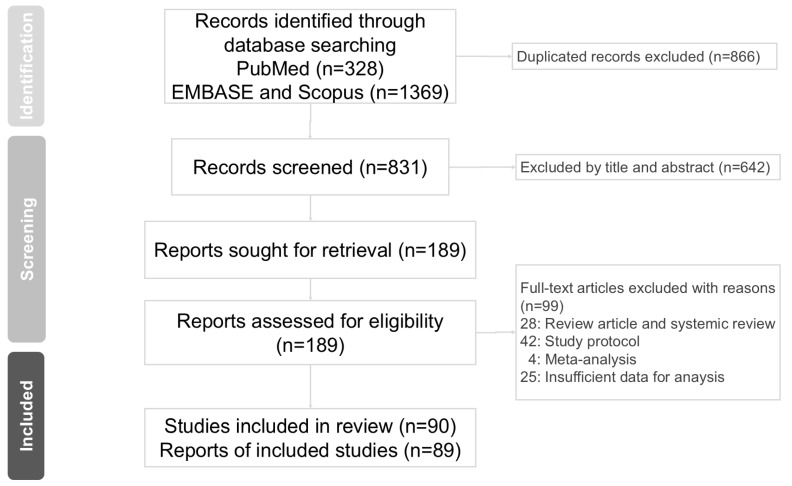
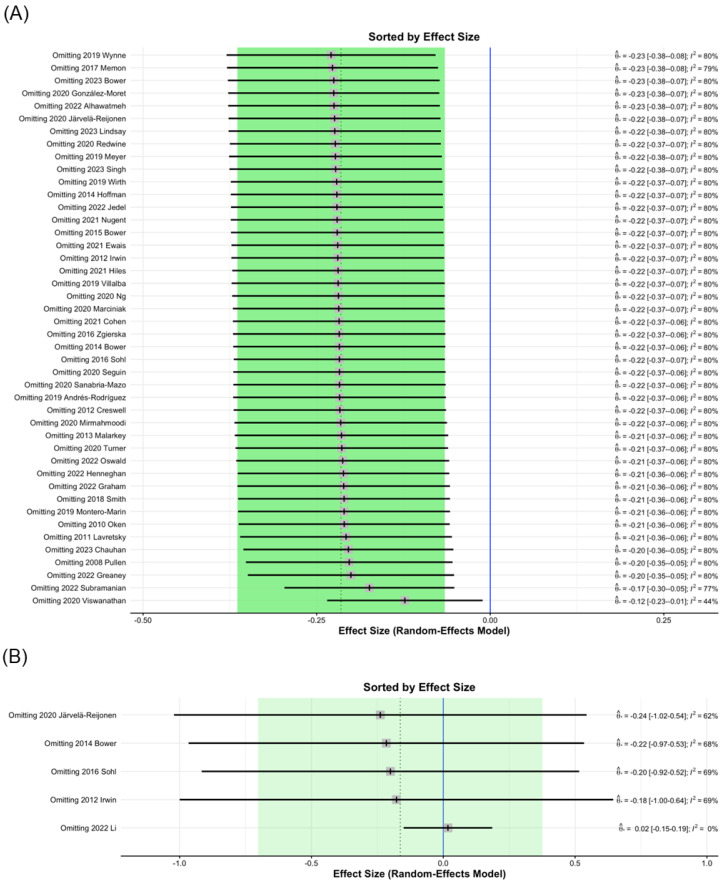
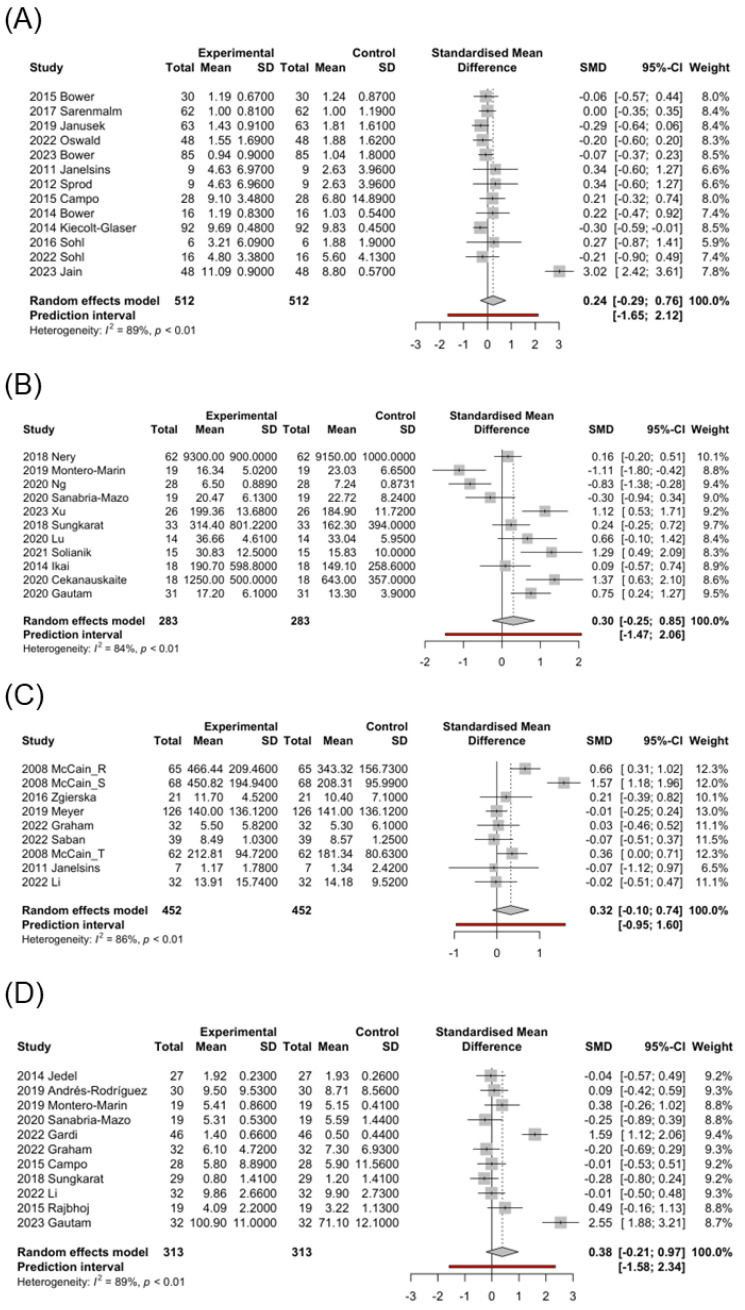
: Chronic stress affects the immune system via the hypothalamic-pituitary-adrenal (HPA) axis and autonomic system. Chronic inflammation is a risk factor for cardiovascular diseases, cancer onset and progression, susceptibility to infection, and cognitive impairment. Mind-body interventions (MBIs) could affect the immune and neuroendocrine systems, and we aimed to assess the correlations among these systems through a meta-analysis. : RCTs were identified by searching three databases: PubMed, Embase, and Scopus. Of the 1697 studies identified, 89 were included in this study. Risk of bias was examined using the Cochrane risk-of-bias assessment tool. Data were pooled using a random-effects model, and SMDs were calculated. I statistics and Egger's test were used to assess the significance of the asymmetry. Influence diagnostics were used to assess whether pooled effects were disproportionately dependent on any single study. The trim-and-fill method was applied to all identified asymmetric instances. Meta-regression was used to examine the moderating effect of MBI efficacy on biomarkers. : MBIs generally decreased the levels of inflammatory factors, such as the CRP, IL-6, TNF-α, IL-1, IL-8, IL-17, ESR, and cortisol, and increased IL-10, IFN-γ, IL-1ra, BDNF, and secretory IgA. In a subgroup analysis of the CNS and cancer, qigong and yoga showed increased BDNF and IL-6, respectively. Notably, IL-10 was increased in inflammatory diseases, and IFN-γ was increased in viral infections. : This study revealed MBIs decrease inflammatory cytokine and increase anti-inflammatory, antiviral, and immune-activating factors. These results suggest the MBIs including gentle physical exercise may be beneficial for neuropsychiatric disorders or tumors. : CRD42024507646.
慢性应激通过下丘脑-垂体-肾上腺(HPA)轴和自主神经系统影响免疫系统。慢性炎症是心血管疾病、癌症发生和进展、感染易感性以及认知障碍的危险因素。身心干预(MBIs)可能会影响免疫和神经内分泌系统,我们旨在通过荟萃分析评估这些系统之间的相关性。通过检索三个数据库(PubMed、Embase和Scopus)来识别随机对照试验(RCTs)。在识别出的1697项研究中,本研究纳入了89项。使用Cochrane偏倚风险评估工具检查偏倚风险。使用随机效应模型汇总数据,并计算标准化均数差(SMDs)。使用I统计量和Egger检验评估不对称性的显著性。使用影响诊断来评估汇总效应是否过度依赖于任何单一研究。对所有识别出的不对称情况应用修剪填充法。使用荟萃回归来检验MBI疗效对生物标志物的调节作用。MBIs通常会降低炎症因子水平,如C反应蛋白(CRP)、白细胞介素-6(IL-6)、肿瘤坏死因子-α(TNF-α)、白细胞介素-1(IL-1)、白细胞介素-8(IL-8)、白细胞介素-17(IL-17)、红细胞沉降率(ESR)和皮质醇,并增加白细胞介素-10(IL-10)、干扰素-γ(IFN-γ)、白细胞介素-1受体拮抗剂(IL-1ra)、脑源性神经营养因子(BDNF)和分泌型免疫球蛋白A(sIgA)。在中枢神经系统和癌症的亚组分析中,气功和瑜伽分别显示BDNF和IL-6增加。值得注意的是,炎症性疾病中IL-10增加,病毒感染中IFN-γ增加。本研究表明MBIs可降低炎性细胞因子水平,并增加抗炎、抗病毒和免疫激活因子。这些结果表明,包括温和体育锻炼在内的MBIs可能对神经精神疾病或肿瘤有益。CRD42024507646。