Kinciniene Odeta, Zekonis Matas, Sutkus Viktoras, Vankeviciene Ramune, Parnarauskiene Juste, Petrulioniene Zaneta, Aliosaitiene Urte, Cerkauskiene Rimante
Faculty of Medicine, Institute of Clinical Medicine, Vilnius University, M. K. Ciurlionis Street 21, 01513 Vilnius, Lithuania.
Medicina (Kaunas). 2025 Mar 28;61(4):615. doi: 10.3390/medicina61040615.
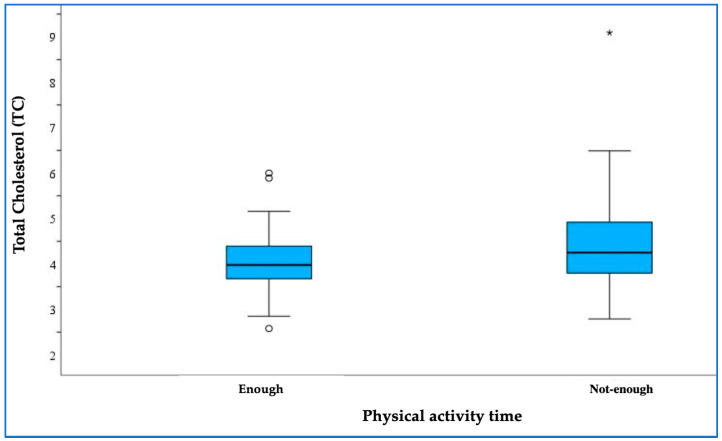
: Cardiovascular diseases are the leading cause of death in Lithuania, with familial hypercholesterolemia being a significant risk factor. This study aimed to evaluate the prevalence of dyslipidaemia among healthy children and the relation with risk factors for familial hypercholesterolaemia. : This study involved 127 children, aged 5 to 10 years, with a focus on the early identification of dyslipidaemia and familial hypercholesterolaemia. The relationship between body composition, dietary habits, physical activity, and dyslipidaemia was researched and statistically assessed. : Standard lipid profile analysis revealed that approximately one-third of participants had abnormal lipid profiles. Elevated total cholesterol (TC) was found in 19 participants (15%), elevated LDL cholesterol (LDL-C) in 24 participants (18.9%), elevated triglycerides (TGs) in 19 participants (15%), and reduced HDL cholesterol (HDL-C) in 9 participants (7.1%). Risk for familial hypercholesterolaemia was suspected for 12 participants with LDL-C elevated more than 4 mmol/L or family history of FH. While no significant link was found between dyslipidaemia and body composition, low levels of physical activity were associated with increased total cholesterol levels, suggesting a protective role for regular exercise. Dietary habits, including vegetable, sweet, and flour product consumption, did not show a significant association with dyslipidaemia. : Dyslipidaemia is fairly common among Lithuanian children. Although this study does not show a significant effect of diet or body composition on lipid levels, it links low levels of physical activity to higher triglyceride values. Due to risk factors not always being present in children with dyslipidaemia, it should not be ruled out in apparently healthy children.
心血管疾病是立陶宛的主要死因,家族性高胆固醇血症是一个重要的危险因素。本研究旨在评估健康儿童血脂异常的患病率及其与家族性高胆固醇血症危险因素的关系。
本研究纳入了127名5至10岁的儿童,重点是早期识别血脂异常和家族性高胆固醇血症。研究了身体成分、饮食习惯、身体活动与血脂异常之间的关系,并进行了统计学评估。
标准血脂谱分析显示,约三分之一的参与者血脂谱异常。19名参与者(15%)总胆固醇(TC)升高,24名参与者(18.9%)低密度脂蛋白胆固醇(LDL-C)升高,19名参与者(15%)甘油三酯(TGs)升高,9名参与者(7.1%)高密度脂蛋白胆固醇(HDL-C)降低。12名LDL-C升高超过4 mmol/L或有家族性高胆固醇血症家族史的参与者被怀疑有家族性高胆固醇血症风险。虽然未发现血脂异常与身体成分之间存在显著联系,但低水平的身体活动与总胆固醇水平升高有关,提示规律运动具有保护作用。饮食习惯,包括蔬菜、甜食和面粉制品的摄入量,与血脂异常无显著关联。
血脂异常在立陶宛儿童中相当常见。尽管本研究未显示饮食或身体成分对血脂水平有显著影响,但它将低水平的身体活动与较高的甘油三酯值联系起来。由于血脂异常儿童并非总是存在危险因素,因此在看似健康的儿童中也不应排除血脂异常。