
使用介电电泳对衰老的人间充质干细胞进行电表型分析。
Electrical Phenotyping of Aged Human Mesenchymal Stem Cells Using Dielectrophoresis.
作者信息
Simpkins Lexi L C, Tsai Tunglin, Egun Emmanuel, Adams Tayloria N G
机构信息
Department of Chemical and Biomolecular Engineering, University of California Irvine, Irvine, CA 92697, USA.
Sue and Bill Gross Stem Cell Research Center, University of California, Irvine, CA 92697, USA.
出版信息
Micromachines (Basel). 2025 Apr 3;16(4):435. doi: 10.3390/mi16040435.
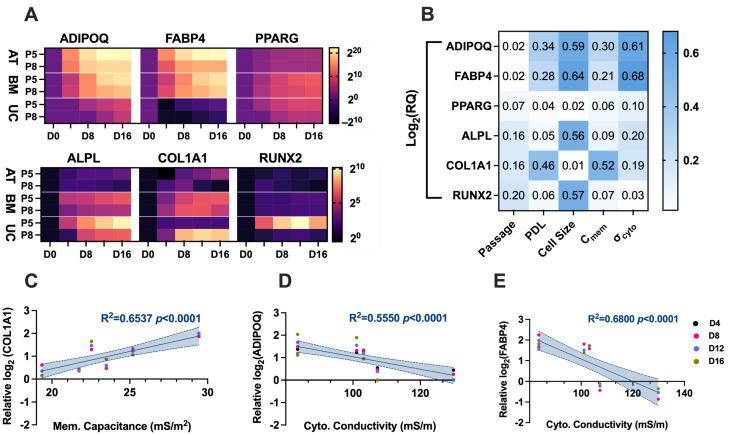
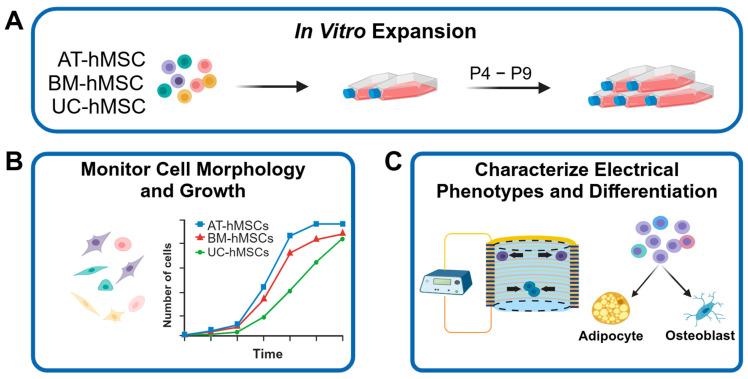
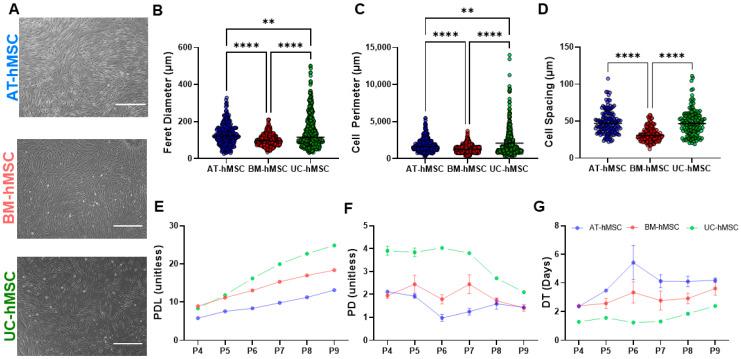
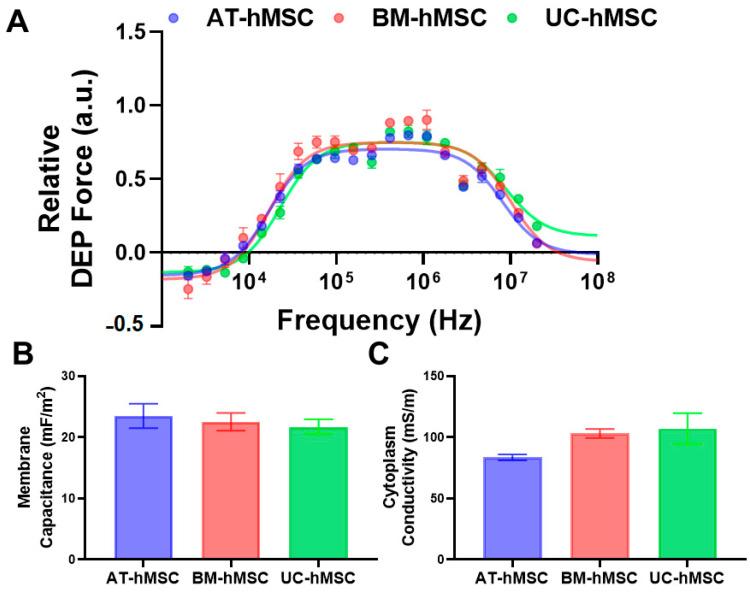
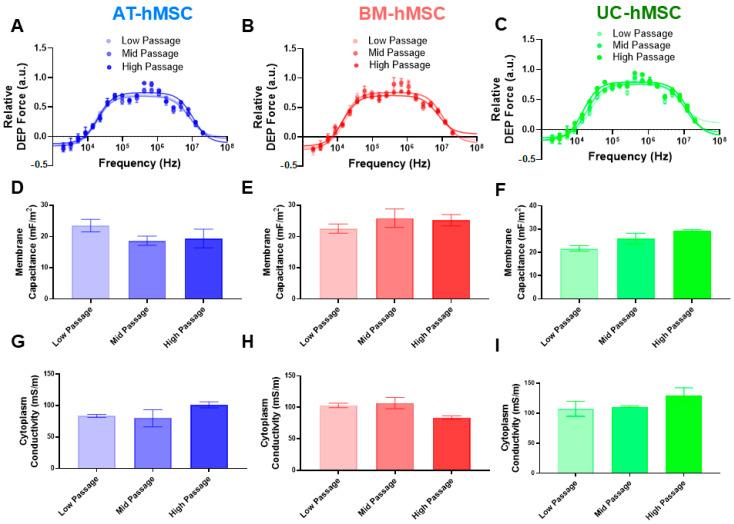
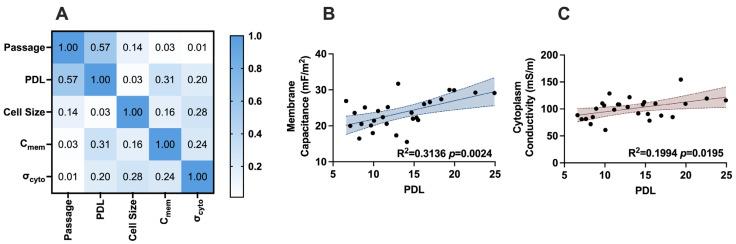
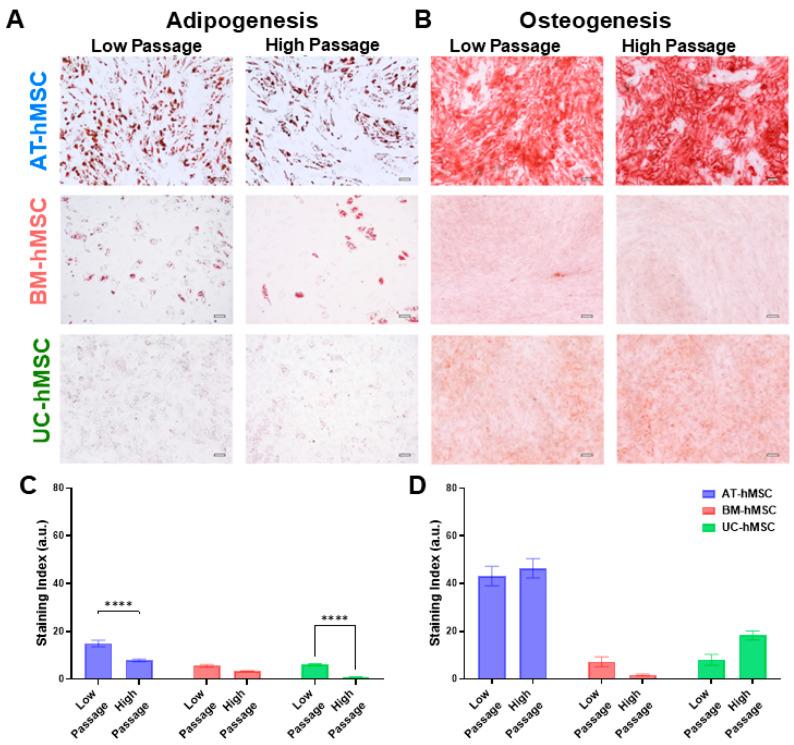
Human mesenchymal stem cells (hMSCs) are widely used in regenerative medicine, but large-scale in vitro expansion alters their function, impacting proliferation and differentiation potential. Currently, a predictive marker to assess these changes is lacking. Here, we used dielectrophoresis (DEP) to characterize the electrical phenotype of hMSCs derived from bone marrow (BM), adipose tissue (AT), and umbilical cord (UC) as they aged in vitro from passage 4 (P4) to passage 9 (P9). The electrical phenotype was defined by the DEP spectra, membrane capacitance, and cytoplasm conductivity. Cell morphology and size, growth characteristics, adipogenic differentiation potential, and osteogenic differentiation potential were assessed alongside label-free biomarker membrane capacitance and cytoplasm conductivity. Differentiation was confirmed by histological staining and RT-qPCR. All hMSCs exhibited typical morphology, though cell size varied, with UC-hMSCs displaying the largest variability across all size metrics. Growth analysis revealed that UC-hMSCs proliferated the fastest. The electrical phenotype varied with cell source and in vitro age, with high passage hMSCs showing noticeable shifts in DEP spectra, membrane capacitance, and cytoplasm conductivity. Correlation analysis revealed that population doubling level (PDL) correlated with membrane capacitance and cytoplasm conductivity, indicating PDL as a more precise marker of in vitro aging than passage number. Additionally, we demonstrate that membrane capacitance correlates with the osteogenic marker COL1A1 and that cytoplasm conductivity correlates with the adipogenic markers ADIPOQ and FABP4, suggesting that DEP-derived electrical properties serve as label-free biomarkers of differentiation potential. While DEP has previously been applied to BM-hMSCs and AT-hMSCs, and more recently to UC-hMSCs, few studies have provided a direct comparison across all three sources or tracked changes across continuous expansion. These findings underscore the utility of DEP as a label-free approach for assessing hMSC aging and function, offering practical applications for optimizing stem cell expansion and stem cell banking in clinical settings.
人间充质干细胞(hMSCs)在再生医学中广泛应用,但大规模体外扩增会改变其功能,影响增殖和分化潜能。目前,缺乏评估这些变化的预测性标志物。在此,我们利用介电电泳(DEP)来表征源自骨髓(BM)、脂肪组织(AT)和脐带(UC)的hMSCs在体外从第4代(P4)培养至第9代(P9)时的电表型。电表型由DEP谱、膜电容和细胞质电导率定义。同时评估细胞形态和大小、生长特性、成脂分化潜能和成骨分化潜能以及无标记生物标志物膜电容和细胞质电导率。通过组织学染色和RT-qPCR确认分化情况。所有hMSCs均呈现典型形态,尽管细胞大小有所不同,其中UC-hMSCs在所有大小指标上的变异性最大。生长分析表明UC-hMSCs增殖最快。电表型随细胞来源和体外培养代数而变化,传代次数较高的hMSCs在DEP谱、膜电容和细胞质电导率方面表现出明显变化。相关性分析表明群体倍增水平(PDL)与膜电容和细胞质电导率相关,表明PDL是比传代次数更精确的体外老化标志物。此外,我们证明膜电容与成骨标志物COL1A1相关,细胞质电导率与成脂标志物ADIPOQ和FABP4相关,这表明DEP衍生的电学性质可作为分化潜能的无标记生物标志物。虽然DEP此前已应用于BM-hMSCs和AT-hMSCs,最近也应用于UC-hMSCs,但很少有研究对所有三种来源进行直接比较或跟踪连续扩增过程中的变化。这些发现强调了DEP作为一种评估hMSC老化和功能的无标记方法的实用性,为临床环境中优化干细胞扩增和干细胞库提供了实际应用。
 Zotero 插件