Brzeszczyński Filip, Hamilton David, Dziedzic Angela, Synder Marek, Bończak Oktawiusz
Department of Trauma, Orthopaedics and Musculoskeletal Oncology, Copernicus Memorial Hospital, Pabianicka 62, 93-513 Łódź, Poland.
Research Centre for Health, Glasgow Caledonian University, Govan Mbeki Building, Cowcaddens Road, Glasgow G4 0BA, UK.
J Clin Med. 2025 Apr 9;14(8):2573. doi: 10.3390/jcm14082573.
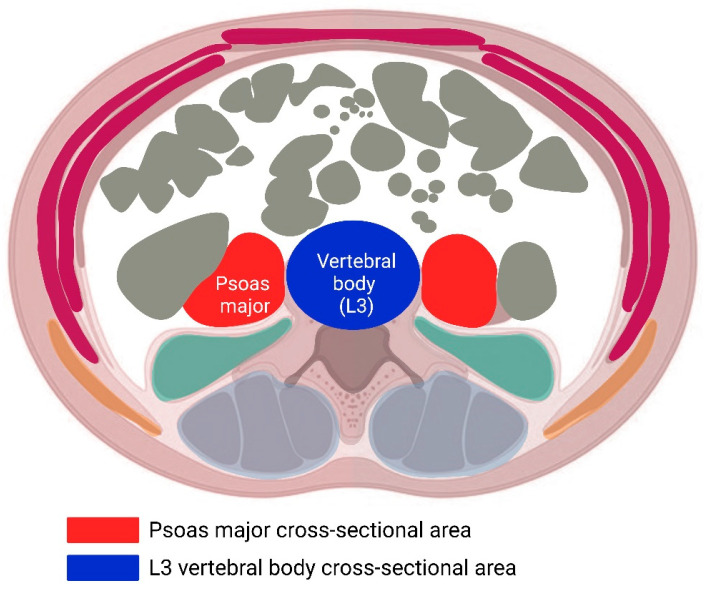
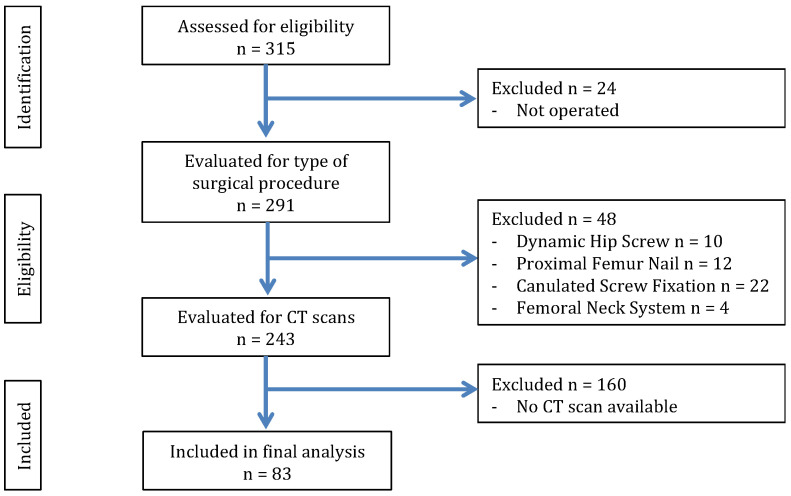
: Displaced femoral neck fractures (FNFs) can be treated with hemiarthroplasty (HA) or total hip arthroplasty (THA), with THA typically offered to fitter patients. Sarcopenia increases complications and mortality after hip arthroplasty. The psoas muscle-L3 vertebra ratio (PML3) is a sarcopenia marker. This study evaluated PML3's role in predicting postoperative outcomes and guiding surgical decision-making. : A retrospective study was conducted at a single centre between January 2021 and December 2024. PML3 was measured on computed tomography (CT) at the L3 vertebra level for patients with displaced FNFs, comparing postoperative outcomes between HA and THA cohorts. : Eighty-three patients (fifty-seven female, twenty-six male) were analysed. Forty-three underwent THA, and forty underwent HA. Postoperative complications were higher in HA patients (48% vs. 21%, = 0.019), with lower 30-day survival (90% vs. 98%). Median PML3 in the HA group was 0.70 mm (IQR: 0.47-1.47), lower than in the THA group (1.34 mm, IQR: 1.00-1.78, = 0.002). However, PML3 values for patients that suffered complications (irrespective of surgical decision) were essentially the same; HA, 0.57 mm (IQR: 0.43-1.83); THA 0.56 mm (IQR: 0.41-1.05, = 0.847). ROC analysis showed PML3 as an acceptable predictor of postoperative complications, with an AUC of 0.71. : Lower PML3 values correlate with higher postoperative complications and mortality following THA or HA for displaced FNFs, confirming its role as a prognostic marker. Some THA complications in low-PML3 patients might have been avoided by selecting less invasive HA, suggesting THA should be reserved for those with greater muscle reserves.
移位型股骨颈骨折(FNFs)可采用半髋关节置换术(HA)或全髋关节置换术(THA)治疗,THA通常适用于身体状况较好的患者。肌肉减少症会增加髋关节置换术后的并发症和死亡率。腰大肌-L3椎体比值(PML3)是一种肌肉减少症标志物。本研究评估了PML3在预测术后结果和指导手术决策中的作用。:2021年1月至2024年12月在单一中心进行了一项回顾性研究。对移位型FNFs患者在L3椎体水平通过计算机断层扫描(CT)测量PML3,比较HA组和THA组的术后结果。:分析了83例患者(57例女性,26例男性)。43例行THA,40例行HA。HA组患者术后并发症更高(48%对21%,P = 0.019),30天生存率更低(90%对98%)。HA组的PML3中位数为0.70mm(四分位间距:0.47 - 1.47),低于THA组(1.34mm,四分位间距:1.00 - 1.78,P = 0.002)。然而,发生并发症的患者(无论手术决策如何)的PML3值基本相同;HA组为0.57mm(四分位间距:0.43 - 1.83);THA组为0.56mm(四分位间距:0.41 - 1.05,P = 0.847)。ROC分析显示PML3是术后并发症的可接受预测指标,曲线下面积为0.71。:较低的PML3值与移位型FNFs行THA或HA术后较高的并发症和死亡率相关,证实了其作为预后标志物的作用。对于PML3值低的患者,选择侵入性较小的HA可能避免一些THA并发症,提示THA应保留给肌肉储备较多的患者。