Wan Zhijie, Wang Chenyu, Luo Shizheng, Zhu Jinwei, He Hua, Hao Kun
State Key Laboratory of Natural Medicine, Jiangsu Province Key Laboratory of Drug Metabolism and Pharmacokinetics, China Pharmaceutical University, Nanjing 210009, China.
Center of Drug Metabolism and Pharmacokinetics, China Pharmaceutical University, Nanjing 210009, China.
Pharmaceuticals (Basel). 2025 Mar 23;18(4):450. doi: 10.3390/ph18040450.
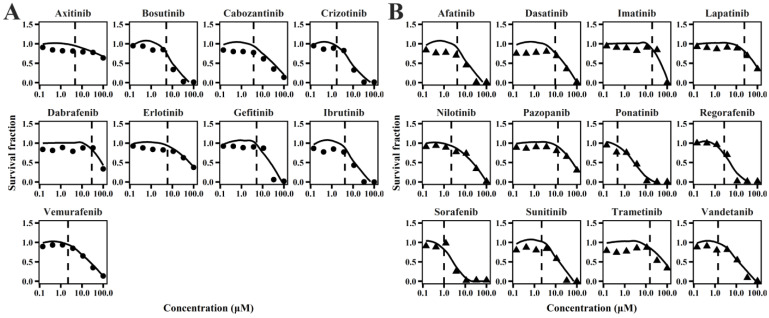
: There is growing concern over tyrosine kinase inhibitor (TKI)-induced cardiotoxicity, particularly regarding left ventricular dysfunction and heart failure in clinical treatment. These adverse effects often lead to treatment discontinuation, severely impacting patient outcomes. Therefore, there is an urgent need for more precise risk assessment methods. This study aimed to assess the cardiotoxicity of TKIs, refine in vitro to in vivo extrapolation (IVIVE) methodologies to improve predictive accuracy, and identify critical in vitro parameters for assessment. : By leveraging high-throughput cardiotoxicity screening with human induced pluripotent stem cell-derived cardiomyocytes (hiPSC-CMs), a mechanism-based toxicodynamic (TD) model for TKIs was constructed. A QSP-PK-TD model was developed by integrating pharmacokinetic (PK) and quantitative systems pharmacology (QSP) models. This model incorporates critical drug exposure factors, such as plasma protein binding, tissue-plasma partitioning, and drug distribution heterogeneity to enhance extrapolation accuracy. : The QSP-PK-TD model validated the reliability of IVIVE and identified the area under the curve of drug effects on mitochondrial membrane potential (AEMMP) and cardiomyocyte contractility (AEAAC) as key in vitro parameters for assessing TKI-induced cardiotoxicity. Incorporating critical drug exposure factors obviously improved qualitative and quantitative extrapolation accuracy. : This study established a framework for predicting in vivo cardiotoxicity from in vitro parameters, enabling efficient translation of preclinical data into clinical risk assessment. These findings provide valuable insights for drug development and regulatory decision-making, offering a powerful tool for evaluating TKI-induced cardiotoxicity.
酪氨酸激酶抑制剂(TKI)引起的心脏毒性日益受到关注,尤其是在临床治疗中左心室功能障碍和心力衰竭方面。这些不良反应常常导致治疗中断,严重影响患者预后。因此,迫切需要更精确的风险评估方法。本研究旨在评估TKI的心脏毒性,完善体外到体内外推(IVIVE)方法以提高预测准确性,并确定用于评估的关键体外参数。通过利用人诱导多能干细胞衍生的心肌细胞(hiPSC-CMs)进行高通量心脏毒性筛选,构建了基于机制的TKI毒性动力学(TD)模型。通过整合药代动力学(PK)和定量系统药理学(QSP)模型开发了一个QSP-PK-TD模型。该模型纳入了关键的药物暴露因素,如血浆蛋白结合、组织-血浆分配和药物分布异质性,以提高外推准确性。QSP-PK-TD模型验证了IVIVE的可靠性,并确定了药物对线粒体膜电位(AEMMP)和心肌细胞收缩性(AEAAC)的效应曲线下面积作为评估TKI诱导心脏毒性的关键体外参数。纳入关键药物暴露因素明显提高了定性和定量外推准确性。本研究建立了一个从体外参数预测体内心脏毒性的框架,能够将临床前数据有效地转化为临床风险评估。这些发现为药物开发和监管决策提供了有价值的见解,为评估TKI诱导的心脏毒性提供了一个强大的工具。