Santos-Báez Leinys S, Ravelli Michele N, Díaz-Rizzolo Diana A, Popp Collin J, Gallagher Dympna, Cheng Bin, Schoeller Dale, Laferrère Blandine
Division of Endocrinology, Nutrition Obesity Research Center, Columbia University Irving Medical Center, New York, NY, USA.
Isotope Ratio Mass Spectrometry Core Laboratory, Biotechnology Center, University of Wisconsin, Madison, WI, USA.
BMC Med Res Methodol. 2025 Apr 26;25(1):115. doi: 10.1186/s12874-025-02568-4.
Self-report methods are widely used to assess energy intake but are prone to measurement errors. We aimed to identify under-reported, over-reported, and plausible self-reported energy intake by dietary recalls (rEI) using a standard method (Method 1) that calculates the rEI ratio against measured energy expenditure (mEE) by doubly-labeled water (DLW), and compare it to a novel method (Method 2), which calculates the rEI ratio against measured energy intake (mEI) by the principle of energy balance (EB = mEE + changes in energy stores).
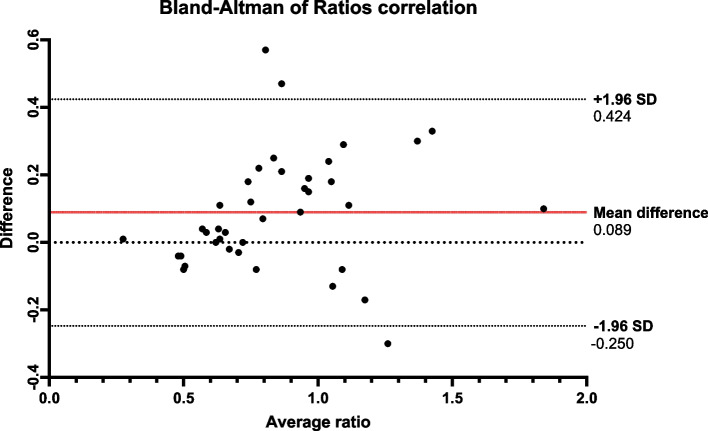
The rEI:mEE and rEI:mEI ratios were assessed for each subject. Group cut-offs were calculated for both methods, using the coefficient of variations of rEI, mEE, and mEI. Entries within ± 1SD of the cutoffs were categorized as plausible, < 1SD as under-reported, and > 1SD as over-reported. Kappa statistics was calculated to assess the agreement between both methods. Percentage bias (bβ) was estimated by linear regression. Remaining bias (dβ) was calculated after applying each method cutoffs.
The percentage of under-reporting was 50% using both methods. Using Method 1, 40.3% of recalls were categorized as plausible, and 10.2% as over-reported. With Method 2, 26.3% and 23.7% recalls were plausible and over-reported, respectively. There was a significant positive relationship between mEI with weight (ß = 21.7, p < 0.01) and BMI (ß = 48.8, p = 0.04), but not between rEI with weight (ß = 13.1, p = 0.06) and BMI (ß = 41.8, p = 0.11). The rEI relationships were significant when only plausible entries were included using Method 1 (weight: ß = 17.4, p < 0.01, remaining bias = 49.5%; BMI: ß = 44.6, p = 0.01, remaining bias = 60.2%) and Method 2 (weight: ß = 19.5, p < 0.01, remaining bias = 24.9%; BMI: ß = 44.8, p = 0.03, remaining bias = 56.9%).
The choice of method significantly impacts plausible and over-reported classification, with the novel method identifying more over-reported entries. While rEI showed no relationships with anthropometric measurements, applying both methods reduced bias. The novel method showed greater bias reduction, suggesting that it may have superior performance when identifying plausible rEI.
NCT04465721.
自我报告法被广泛用于评估能量摄入,但容易出现测量误差。我们旨在通过膳食回忆法(rEI),使用一种标准方法(方法1)来识别报告不足、报告过度以及看似合理的自我报告能量摄入,该方法通过双标水(DLW)测量能量消耗(mEE)来计算rEI比率,并将其与一种新方法(方法2)进行比较,新方法根据能量平衡原理(EB = mEE + 能量储存变化)计算rEI与测量能量摄入(mEI)的比率。
评估每个受试者的rEI:mEE和rEI:mEI比率。使用rEI、mEE和mEI的变异系数为两种方法计算分组临界值。临界值±1SD范围内的记录被分类为看似合理,<1SD为报告不足,>1SD为报告过度。计算kappa统计量以评估两种方法之间的一致性。通过线性回归估计百分比偏差(bβ)。应用每种方法的临界值后计算剩余偏差(dβ)。
两种方法报告不足的百分比均为50%。使用方法1时,40.3%的回忆被分类为看似合理,10.2%为报告过度。使用方法2时,分别有26.3%和23.7%的回忆看似合理和报告过度。mEI与体重(ß = 21.7,p < 0.01)和BMI(ß = 48.8,p = 0.04)之间存在显著正相关,但rEI与体重(ß = 13.1,p = 0.06)和BMI(ß = 41.8,p = 0.11)之间无显著相关。当仅使用方法1(体重:ß = 17.4,p < 0.01,剩余偏差 = 49.5%;BMI:ß = 44.6,p = 0.01,剩余偏差 = 60.2%)和方法2(体重:ß = 19.5,p < 0.01,剩余偏差 = 24.9%;BMI:ß = 44.8,p = 0.03,剩余偏差 = 56.9%)纳入看似合理的记录时,rEI关系显著。
方法的选择对看似合理和报告过度的分类有显著影响,新方法识别出更多报告过度的记录。虽然rEI与人体测量指标无相关性,但应用两种方法均可减少偏差。新方法显示出更大的偏差减少,表明其在识别看似合理的rEI时可能具有更好的性能。
NCT04465721。