Wei Chen, Liao Kun, Chen Hao-Jie, Xiao Zi-Xuan, Meng Qi, Liu Ze-Kun, Lu Yun-Xin, Sheng Hui, Mo Hai-Yu, Wu Qi-Nian, Han Yi, Zeng Zhao-Lei, Guan Xin-Yuan, Luo Hui-Yan, Ju Huai-Qiang, Xu Rui-Hua
Department of Medical Oncology, Sun Yat-sen University Cancer Center, State Key Laboratory of Oncology in South China, Guangdong Provincial Clinical Research Center for Cancer, Sun Yat-sen University, Guangzhou, PR China.
Research Unit of Precision Diagnosis and Treatment for Gastrointestinal Cancer, Chinese Academy of Medical Sciences, Guangzhou, PR China.
Signal Transduct Target Ther. 2025 Apr 28;10(1):138. doi: 10.1038/s41392-025-02221-y.
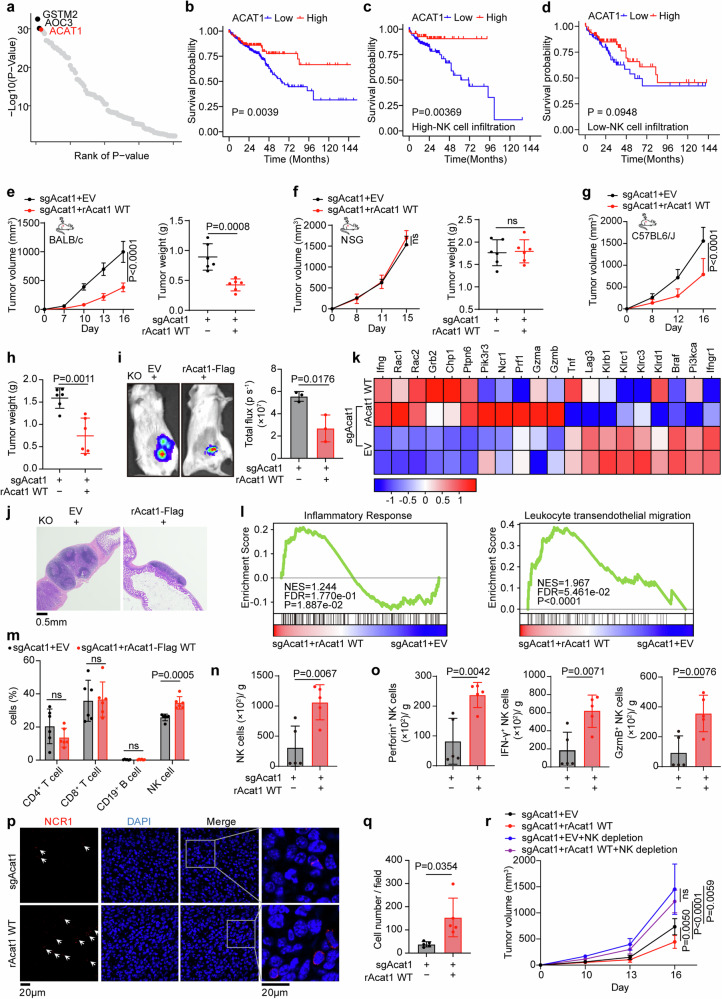
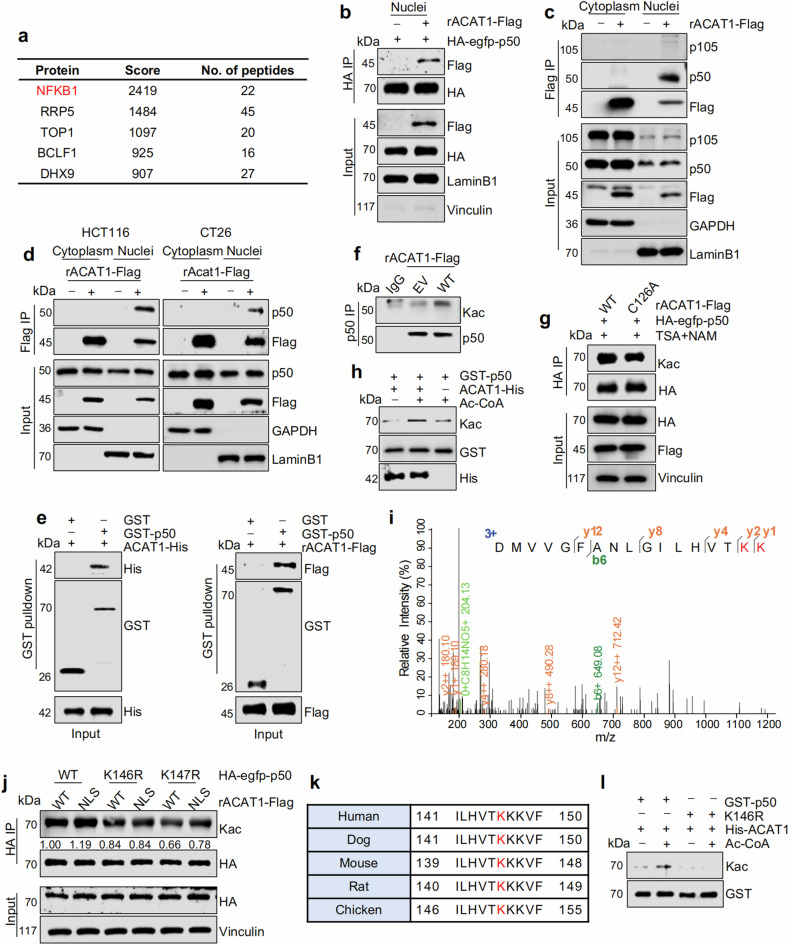
Tumor metabolism often interferes with the immune microenvironment. Although natural killer (NK) cells play pivotal roles in antitumor immunity, the connection between NK cells and tumor metabolism remains unclear. Our systematic analysis of multiomics data and survival data from colorectal cancer (CRC) patients uncovered a novel association between mitochondrial acetyl-CoA acetyltransferase 1 (ACAT1) and NK cell infiltration that influences disease progression. ACAT1, a metabolic enzyme involved in reversible conversion of acetoacetyl-CoA to two molecules of acetyl-CoA, exhibits nuclear protein acetylation activity through its translocation. Under immune stimulation, mitochondrial ACAT1 can be phosphorylated at serine 60 (S60) and enters the nucleus; however, this process is hindered in nutrient-poor tumor microenvironments. Nuclear ACAT1 directly acetylates lysine 146 of p50 (NFKB1), attenuating its DNA binding and transcriptional repression activity and thereby increasing the expression of immune-related factors, which in turn promotes NK cell recruitment and activation to suppress colorectal cancer growth. Furthermore, significant associations are found among low nuclear ACAT1 levels, decreased S60 phosphorylation, and reduced NK cell infiltration, as well as poor prognosis in CRC. Our findings reveal an unexpected function of ACAT1 as a nuclear acetyltransferase and elucidate its role in NK cell-dependent antitumor immunity through p50 acetylation.
肿瘤代谢常常干扰免疫微环境。尽管自然杀伤(NK)细胞在抗肿瘤免疫中发挥关键作用,但NK细胞与肿瘤代谢之间的联系仍不清楚。我们对结直肠癌(CRC)患者的多组学数据和生存数据进行的系统分析揭示了线粒体乙酰辅酶A乙酰转移酶1(ACAT1)与影响疾病进展的NK细胞浸润之间的新关联。ACAT1是一种参与将乙酰乙酰辅酶A可逆转化为两分子乙酰辅酶A的代谢酶,通过其易位表现出核蛋白乙酰化活性。在免疫刺激下,线粒体ACAT1可在丝氨酸60(S60)处磷酸化并进入细胞核;然而,在营养匮乏的肿瘤微环境中,这一过程会受到阻碍。核ACAT1直接使p50(NFKB1)的赖氨酸146乙酰化,减弱其DNA结合和转录抑制活性,从而增加免疫相关因子的表达,进而促进NK细胞募集和激活以抑制结直肠癌生长。此外,在CRC中发现核ACAT1水平低、S60磷酸化降低、NK细胞浸润减少以及预后不良之间存在显著关联。我们的研究结果揭示了ACAT1作为核乙酰转移酶的意外功能,并阐明了其通过p50乙酰化在NK细胞依赖性抗肿瘤免疫中的作用。