
积极关怀:犬类辅助干预对重症监护病房患者及其家属焦虑情绪的影响:一项单中心、单臂研究。
Pawsitive Care: Canine-Assisted Intervention for Anxiety in ICU Patients and Family Members: A Single-Center, Single-Arm Study.
作者信息
Cook Kathleen, Robertson Clare, Gudivada Kiran, Mitchell Imogen, Nourse Mary, Hosey Megan M, Paterson Catherine, Rai Sumeet
机构信息
Advance Practice Nurse, Canberra Health Services, Canberra, ACT, Australia.
Registered Nurse, Canberra Hospital, Canberra Health Services, Canberra, ACT, Australia.
出版信息
Crit Care Explor. 2025 Apr 28;7(5):e1258. doi: 10.1097/CCE.0000000000001258. eCollection 2025 May 1.
OBJECTIVES
To investigate the effect of canine-assisted intervention (CAI) on anxiety symptoms among intensive care patients and their family members.
DESIGN
Prospective, single-center, single-arm, nonrandomized, within-subject study design.
SETTING
Tertiary hospital ICU.
PATIENTS/SUBJECTS: Adult (≥ 16 yr) ICU patients and their family members.
INTERVENTIONS
Individual CAI (therapy dog) sessions, lasting at least 15 minutes.
MEASUREMENTS AND MAIN RESULTS
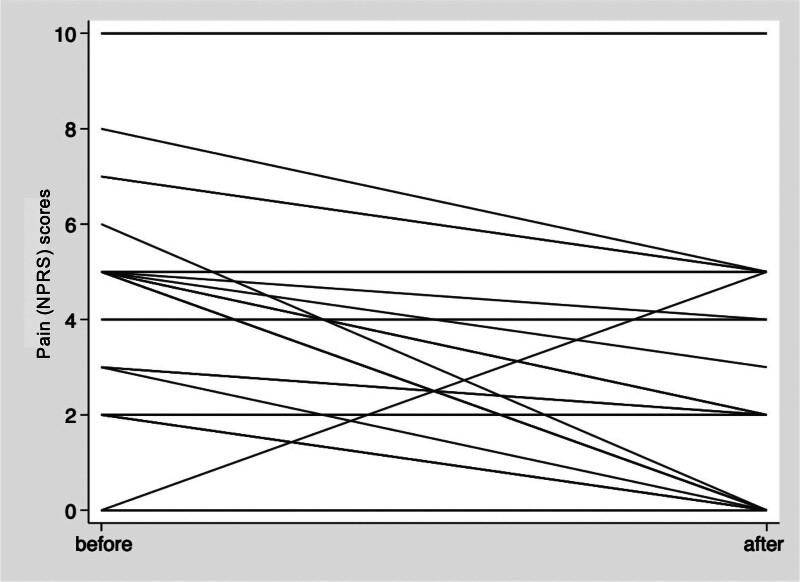
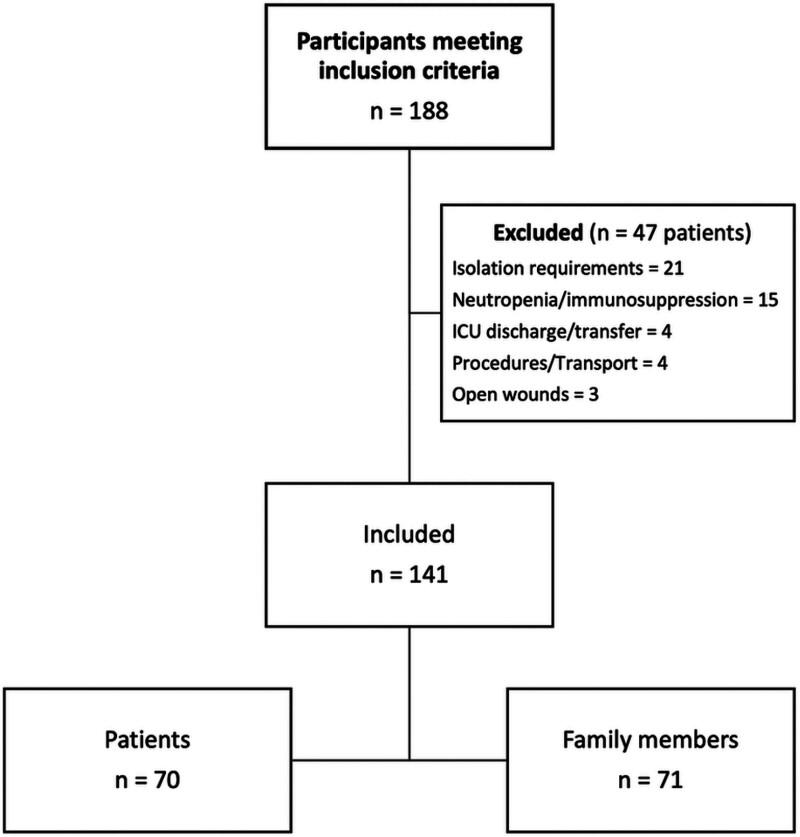
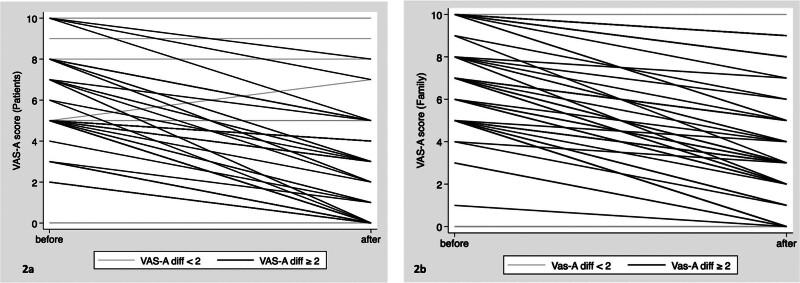
Primary outcome: change in Visual Analog Scale for Anxiety (VAS-A) among patients and family members; secondary outcomes (patient cohort): change in: 1) Numeric Pain Rating Scale, 2) physiologic vital signs, and 3) intervention-related adverse events. A total of 141 participants (70 patients and 71 family members) were recruited. The median (interquartile range [IQR]) age (yr) was 63 (49-71) for patients, and 51 (36-61) for family members. There was a significant reduction in anxiety scores after the intervention, with median (IQR) VAS-A scores changing from 5 (1-7) to 0 (0-4 [p < 0.001]) for the patient cohort and from 6 (5-8) to 3 (1-5 [p < 0.001]) for the family cohort. Majority of patients (56/70 [62%]) and family members (63/68 [93%]) demonstrated a greater than or equal to 2-point reduction in VAS-A scores. In terms of pain, median (IQR) scores among the patient cohort were also lower post-intervention (0 [0-5] vs. 0 [0-2]; p < 0.001). There were no statistically significant changes in physiologic vital signs (heart rate, respiratory rate, and systolic blood pressure) among patients following the intervention. Additionally, there were no reported dog bites, scratches, or other adverse events during CAI.
CONCLUSIONS
CAI offers immediate therapeutic benefits in reducing anxiety symptoms in ICU patients and their family members with no observed adverse effects. It may also have a potential role as an adjunctive therapy for pain management in ICU patients. Further research should explore the influence on longer-term psychologic outcomes for ICU patients and family members.
目的
探讨犬辅助干预(CAI)对重症监护患者及其家属焦虑症状的影响。
设计
前瞻性、单中心、单臂、非随机、受试者内研究设计。
设置
三级医院重症监护病房。
患者/受试者:成年(≥16岁)重症监护病房患者及其家属。
干预措施
个体化CAI(治疗犬)疗程,持续至少15分钟。
测量指标及主要结果
主要结局:患者及家属焦虑视觉模拟量表(VAS-A)评分的变化;次要结局(患者队列):以下指标的变化:1)数字疼痛评分量表,2)生理生命体征,3)与干预相关的不良事件。共招募了141名参与者(70名患者和71名家属)。患者的年龄中位数(四分位间距[IQR])为63岁(49 - 71岁),家属为51岁(36 - 61岁)。干预后焦虑评分显著降低,患者队列的VAS-A评分中位数(IQR)从5(1 - 7)降至0(0 - 4 [p < 0.001]),家属队列从6(5 - 8)降至3(1 - 5 [p < 0.001])。大多数患者(56/70 [62%])和家属(63/68 [93%])的VAS-A评分降低了2分及以上。在疼痛方面,患者队列干预后的评分中位数(IQR)也较低(0 [0 - 5] 对比 0 [0 - 2];p < 0.001)。干预后患者的生理生命体征(心率、呼吸频率和收缩压)无统计学显著变化。此外,在CAI期间未报告有犬咬伤、抓伤或其他不良事件。
结论
CAI在减轻重症监护病房患者及其家属的焦虑症状方面具有即时治疗益处,且未观察到不良反应。它在重症监护病房患者疼痛管理中作为辅助治疗可能也具有潜在作用。进一步的研究应探讨其对重症监护病房患者及其家属长期心理结局的影响。
 Zotero 插件