Yordanova Ivet A, Lander Angelika, Wahlbrink Annette, Towner Jonathan S, Albariño César G, Ang Lay Teng, Prescott Joseph B
Center for Biological Threats and Special Pathogens, Robert Koch Institute, 13353, Berlin, Germany.
Viral Special Pathogens Branch, Centers for Disease Control and Prevention, Atlanta, GA, 30329, USA.
Npj Viruses. 2024 May 2;2(1):19. doi: 10.1038/s44298-024-00027-3.
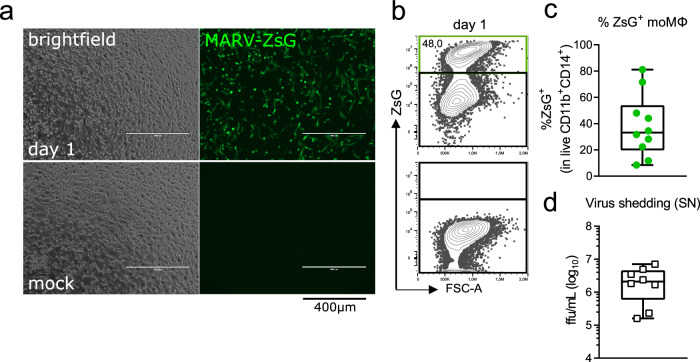
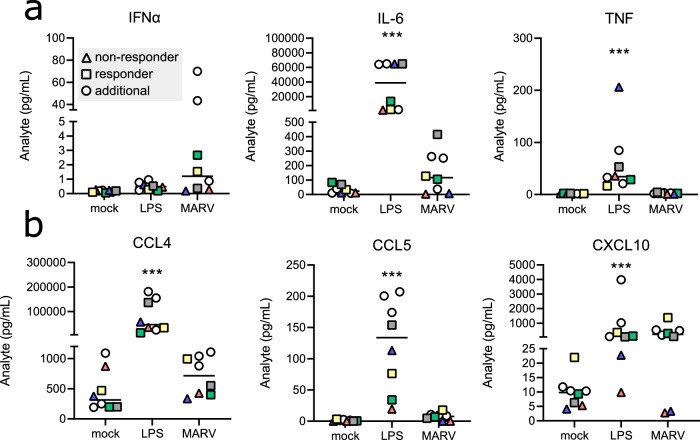
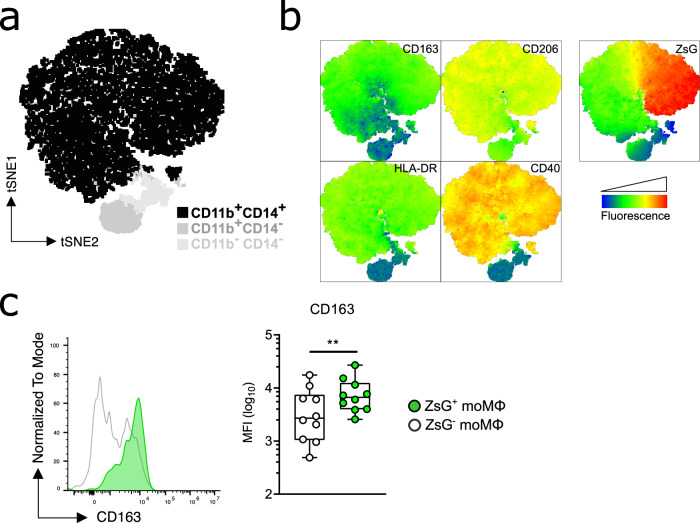
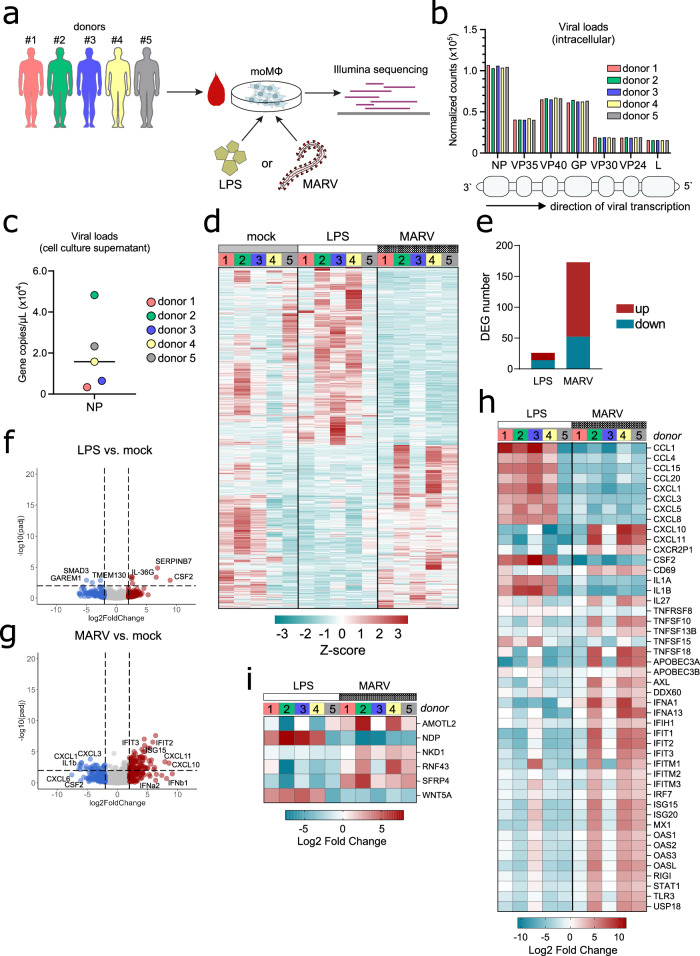
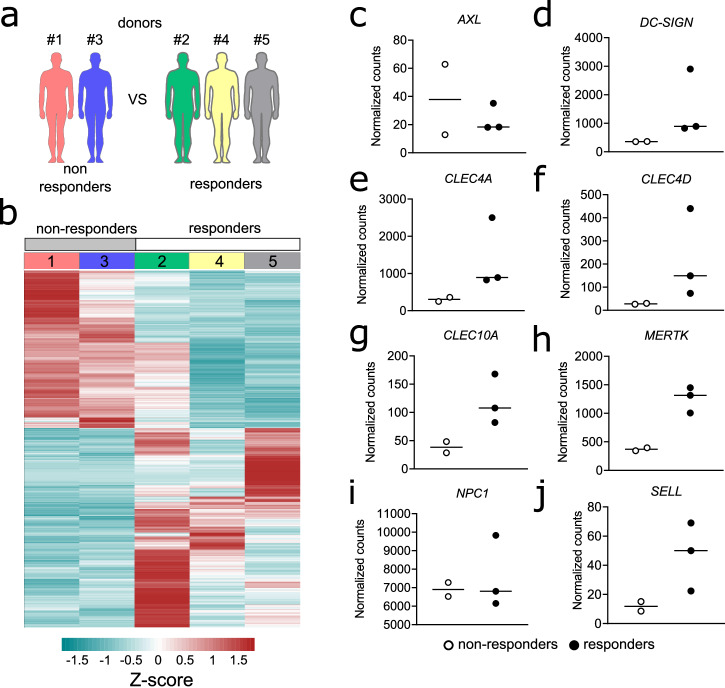
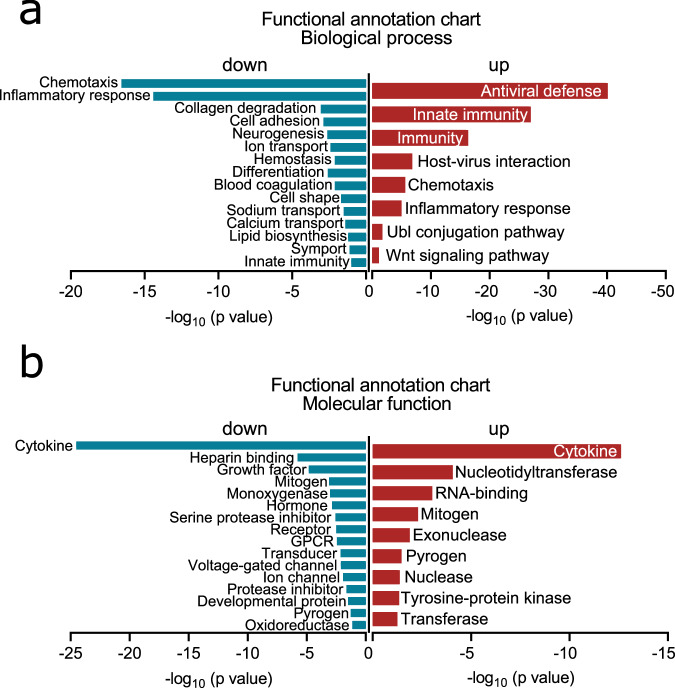
Marburg virus (MARV) is a highly pathogenic filovirus and a causative agent of sporadic zoonotic viral hemorrhagic fever outbreaks with high case fatality rates. In humans, filoviruses like MARV and Zaire Ebola virus (EBOV) target, among others, innate immune cells like dendritic cells and macrophages (MΦs). Filovirus-infected dendritic cells display impaired maturation and antigen presentation, while MΦs become hyper-activated and secrete proinflammatory cytokines and chemokines. Our current understanding of human macrophage responses to MARV remains limited. Here, we used human monocyte-derived macrophages (moMΦs) to address how their phenotype, transcriptional profile, and protein expression change upon an in vitro infection with a bat isolate of MARV. Confirming its tropism for macrophages, we show that MARV induces notable shifts in their transcription distinct from responses induced by lipopolysaccharide (LPS), marked by upregulated gene expression of several chemokines, type I interferons, and IFN-stimulated genes. MARV infection also elicited pronounced inter-individually different transcriptional programs in moMΦs, the induction of Wnt signaling-associated genes, and the downregulation of multiple biological processes and molecular pathways.
马尔堡病毒(MARV)是一种高致病性丝状病毒,是散发性人畜共患病毒性出血热疫情的病原体,病死率很高。在人类中,像马尔堡病毒和扎伊尔埃博拉病毒(EBOV)这样的丝状病毒会攻击树突状细胞和巨噬细胞(MΦs)等先天免疫细胞。感染丝状病毒的树突状细胞表现出成熟和抗原呈递受损,而MΦs则会过度激活并分泌促炎细胞因子和趋化因子。我们目前对人类巨噬细胞对马尔堡病毒反应的了解仍然有限。在这里,我们使用人单核细胞衍生的巨噬细胞(moMΦs)来研究它们在体外感染马尔堡病毒蝙蝠分离株后其表型、转录谱和蛋白质表达如何变化。我们证实了马尔堡病毒对巨噬细胞的嗜性,表明马尔堡病毒会在其转录过程中引发显著变化,这些变化不同于脂多糖(LPS)诱导的反应,其特征是几种趋化因子、I型干扰素和干扰素刺激基因的基因表达上调。马尔堡病毒感染还在moMΦs中引发了明显的个体间不同的转录程序、Wnt信号相关基因的诱导以及多个生物学过程和分子途径的下调。