De Jonghe Joachim, Kim Hyung Chul, Adedeji Ayanfeoluwa, Leitão Elsa, Dawes Ruebena, Chen Yuyang, Blakes Alexander Jm, Simons Cas, Rius Rocio, Alvi Javeria R, Amblard Florence, Austin-Tse Christina, Baer Sarah, Balton Elsa V, Blanc Pierre, Calame Daniel G, Coutton Charles, Cunningham Chloe A, Dargie Nitsuh, Dipple Katrina M, Du Haowei, El Chehadeh Salima, Glass Ian, Gleeson Joseph G, Grunewald Olivier, Gueguen Paul, Harbuz Radu, Jacquemont Marie-Line, Leventer Richard J, Marijon Pierre, Messaoud Olfa, Sultan Tipu, Thauvin Christel, Vincent-Delorme Catherine, Gulec Elif Yilmaz, Thevenon Julien, Mendez Rodrigo, MacArthur Daniel G, Depienne Christel, Nava Caroline, Whiffin Nicola, Findlay Gregory M
The Genome Function Laboratory, The Francis Crick Institute, London, UK.
Big Data Institute, University of Oxford, Oxford, UK.
medRxiv. 2025 Apr 10:2025.04.08.25325442. doi: 10.1101/2025.04.08.25325442.
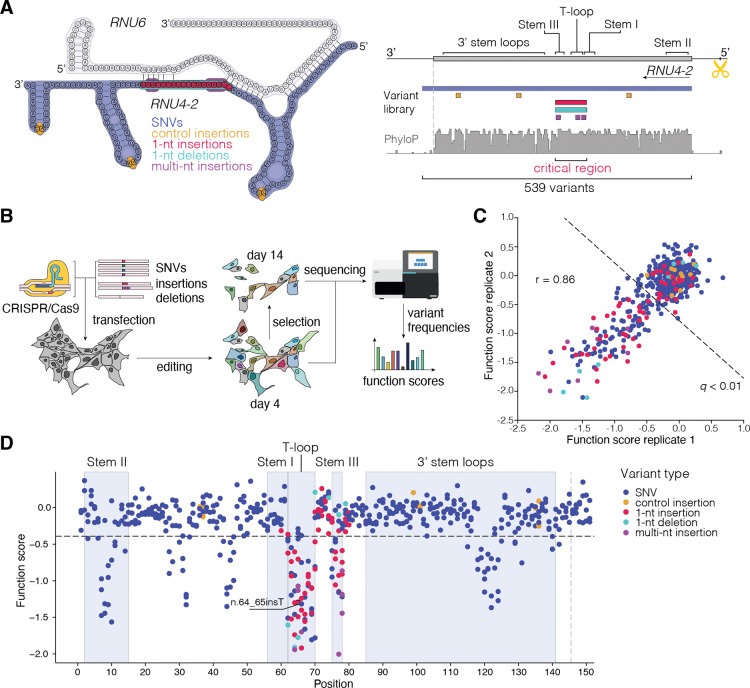
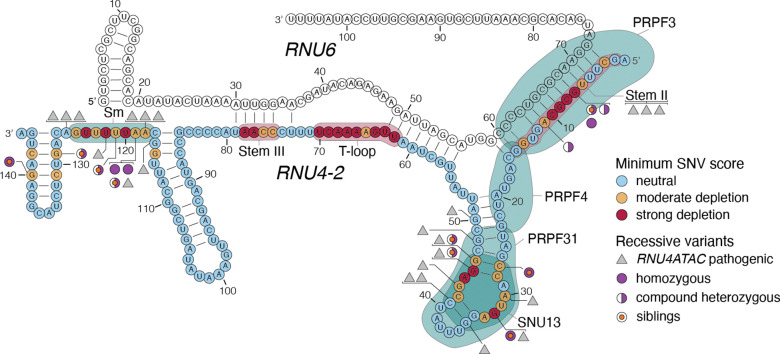
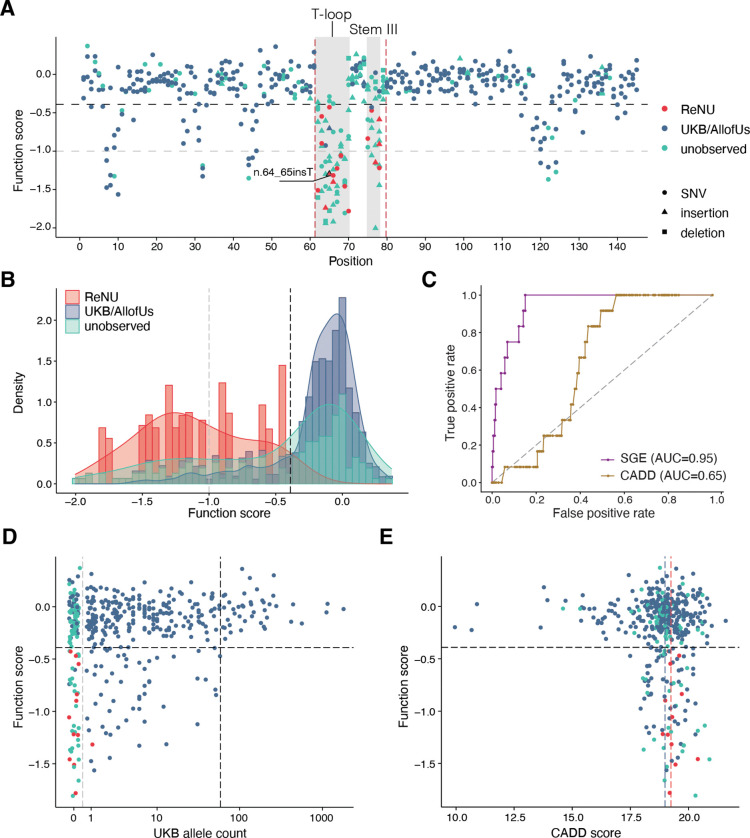
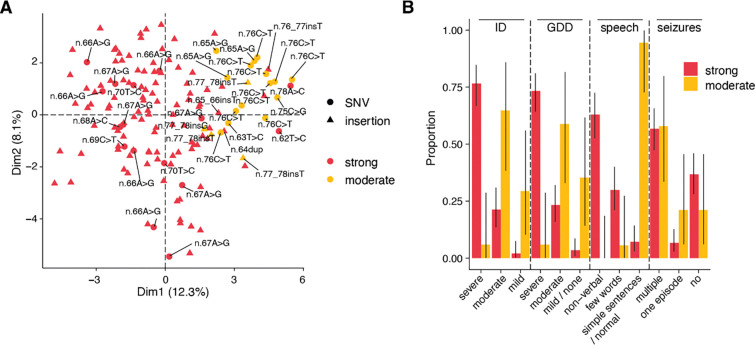
Recently, variants in an 18 nucleotide region in the centre of were shown to cause ReNU syndrome, a syndromic neurodevelopmental disorder (NDD) that is predicted to affect tens of thousands of individuals worldwide. is a non-protein-coding gene that is transcribed into the U4 small nuclear RNA (snRNA) component of the major spliceosome. ReNU syndrome variants disrupt spliceosome function and alter 5' splice site selection. Here, we performed saturation genome editing (SGE) of to identify the functional and clinical impact of variants across the entire gene. The resulting SGE function scores, derived from variants' effects on cell fitness, discriminate ReNU syndrome variants from those observed in the population and dramatically outperform variant effect prediction. Using these data, we redefine the ReNU syndrome critical region at single nucleotide resolution, resolve variant pathogenicity for variants of uncertain significance, and show that SGE function scores delineate variants by phenotypic severity. Further, we identify variants impacting function in regions of that are critical for interactions with other spliceosome components. We show that these variants cause a novel recessive NDD that is clinically distinct from ReNU syndrome. Together, this work defines the landscape of variant function across , providing critical insights for both diagnosis and therapeutic development.
最近,位于基因中心一个18核苷酸区域的变异被证明会导致ReNU综合征,这是一种综合征性神经发育障碍(NDD),预计全球数万人会受其影响。该基因是一个非蛋白质编码基因,转录为主要剪接体的U4小核RNA(snRNA)成分。ReNU综合征变异会破坏剪接体功能并改变5'剪接位点选择。在此,我们对该基因进行了饱和基因组编辑(SGE),以确定整个基因变异的功能和临床影响。从变异对细胞适应性的影响得出的SGE功能评分,可将ReNU综合征变异与人群中观察到的变异区分开来,并且显著优于变异效应预测。利用这些数据,我们在单核苷酸分辨率下重新定义了ReNU综合征关键区域,解决了意义不明确变异的致病性问题,并表明SGE功能评分可根据表型严重程度划分变异。此外,我们在该基因中对与其他剪接体成分相互作用至关重要的区域鉴定出影响功能的变异。我们表明这些变异会导致一种临床上与ReNU综合征不同的新型隐性NDD。总之,这项工作定义了该基因变异功能的全貌,为诊断和治疗开发提供了关键见解。