Chenoweth David J, Palmer Benjamin A, Norris Andrew W, Tansey Michael J, Pinnaro Catherina T
Stead Family Department of Pediatrics, University of Iowa, 200 Hawkins Drive, Iowa City 52242, Iowa, USA.
Fraternal Order of Eagles Diabetes Research Center, Iowa City 52242, Iowa, USA.
Pediatr Diabetes. 2024 Oct 24;2024:5218915. doi: 10.1155/2024/5218915. eCollection 2024.
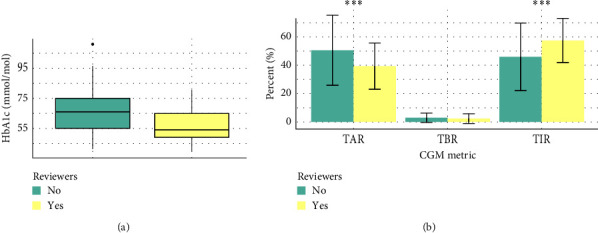
Regular retrospective review of glucose data is an important aspect of type 1 diabetes (T1D) management. Continuous glucose monitors (CGMs) facilitate retrospective review by capturing glucose data and generating standardized reports. However, only a minority of adults with T1D retrospectively review their glucose data, and adolescents are understudied. The objectives of this study were to determine the prevalence of self-reported retrospective glucose data review by adolescents with T1D, determine factors associated with self-reported retrospective glucose data review, and assess whether self-reported retrospective glucose data review was associated with improved glycemia. We conducted a cross-sectional survey of adolescents aged 12-18 years with T1D in conjunction with review of the associated electronic medical record, which included age, sex, date of diagnosis, clinic hemoglobin A1c (HbA1c), type of insurance, and CGM data. The survey included the Hypoglycemia Fear Survey (HFS) and questions regarding habits and attitudes associated with retrospective review. 112 out of 218 eligible individuals completed the survey (51%). Fifty-three percent of adolescents who completed the survey reported that they had engaged in retrospective glucose data review. Of these, 88% of individuals reported that they reviewed data regularly. Age, sex, race, type of insurance, and CGM use were not associated with retrospective review status. Self-report of retrospective glucose data review was associated with improved glycemia as measured by HbA1c and time in range (TIR) compared to adolescents who indicated they do not review glucose data (=0.006 and =0.04, respectively). There was no difference in HFS scores between reviewers and nonreviewers including the behavioral subscale, worry subscale, and total score. Self-report of retrospective glucose data review was associated with improved glycemia as measured by HbA1c and TIR. Adolescent-initiated glucose data self-review does not appear to be driven by fear of hypoglycemia (FoH).
定期回顾葡萄糖数据是1型糖尿病(T1D)管理的一个重要方面。持续葡萄糖监测仪(CGM)通过记录葡萄糖数据并生成标准化报告,便于进行回顾性分析。然而,只有少数成年T1D患者会回顾他们的葡萄糖数据,而青少年群体在此方面的研究较少。本研究的目的是确定T1D青少年自我报告回顾葡萄糖数据的比例,确定与自我报告回顾葡萄糖数据相关的因素,并评估自我报告回顾葡萄糖数据是否与血糖改善相关。我们对12至18岁的T1D青少年进行了一项横断面调查,并结合相关电子病历进行分析,电子病历包括年龄、性别、诊断日期、诊所血红蛋白A1c(HbA1c)、保险类型和CGM数据。该调查包括低血糖恐惧调查(HFS)以及与回顾性分析相关的习惯和态度问题。218名符合条件的个体中有112人完成了调查(51%)。完成调查的青少年中,53%报告他们进行过回顾性葡萄糖数据分析。其中,88%的个体报告他们定期回顾数据。年龄、性别、种族、保险类型和CGM使用情况与回顾状态无关。与表示不回顾葡萄糖数据的青少年相比,自我报告回顾葡萄糖数据与通过HbA1c和血糖达标时间(TIR)衡量的血糖改善相关(分别为P=0.006和P=0.04)。回顾者和非回顾者在HFS评分上没有差异,包括行为子量表、担忧子量表和总分。自我报告回顾葡萄糖数据与通过HbA1c和TIR衡量的血糖改善相关。青少年发起的葡萄糖数据自我回顾似乎不是由低血糖恐惧(FoH)驱动的。