Andriolo Luca, Veronesi Francesca, Zanasi Lorenzo, Costa Viviana, Franceschini Marco, Miceli Marco, Spinnato Paolo, Zaffagnini Stefano, Giavaresi Gianluca, Filardo Giuseppe
Clinica Ortopedica e Traumatologica II, IRCCS Istituto Ortopedico Rizzoli, Bologna, Italy.
Surgical Sciences and Technologies, IRCCS Istituto Ortopedico Rizzoli, Bologna, Italy
BMJ Open. 2025 Apr 30;15(4):e092379. doi: 10.1136/bmjopen-2024-092379.
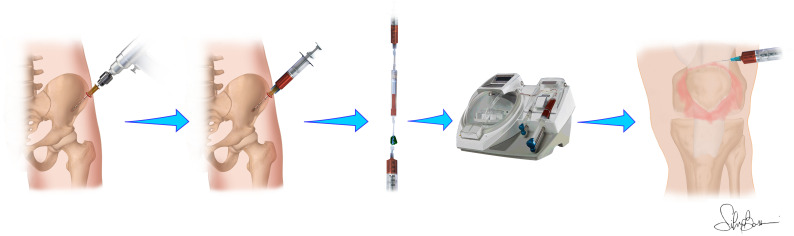
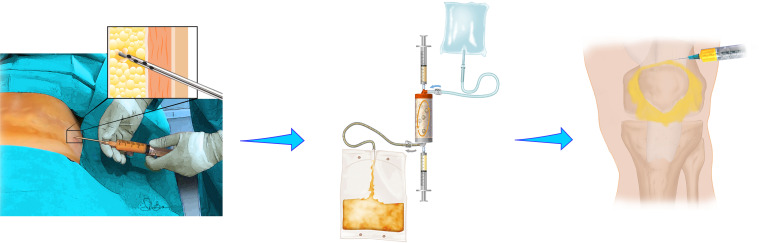
Intra-articular injections of mesenchymal stromal cells concentrates showed promising results in the treatment of knee osteoarthritis (OA). Among these, bone marrow aspirate concentrate (BMAC) has been widely adopted in clinical practice. More recently, microfragmented adipose tissue (MFAT) has been proposed as a more suitable solution. However, there is still no high-level evidence demonstrating the superiority of MFAT to BMAC. The aim of this randomised controlled trial is to compare the safety and clinical outcomes of a single intra-articular injection of BMAC versus a single intra-articular injection of MFAT in patients with knee OA.
204 patients aged 40-75 years and affected by knee OA are randomised to receive a single injection of BMAC or MFAT in a 1:1 ratio. The primary outcome of the study is the Western Ontario and McMaster University OA index (WOMAC) pain score at 6 months. The secondary outcomes of the study are the WOMAC pain score at 2 months and 12 months and the WOMAC subscales, the total WOMAC score, the International Knee Documentation Committee subjective and objective scores, the Knee Injury and OA Outcome score, the visual analogue scale (VAS) for pain evaluation, the EuroQol VAS and the Tegner score at 2 months, 6 months and 12 months. Moreover, the study aims at demonstrating whether these products have disease-modifying effects: radiographs and magnetic resonance evaluations are performed at baseline and at 12 months of follow-up, while systemic OA biomarkers are evaluated at baseline and after 2 months, 6 months and 12 months. As a tertiary outcome, this study aims at identifying the factors that influence the clinical response, including baseline patient clinical characteristics, biological features of the OA joint, as well as anabolic and anti-inflammatory properties of the injected products.
The study protocol has been approved by Emilia Romagna's Ethics Committee Comitato Etico Area Vasta Emilia Centro (CE-AVEC), Bologna, Italy (protocol number: 150/2023/Sper/IOR). Written informed consent is obtained from all participants. The findings of this study will be disseminated through peer-reviewed publications and conference presentations.
March 2023.
NCT06040957.
关节内注射间充质基质细胞浓缩物在膝关节骨关节炎(OA)的治疗中显示出了有前景的结果。其中,骨髓抽吸浓缩物(BMAC)已在临床实践中广泛应用。最近,微片段化脂肪组织(MFAT)被认为是一种更合适的解决方案。然而,目前仍缺乏高级别证据证明MFAT优于BMAC。本随机对照试验的目的是比较单次关节内注射BMAC与单次关节内注射MFAT治疗膝关节OA患者的安全性和临床结局。
204例年龄在40 - 75岁且患有膝关节OA的患者被随机分为两组,按1:1的比例分别接受单次BMAC注射或MFAT注射。本研究的主要结局指标是6个月时的西安大略和麦克马斯特大学骨关节炎指数(WOMAC)疼痛评分。次要结局指标包括2个月、12个月时的WOMAC疼痛评分以及WOMAC各子量表、WOMAC总分、国际膝关节文献委员会主观和客观评分、膝关节损伤和骨关节炎结局评分、疼痛评估的视觉模拟量表(VAS)、欧洲五维度健康量表视觉模拟量表(EuroQol VAS)以及2个月、6个月和12个月时的Tegner评分。此外,本研究旨在证明这些产品是否具有疾病修饰作用:在基线和随访12个月时进行X线片和磁共振评估,同时在基线以及2个月、6个月和12个月后评估全身OA生物标志物。作为三级结局,本研究旨在确定影响临床反应的因素,包括患者基线临床特征、OA关节的生物学特征以及注射产品的合成代谢和抗炎特性。
本研究方案已获得意大利博洛尼亚艾米利亚 - 罗马涅大区伦理委员会Comitato Etico Area Vasta Emilia Centro(CE - AVEC)的批准(方案编号:150/2023/Sper/IOR)。所有参与者均获得书面知情同意。本研究结果将通过同行评审出版物和会议报告进行传播。
2023年3月。
NCT06040957。