Yang Luting, Hu Chunqing, Chen Xiaowen, Sun Mengru, Zhang Jie, Feng Zhe, Cui Tingting, Zhu Ruyi, Zhang Xin, Xiao Yanxin, Gong Ye, Yang Yang, Zhang Qian, Zhang Yaling, Yan Yaping
Key Laboratory of the Ministry of Education for Medicinal Resources and Natural Pharmaceutical Chemistry, National Engineering Laboratory for Resource Development of Endangered Crude Drugs in Northwest of China, College of Life Sciences, Shaanxi Normal University, Xi'an, 710119, China.
Department of Experimental Surgery, Tangdu Hospital, Air Force Medical University, Xi'an, 710038, China.
J Neuroinflammation. 2025 Apr 30;22(1):126. doi: 10.1186/s12974-025-03453-z.
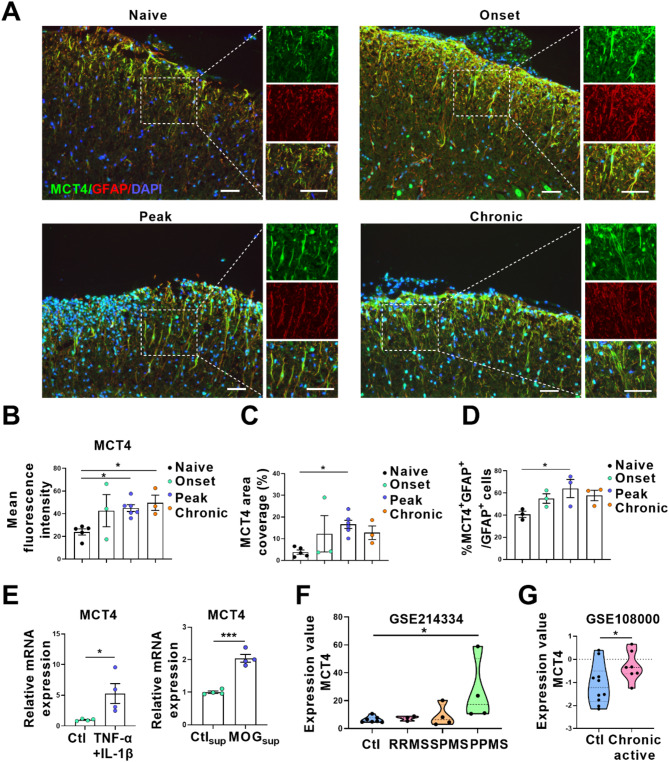
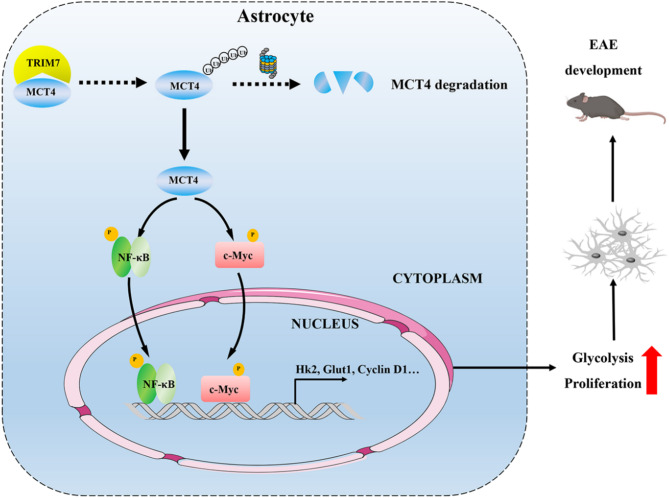
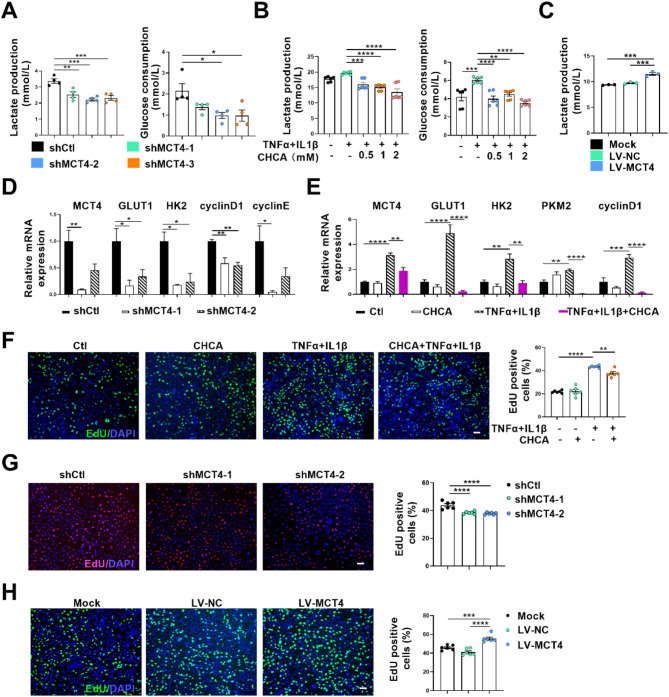
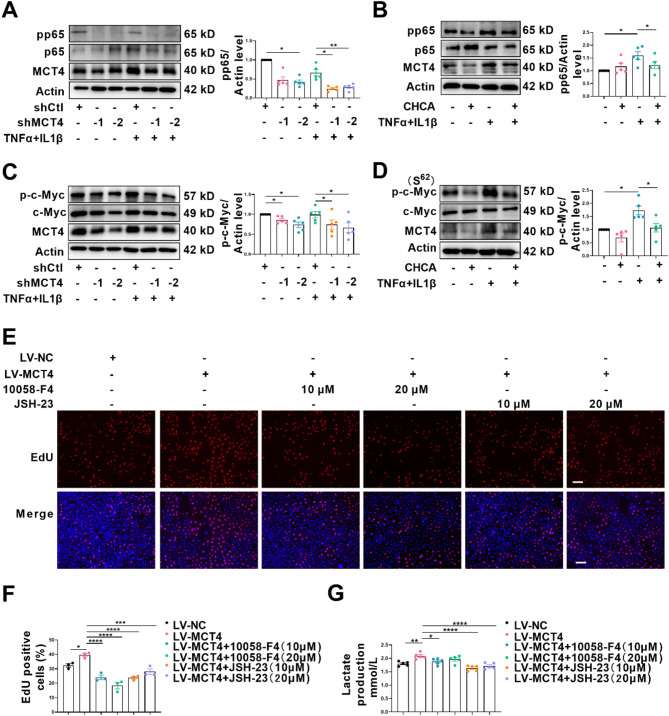
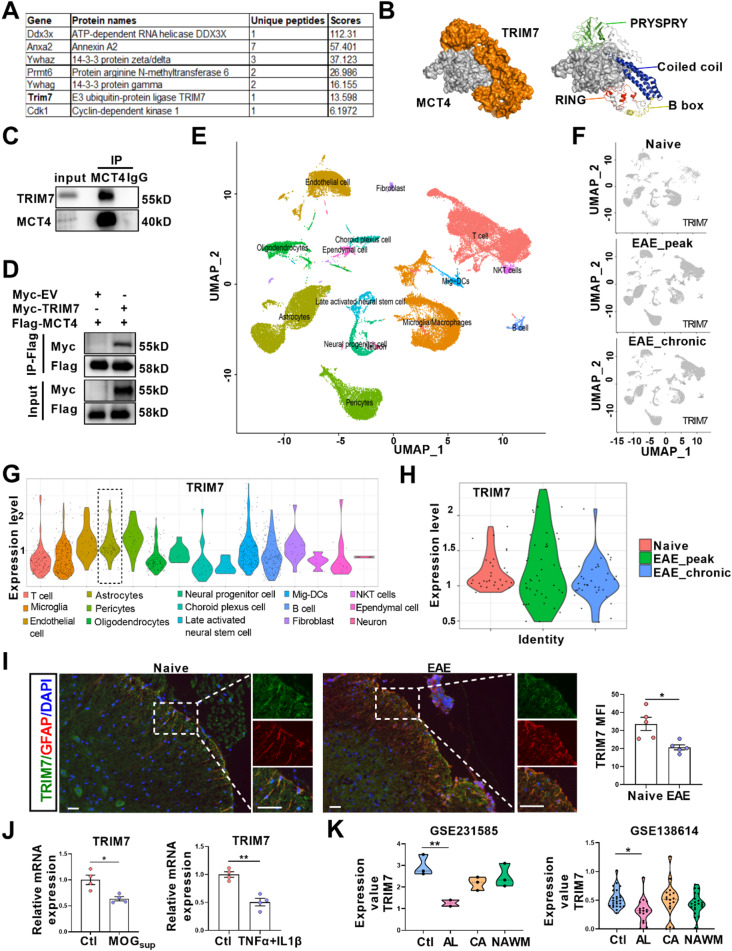
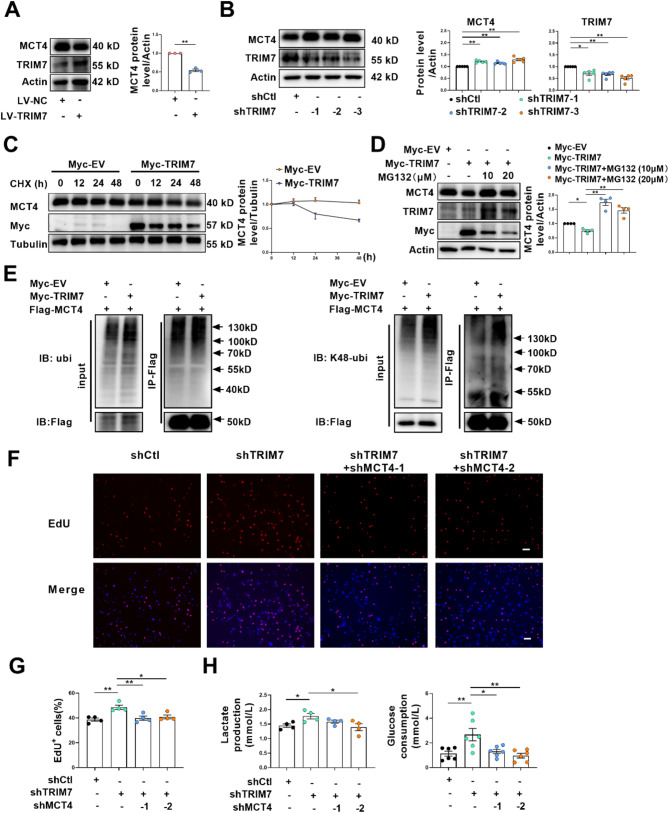
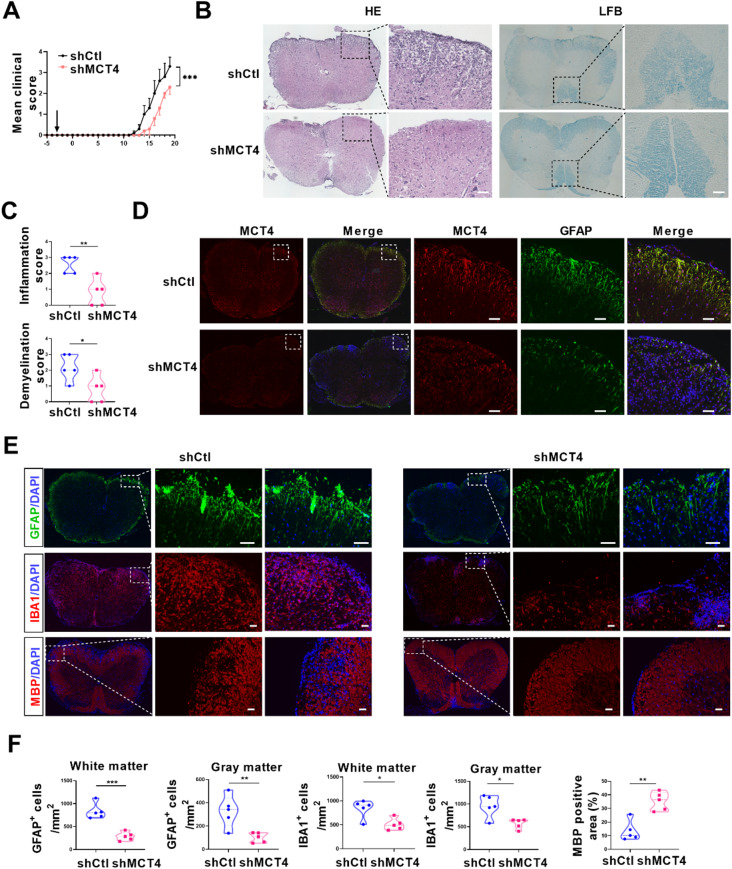
One of the histopathological hallmarks of neuroinflammatory diseases such as multiple sclerosis (MS) is the emergence of astrocyte reactivity. Accumulating evidence suggests that excessive glycolysis may lead to astrocyte reactivity and contribute to neuroinflammatory responses. However, the intricate mechanisms underlying astrocyte metabolic reprogramming towards glycolysis remain largely unknown. Here, we conducted in vitro experiments using primary astrocytes and in vivo studies in an experimental autoimmune encephalomyelitis (EAE) mouse model of multiple sclerosis (MS). We observed increased astrocytic expression of MCT4, a key glycolytic regulator, in EAE mice. MCT4 enhanced astrocyte reactivity through promoting glycolysis and proliferation, mediated primarily by activation of the NF-κB and c-Myc signaling pathways. Notably, we report a novel regulatory mechanism in which the E3 ubiquitin ligase TRIM7 regulates MCT4 levels via ubiquitination. In mice, blockade of astrocyte MCT4 expression by intracerebroventricular injection of lentivirus alleviated disease severity of EAE mice. The results suggest that targeting glycolysis, specifically through the inhibition of MCT4 expression, might be effective in reducing astrocyte reactivity, neuroinflammation and demyelination occurring in MS and relating neuroinflammatory diseases.
诸如多发性硬化症(MS)等神经炎症性疾病的组织病理学特征之一是星形胶质细胞反应性的出现。越来越多的证据表明,过度糖酵解可能导致星形胶质细胞反应性并促进神经炎症反应。然而,星形胶质细胞向糖酵解代谢重编程的复杂机制在很大程度上仍然未知。在这里,我们使用原代星形胶质细胞进行了体外实验,并在多发性硬化症(MS)的实验性自身免疫性脑脊髓炎(EAE)小鼠模型中进行了体内研究。我们观察到EAE小鼠中关键糖酵解调节因子MCT4的星形胶质细胞表达增加。MCT4主要通过激活NF-κB和c-Myc信号通路,促进糖酵解和增殖,从而增强星形胶质细胞反应性。值得注意的是,我们报道了一种新的调节机制,即E3泛素连接酶TRIM7通过泛素化调节MCT4水平。在小鼠中,通过脑室内注射慢病毒阻断星形胶质细胞MCT4表达可减轻EAE小鼠的疾病严重程度。结果表明,靶向糖酵解,特别是通过抑制MCT4表达,可能有效降低MS及相关神经炎症性疾病中发生的星形胶质细胞反应性、神经炎症和脱髓鞘。