Joyce Laura R, Gutenstein Marc, Gilbert Mark, Weaver James, Pearson Scott, Pickering John W, Than Martin
Department of Surgery and Critical Care, University of Otago, Christchurch, New Zealand.
Emergency Department, Te Whatu Ora Waitaha Canterbury, Christchurch, New Zealand.
Emerg Med Australas. 2025 Jun;37(3):e70048. doi: 10.1111/1742-6723.70048.
A quantitative and qualitative evaluation of the impact of a peer-to-peer telehealth service called Specialist Telehealth Aotearoa (STAR) on transfers to the ED.
This mixed-methods study reviewed STAR between 31 July 2023 and 31 October 2023. Reasons for presentation and outcomes were analysed. Thematic analysis was used to examine responses to an electronic survey from referrers to the STAR service, exploring the benefits and barriers to engagement with the service.
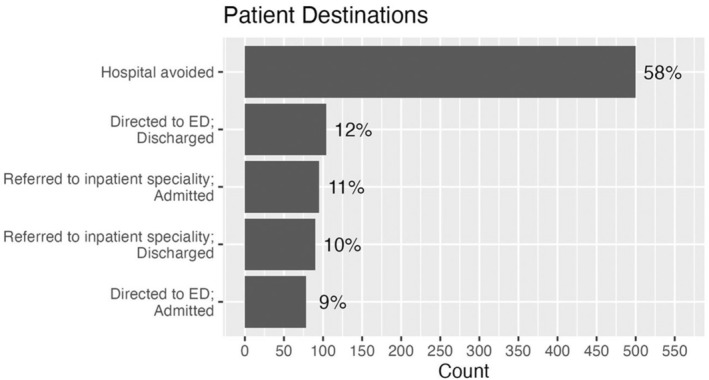
Eight hundred and sixty-seven consultations occurred, with hospital transfer avoided for 500 (58%) patients. Fifty-one patients (10.2%) re-presented to Christchurch Hospital within 7 days with the same/related issue, similar to the overall hospital 7-day re-presentation rate of 9.5%. Survey responses were received from 130 ambulance staff and rural practitioners, with 97% reporting a 'very good' or 'excellent' experience with STAR. Thematic analysis of responses from referrers identified four main benefits: local FACEMs who understand the local context, mutual trust built on pre-existing relationships, empowering pre-hospital and rural clinicians and putting the patient first: providing right care-right place-right time.
STAR prevented unnecessary transfers to ED with a 7-day representation rate comparable to the wider hospital. Referrers reported a number of benefits to the service, as well as identifying potential barriers to engagement. The integration of a specialist emergency care telehealth service into the health system could alleviate pressure on EDs in Aotearoa New Zealand.
对一项名为“新西兰专家远程医疗”(STAR)的点对点远程医疗服务对急诊转诊的影响进行定量和定性评估。
这项混合方法研究回顾了2023年7月31日至2023年10月31日期间的STAR服务。分析了就诊原因和结果。采用主题分析法来研究STAR服务转诊者对电子调查问卷的回复,探讨参与该服务的益处和障碍。
共进行了867次会诊,500名(58%)患者避免了医院转诊。51名患者(10.2%)在7天内因相同/相关问题再次前往克赖斯特彻奇医院就诊,这与医院总体7天再次就诊率9.5%相似。收到了130名救护人员和乡村医生的调查回复,97%的人报告称对STAR服务有“非常好”或“优秀”的体验。对转诊者回复的主题分析确定了四个主要益处:了解当地情况的本地急救医学专家、基于既有关系建立的相互信任、增强院前和乡村临床医生的能力以及将患者放在首位:在正确的时间、正确的地点提供正确的护理。
STAR避免了不必要的急诊转诊,其7天再次就诊率与更广泛的医院相当。转诊者报告了该服务的诸多益处,同时也指出了参与的潜在障碍。将专科紧急护理远程医疗服务整合到医疗系统中可以减轻新西兰急诊部门的压力。