Song Zixuan, Lin Hong, Shao Mengyuan, Wang Xiaoxue, Chen Xueting, Zhou Yangzi, Zhang Dandan
Department of Obstetrics and Gynecology, Shengjing Hospital of China Medical University, Shenyang, China.
Department of Obstetrics and Gynecology, Liaoning Maternal and Child Health Hospital, Shenyang, China.
BMC Pregnancy Childbirth. 2025 May 3;25(1):529. doi: 10.1186/s12884-025-07633-w.
This study aimed to develop a machine learning (ML) model integrated with SHapley Additive exPlanations (SHAP) analysis to predict postpartum hemorrhage (PPH) following vaginal deliveries, offering a potential tool for personalized risk assessment and prevention in clinical settings.
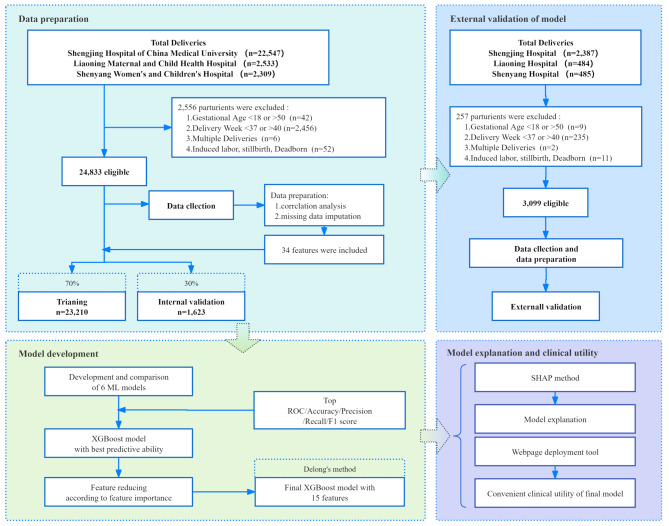
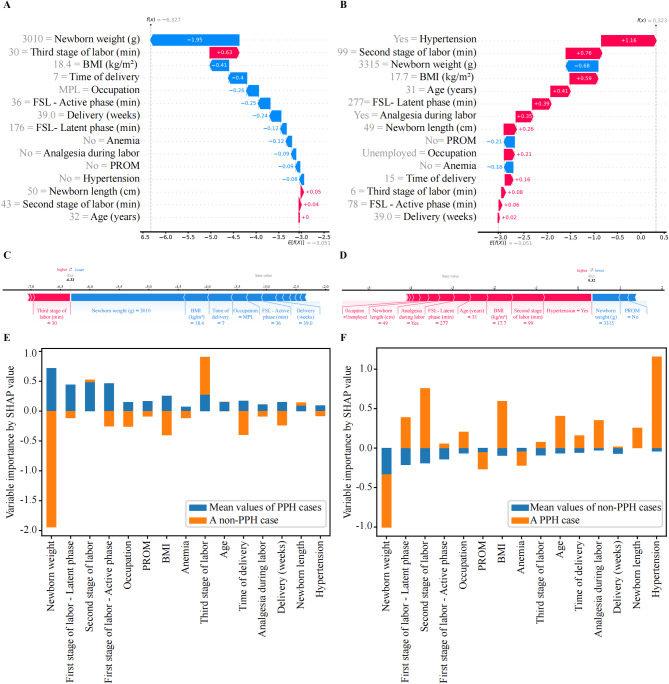
We conducted a retrospective multicenter cohort study in Northeast China, including women who had vaginal deliveries at three tertiary hospitals from September 2018 to December 2023. Data were extracted from electronic medical records. The dataset was split into a training set (70%) and an internal validation set (30%) to prevent overfitting. External validation was performed on a separate dataset. Several evaluation metrics, including the area under the receiver operating characteristic curve (AUC), were used to compare prediction performance. Features were ranked using SHAP, and the final model was explained.
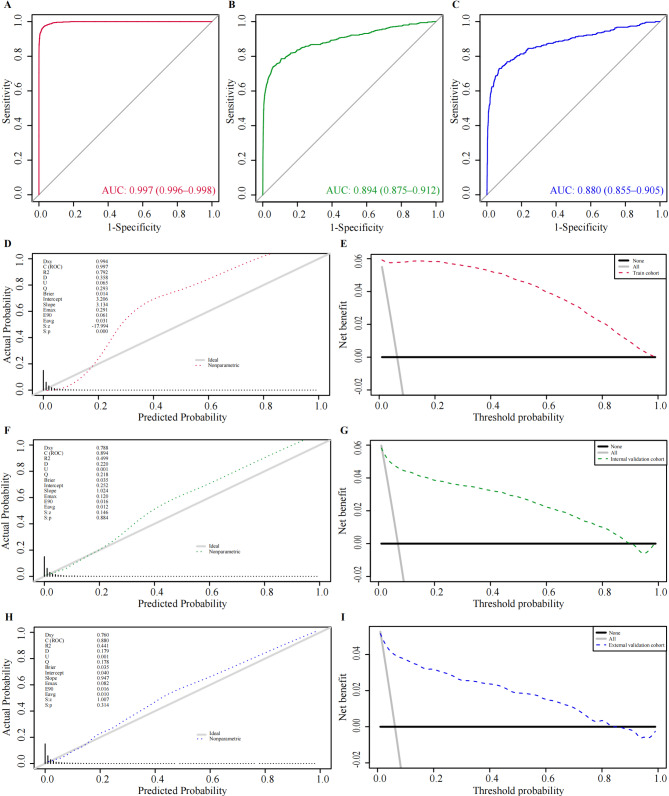
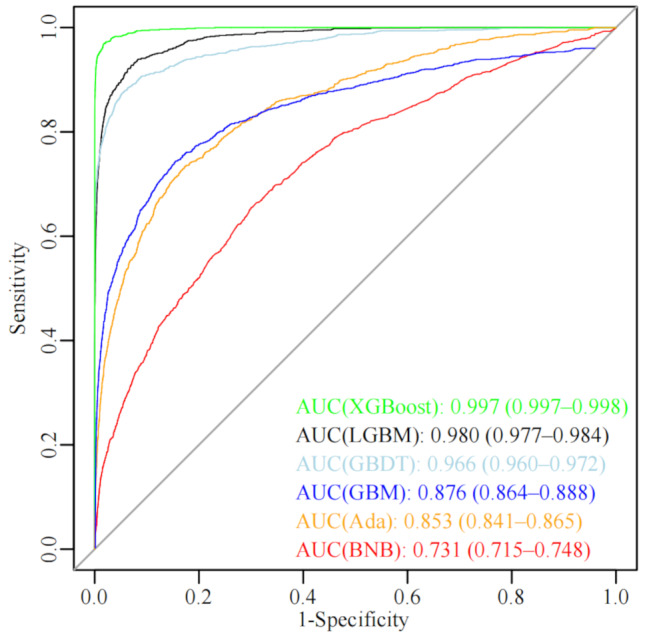
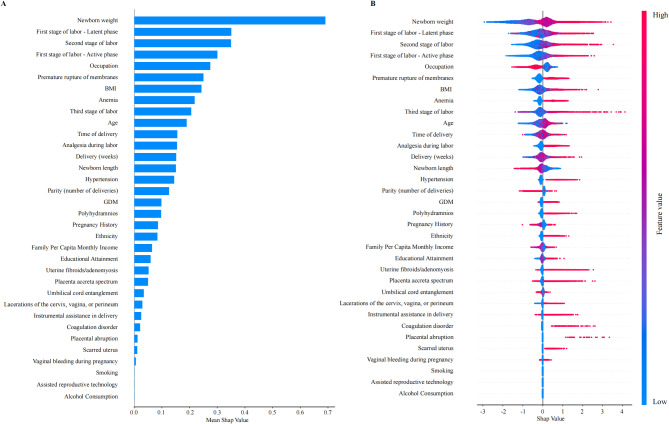
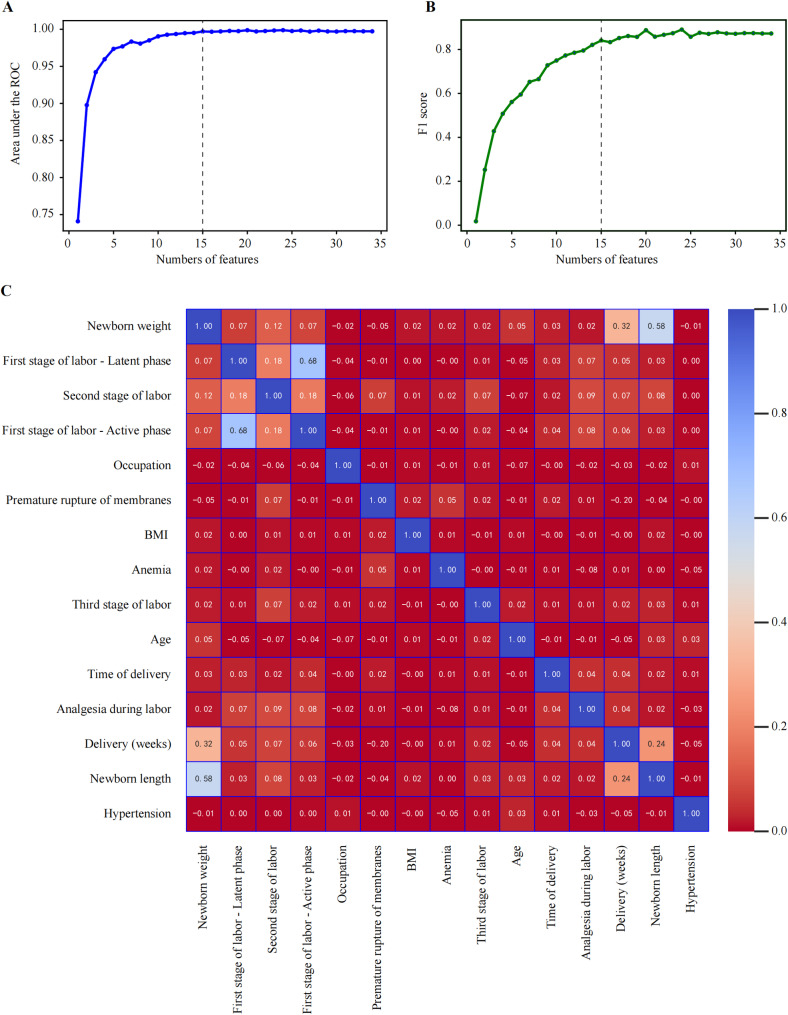
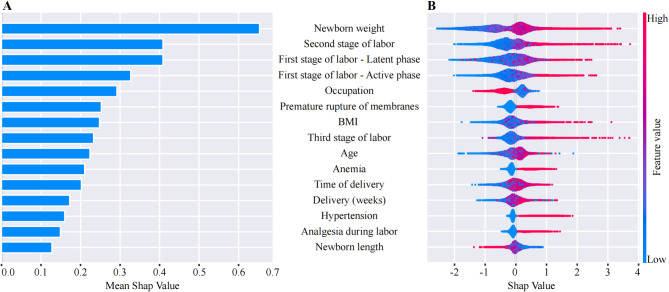
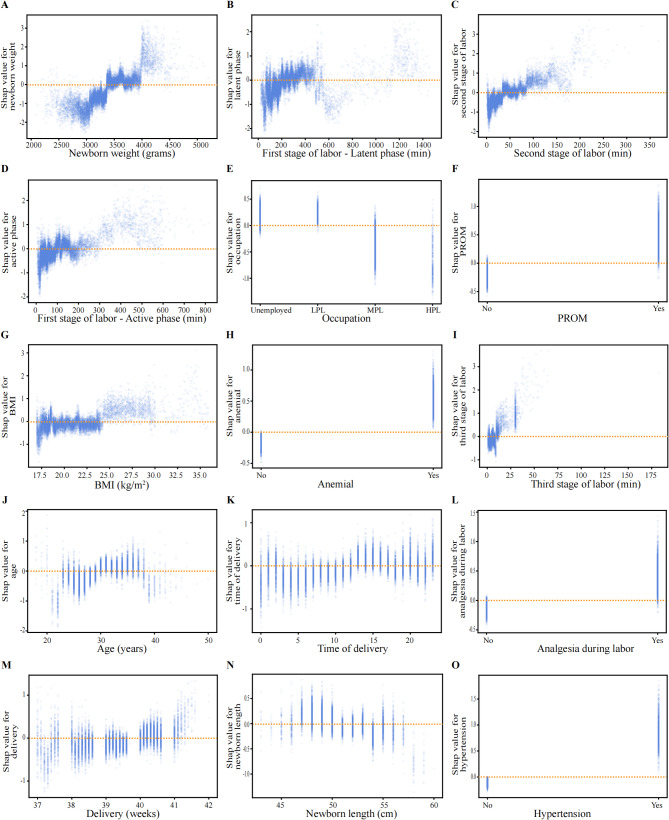
The XGBoost model demonstrated superior predictive accuracy for PPH, with an AUC of 0.997 in the training set. SHAP value-based feature selection identified 15 key features contributing to the model's predictive power. SHAP dependence and summary plots provided intuitive insights into each feature's contribution, enabling the identification of anomalies. The final model maintained high predictive power, with an AUC of 0.894 in internal validation and 0.880 in external validation.
This study successfully developed an interpretable ML model that predicts PPH with high accuracy. Future studies with larger and more diverse datasets are necessary to further validate and refine the model, particularly to assess its generalizability across different populations and healthcare settings.
本研究旨在开发一种集成SHapley值加法解释(SHAP)分析的机器学习(ML)模型,以预测阴道分娩后的产后出血(PPH),为临床环境中的个性化风险评估和预防提供一种潜在工具。
我们在中国东北地区进行了一项回顾性多中心队列研究,纳入了2018年9月至2023年12月在三家三级医院进行阴道分娩的女性。数据从电子病历中提取。数据集被分为训练集(70%)和内部验证集(30%)以防止过拟合。在一个单独的数据集上进行外部验证。使用包括受试者操作特征曲线下面积(AUC)在内的几个评估指标来比较预测性能。使用SHAP对特征进行排序,并对最终模型进行解释。
XGBoost模型对PPH显示出卓越的预测准确性,训练集中的AUC为0.997。基于SHAP值的特征选择确定了15个对模型预测能力有贡献的关键特征。SHAP依赖图和汇总图直观地展示了每个特征的贡献,有助于识别异常情况。最终模型保持了较高的预测能力,内部验证中的AUC为0.894,外部验证中的AUC为0.880。
本研究成功开发了一种可解释的ML模型,该模型能高精度地预测PPH。未来需要使用更大、更多样化的数据集进行研究,以进一步验证和完善该模型,特别是评估其在不同人群和医疗环境中的通用性。