Zhao Xiaojie, Li Yan, Zhang Siwei, Sudwarts Ari, Zhang Hanwen, Kozlova Alena, Moulton Matthew J, Goodman Lindsey D, Pang Zhiping P, Sanders Alan R, Bellen Hugo J, Thinakaran Gopal, Duan Jubao
Center for Psychiatric Genetics, Endeavor Health, Evanston, IL, 60201, USA.
Department of Psychiatry and Behavioral Neuroscience, University of Chicago, Chicago, IL, 60637, USA.
Mol Neurodegener. 2025 May 3;20(1):51. doi: 10.1186/s13024-025-00840-1.
Genome-wide association studies (GWAS) of Alzheimer's disease (AD) have identified a plethora of risk loci. However, the disease variants/genes and the underlying mechanisms have not been extensively studied.
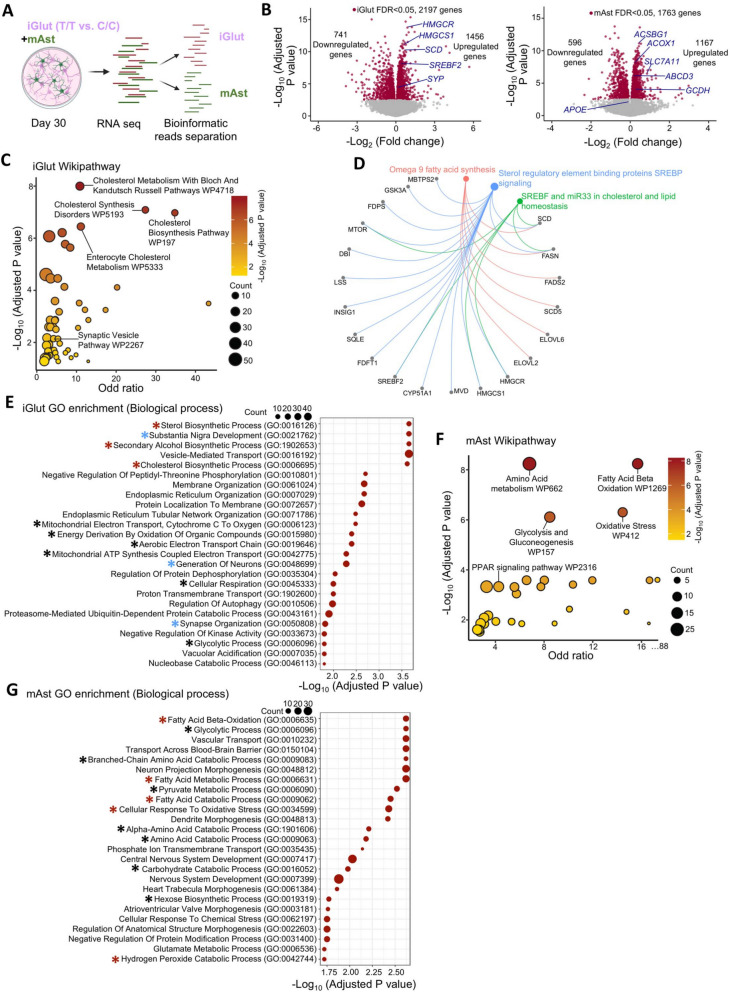
Bulk ATAC-seq was performed in induced pluripotent stem cells (iPSCs) differentiated various brain cell types to identify allele-specific open chromatin (ASoC) SNPs. CRISPR-Cas9 editing generated isogenic pairs, which were then differentiated into glutamatergic neurons (iGlut). Transcriptomic analysis and functional studies of iGlut co-cultured with mouse astrocytes assessed neuronal excitability and lipid droplet formation.
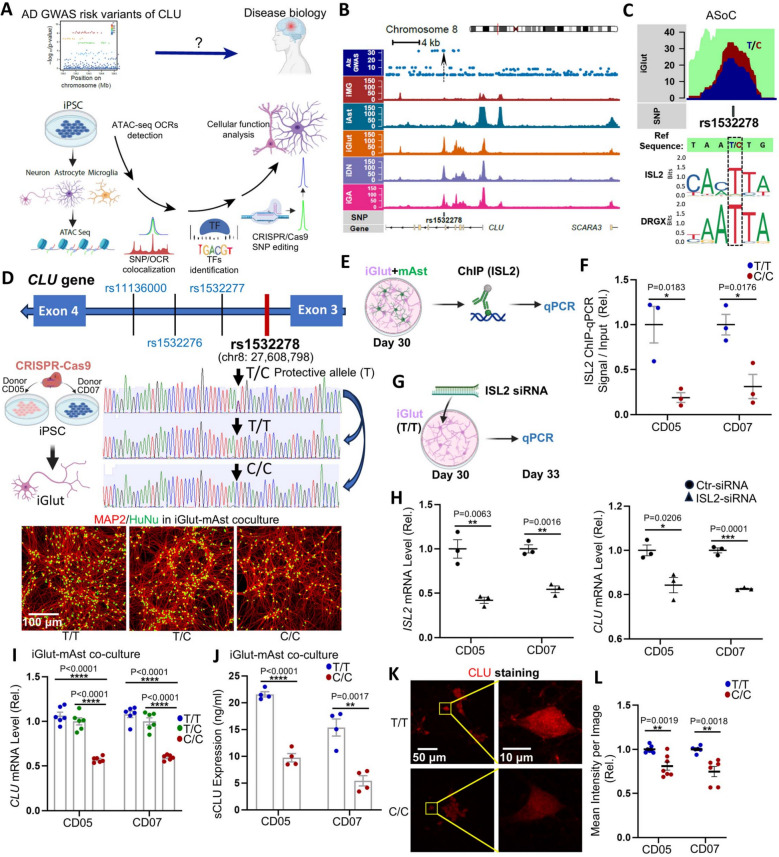
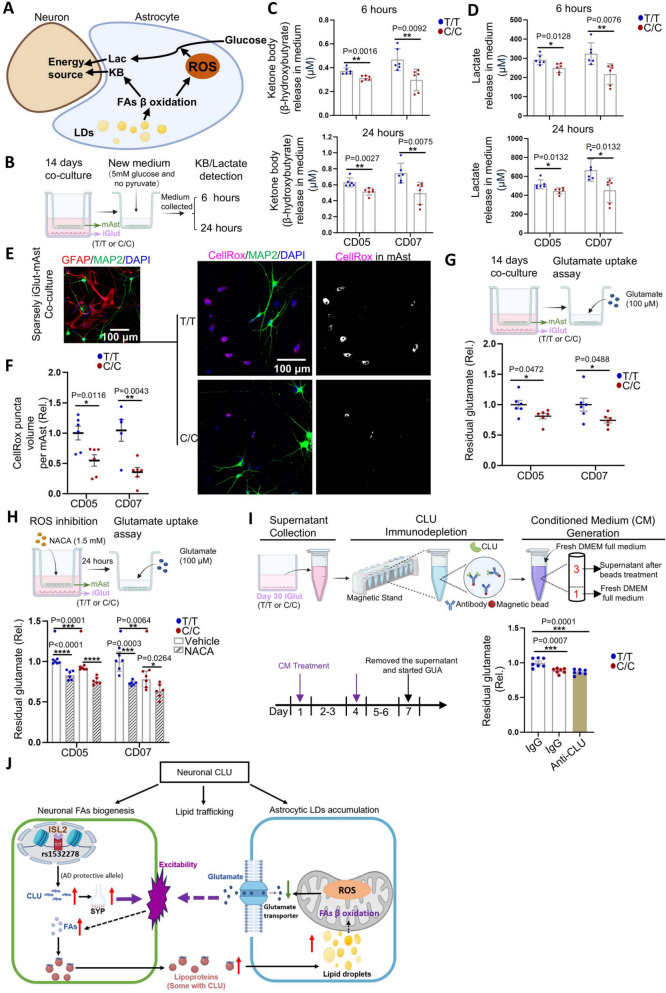
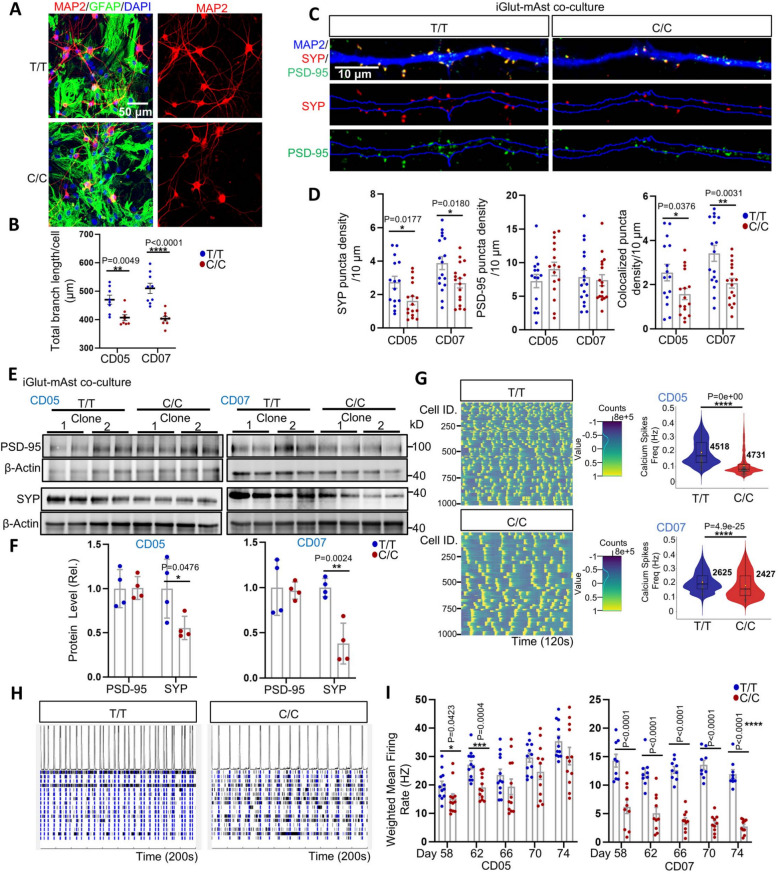
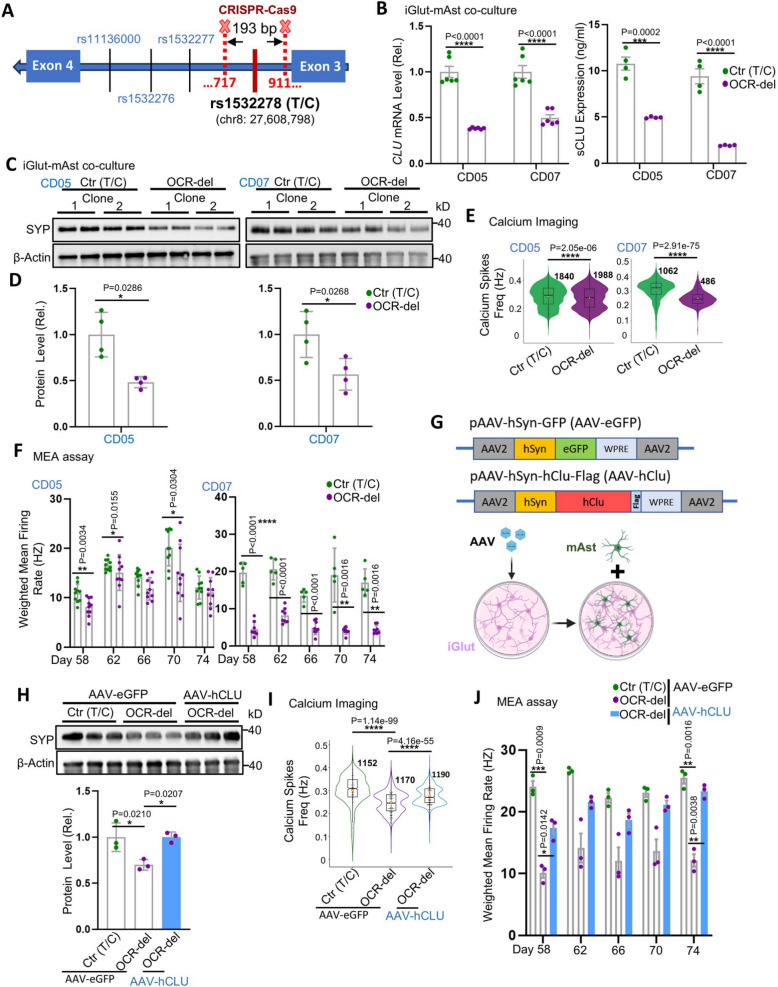
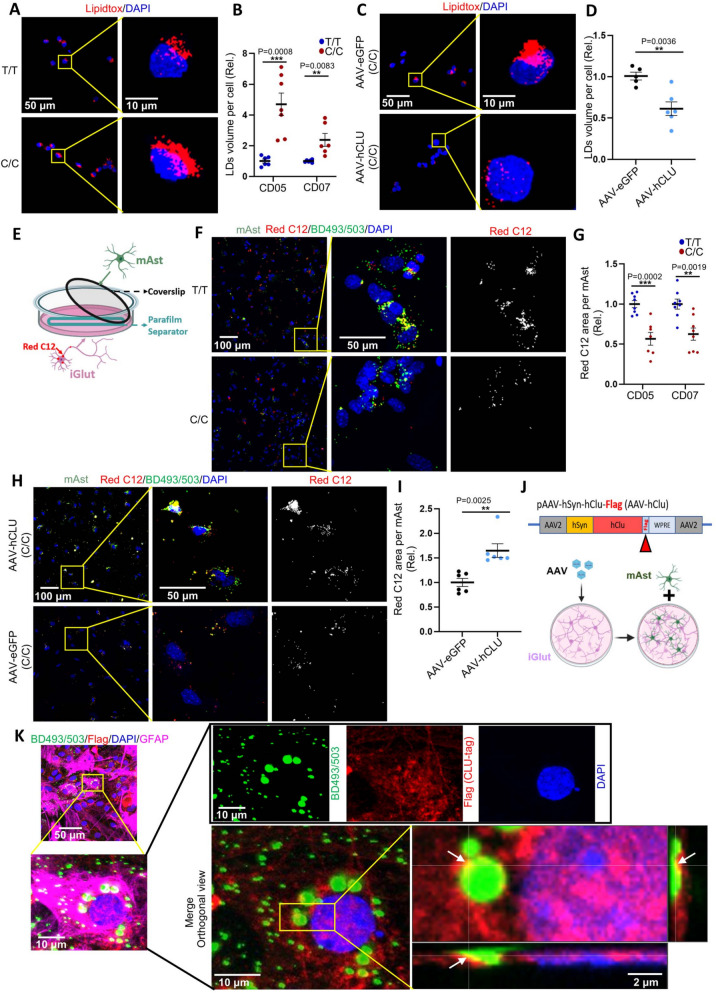
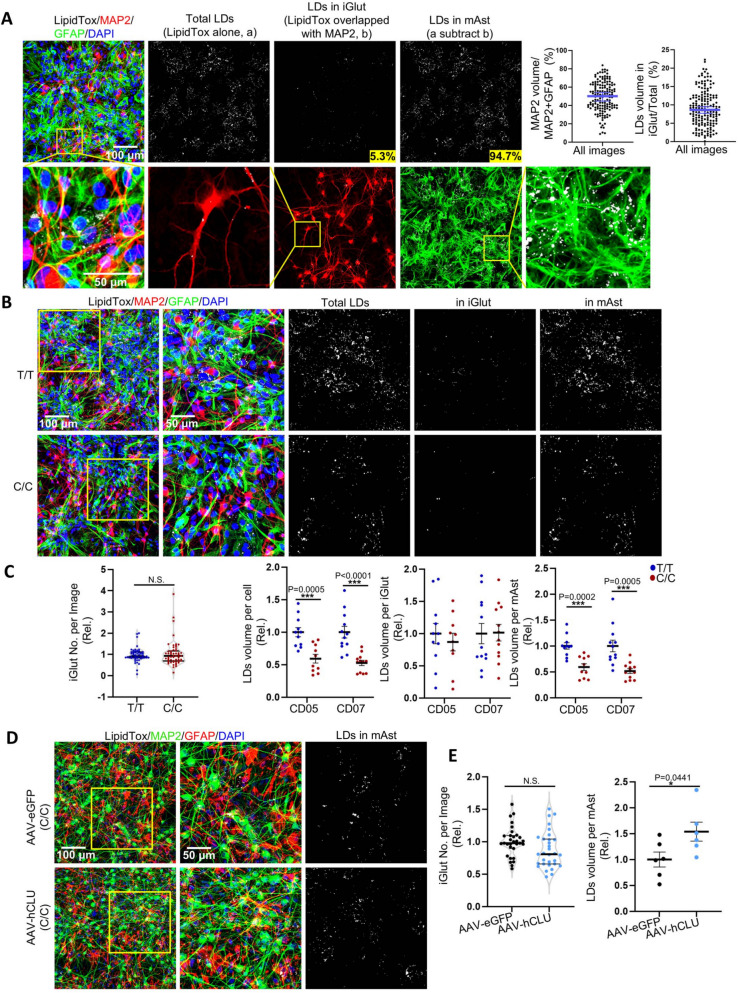
We identified a putative causal SNP of CLU that impacted neuronal chromatin accessibility to transcription-factor(s), with the AD protective allele upregulating neuronal CLU and promoting neuron excitability. And, neuronal CLU facilitated neuron-to-glia lipid transfer and astrocytic lipid droplet formation coupled with reactive oxygen species (ROS) accumulation. These changes caused astrocytes to uptake less glutamate thereby altering neuron excitability.
For a strong AD-associated locus near Clusterin (CLU), we connected an AD protective allele to a role of neuronal CLU in promoting neuron excitability through lipid-mediated neuron-glia communication. Our study provides insights into how CLU confers resilience to AD through neuron-glia interactions.
阿尔茨海默病(AD)的全基因组关联研究(GWAS)已经确定了大量风险位点。然而,疾病变异体/基因及其潜在机制尚未得到广泛研究。
在分化为各种脑细胞类型的诱导多能干细胞(iPSC)中进行批量ATAC-seq,以鉴定等位基因特异性开放染色质(ASoC)单核苷酸多态性(SNP)。CRISPR-Cas9编辑产生同基因对,然后将其分化为谷氨酸能神经元(iGlut)。对与小鼠星形胶质细胞共培养的iGlut进行转录组分析和功能研究,以评估神经元兴奋性和脂滴形成。
我们鉴定出一个假定的CLU因果SNP,它影响神经元染色质对转录因子的可及性,AD保护性等位基因上调神经元CLU并促进神经元兴奋性。而且,神经元CLU促进神经元向神经胶质细胞的脂质转移和星形胶质细胞脂滴形成,并伴有活性氧(ROS)积累。这些变化导致星形胶质细胞摄取较少的谷氨酸,从而改变神经元兴奋性。
对于靠近簇集蛋白(CLU)的一个强AD相关位点,我们将一个AD保护性等位基因与神经元CLU通过脂质介导的神经元-神经胶质细胞通讯促进神经元兴奋性的作用联系起来。我们的研究为CLU如何通过神经元-神经胶质细胞相互作用赋予AD抗性提供了见解。