
氧化应激和炎症在年龄相关性黄斑变性中的作用:对视网膜色素上皮(RPE)的见解。
Role of Oxidative Stress and Inflammation in Age Related Macular Degeneration: Insights into the Retinal Pigment Epithelium (RPE).
作者信息
Ochoa Hernández María Elena, Lewis-Luján Lidianys María, Burboa Zazueta María Guadalupe, Del Castillo Castro Teresa, De La Re Vega Enrique, Gálvez-Ruiz Juan Carlos, Trujillo-López Sergio, López Torres Marco Antonio, Iloki-Assanga Simon Bernard
机构信息
Department of Scientific and Technological Research, University of Sonora, Luis Encinas y Rosales, Centro, Hermosillo 83000, Sonora, Mexico.
Department of Biological Chemical Sciences, University of Sonora, Luis Encinas y Rosales, Centro, Hermosillo 83000, Sonora, Mexico.
出版信息
Int J Mol Sci. 2025 Apr 8;26(8):3463. doi: 10.3390/ijms26083463.
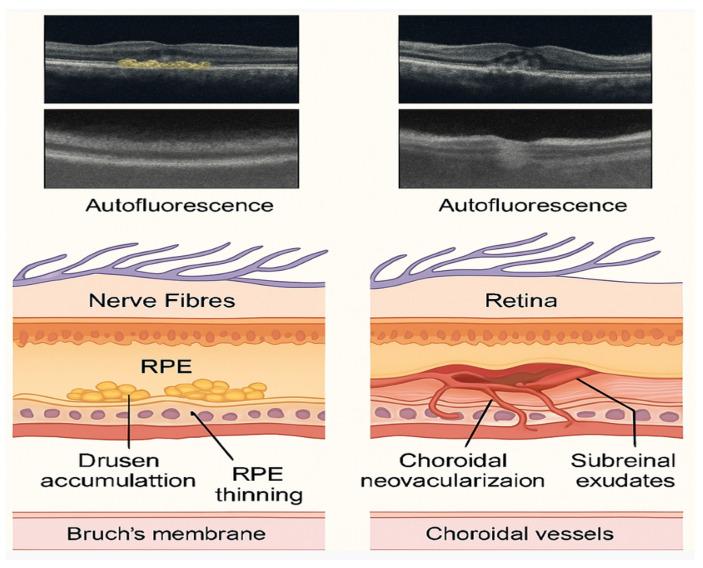
Age-related macular degeneration (AMD) is a leading cause of visual impairment worldwide, characterized by the accumulation of extracellular drusen deposits within the macula. The pathogenesis of AMD is multifactorial, involving oxidative stress, chronic inflammation, immune system dysregulation, and genetic predisposition. A key contributor to disease progression is the excessive accumulation of reactive oxygen species (ROS), which damage retinal pigment epithelium (RPE) cells and disrupt cellular homeostasis. Additionally, immunosenescence and chronic low-grade inflammation exacerbate AMD pathology, further impairing retinal integrity. Despite ongoing research, effective therapeutic options remain limited, and there is no definitive cure for AMD. This review explores the intricate molecular mechanisms underlying AMD, including the role of oxidative stress, chronic inflammation, and genetic factors in RPE dysfunction. Furthermore, we highlight potential therapeutic strategies targeting these pathways, as well as the emerging role of bioinformatics and artificial intelligence in AMD diagnosis and treatment development. By improving our understanding of AMD pathophysiology, we can advance the search for novel therapeutic interventions and preventative strategies.
年龄相关性黄斑变性(AMD)是全球视力损害的主要原因,其特征是黄斑区内细胞外玻璃膜疣沉积物的积累。AMD的发病机制是多因素的,涉及氧化应激、慢性炎症、免疫系统失调和遗传易感性。疾病进展的一个关键因素是活性氧(ROS)的过度积累,它会损害视网膜色素上皮(RPE)细胞并破坏细胞内稳态。此外,免疫衰老和慢性低度炎症会加剧AMD病理,进一步损害视网膜完整性。尽管研究不断,但有效的治疗选择仍然有限,且尚无针对AMD的明确治愈方法。本综述探讨了AMD潜在的复杂分子机制,包括氧化应激、慢性炎症和遗传因素在RPE功能障碍中的作用。此外,我们强调了针对这些途径的潜在治疗策略,以及生物信息学和人工智能在AMD诊断和治疗开发中的新兴作用。通过增进我们对AMD病理生理学的理解,我们可以推进寻找新的治疗干预措施和预防策略。



 Zotero 插件