Cunha Marcela Juliano Silva, Galastri Francisco Leonardo, Nasser Felipe, Affonso Breno Boueri, Valle Leonardo Guedes Moreira, Falsarella Priscila Mina, Schmid Bruno Pagnin, Yamaga Lilian Yuri Itaya, Torre Giovanna Sawaya, Garcia Rodrigo Gobbo, Wolosker Nelson
Department of Interventional Radiology, Hospital Israelita Albert Einstein, São Paulo, SP, Brazil.
Department of Nuclear Medicine, Hospital Israelita Albert Einstein, São Paulo, SP, Brazil.
Einstein (Sao Paulo). 2025 May 2;23:eAO1287. doi: 10.31744/einstein_journal/2025AO1287. eCollection 2025.
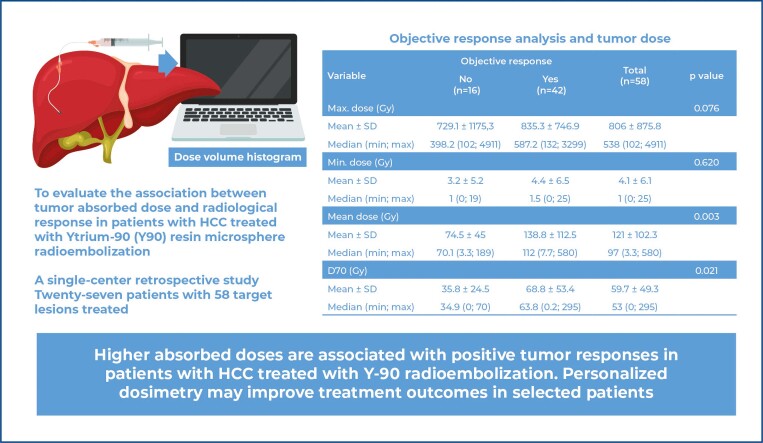
To evaluate the relationship between the absorbed dose and radiological response in patients with hepatocellular carcinoma undergoing resin microsphere radioembolization to enhance treatment precision and potentially adjust protocols for better outcomes.
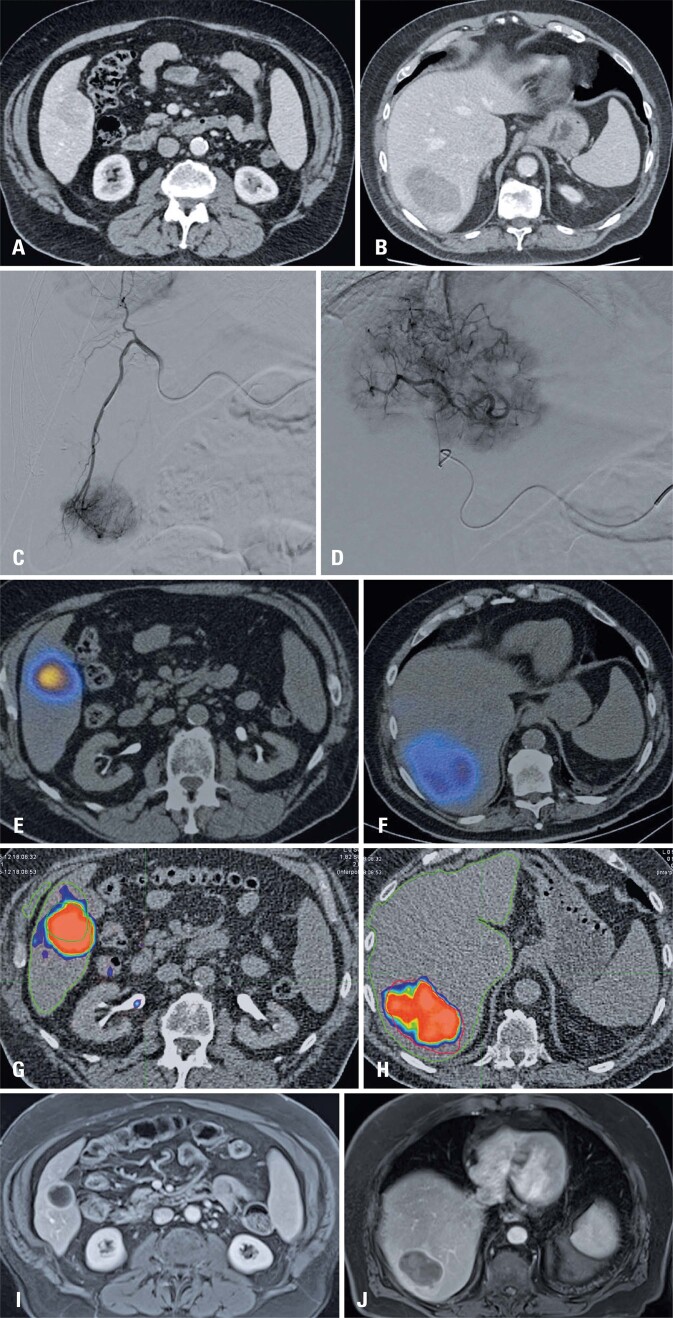
This single-center retrospective study was conducted at a quaternary care center in Brazil and comprised 27 patients with 58 target lesions treated between November 2014 and April 2023. The patients' dosimetric profiles were analyzed using advanced imaging software to assess post-treatment clinical and radiological responses. This study explored the correlation between the absorbed doses and tumor objective responses using statistical analyses to confirm the findings.
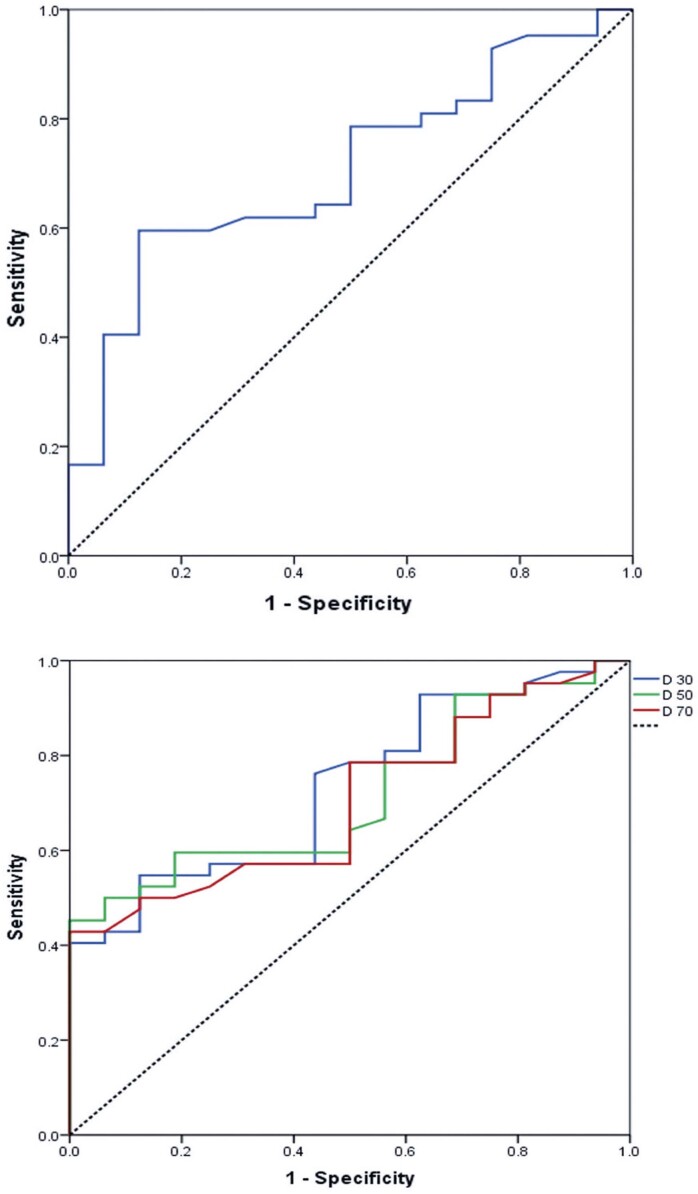
Higher absorbed doses were significantly associated with improved objective responses in the target lesions. The analysis demonstrated that achieving higher dosimetric thresholds correlated with better clinical outcomes, suggesting that a dose-response relationship is essential to optimize treatment protocols.
These findings emphasize the importance of personalized dosimetry in managing hepatocellular carcinoma using resin microsphere radioembolization. By quantifying the absorbed dose and understanding its impact on tumor response, treatment strategies can be tailored to enhance efficacy and potentially shift palliative treatments toward curative outcomes. This study provides a crucial foundation for dosimetric adjustment and highlights the need for further research in this area, particularly in Brazil.
评估接受树脂微球放射性栓塞治疗的肝细胞癌患者的吸收剂量与放射学反应之间的关系,以提高治疗精度,并有可能调整治疗方案以获得更好的治疗效果。
这项单中心回顾性研究在巴西的一家四级医疗中心进行,纳入了2014年11月至2023年4月期间接受治疗的27例患者,共58个靶病灶。使用先进的成像软件分析患者的剂量学特征,以评估治疗后的临床和放射学反应。本研究通过统计分析探索吸收剂量与肿瘤客观反应之间的相关性,以证实研究结果。
较高的吸收剂量与靶病灶客观反应的改善显著相关。分析表明,达到更高的剂量学阈值与更好的临床结果相关,这表明剂量反应关系对于优化治疗方案至关重要。
这些发现强调了在使用树脂微球放射性栓塞治疗肝细胞癌时个性化剂量学的重要性。通过量化吸收剂量并了解其对肿瘤反应的影响,可以调整治疗策略以提高疗效,并有可能将姑息性治疗转向治愈性结果。本研究为剂量学调整提供了关键基础,并突出了该领域进一步研究的必要性,特别是在巴西。