Souza Ana Sara Semeão de, Cavalcante João Roberto, Proença Raquel, Rodrigues Igor de Assis, Frank Carlos Henrique Michiles, Freitas Daniel Roberto Coradi de, Barreira Filho Edenilo Baltazar, Maciel Ethel Leonor, Garcia Márcio Henrique de Oliveira
Ministério da Saúde, Secretaria de Vigilância em Saúde e Ambiente, Brasília, DF, Brazil.
Epidemiol Serv Saude. 2025 May 2;34:e20240498. doi: 10.1590/S2237-96222024v34e20240498.en. eCollection 2025.
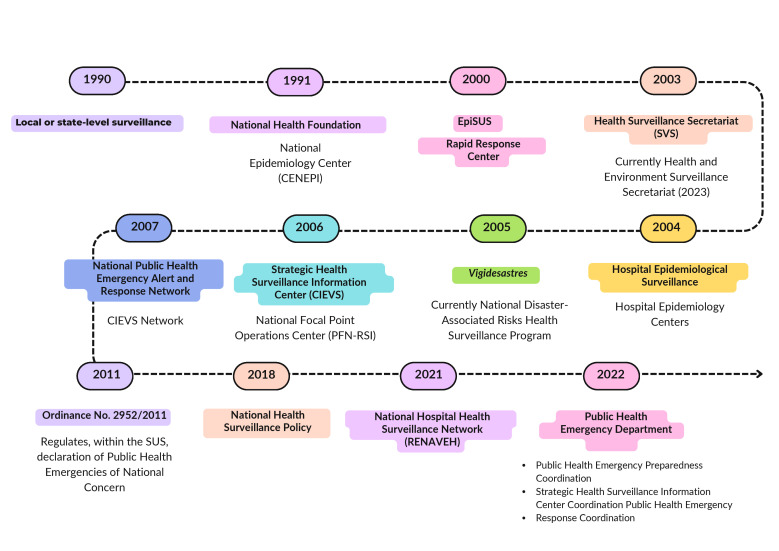
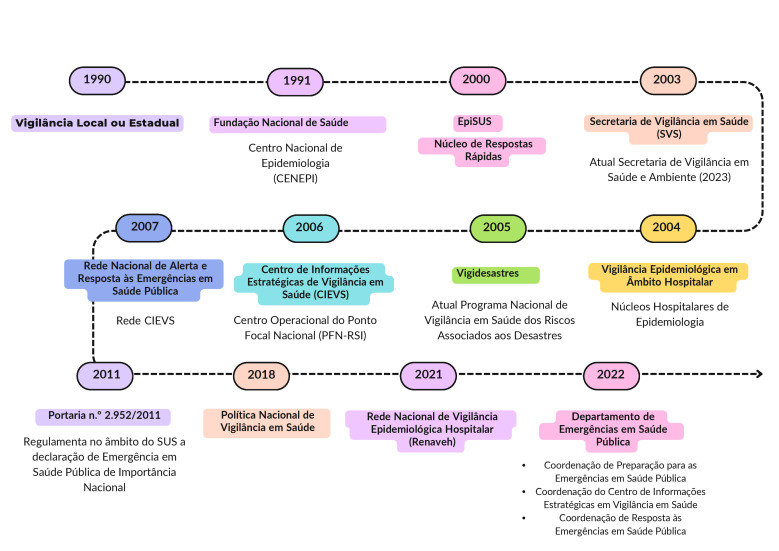
Public health emergencies can cause significant social, economic and health impacts. To mitigate these effects, approaches and programs at national and global levels have been developed, focusing on preparedness, surveillance and response, especially for emergencies of international concern (1). As a Member State of the World Health Organization and signatory of its agreements and conventions, Brazil is committed to ensuring the execution of health actions with a focus on public health emergencies. Despite successful experiences in emergency management, this is still an emerging field, with limited scientific production. This article describes the history of public health emergency management at the federal level and its strategies for preparing, surveillance and responding to these events in the Brazilian National Health System.
突发公共卫生事件会造成重大的社会、经济和健康影响。为减轻这些影响,已制定了国家和全球层面的方法与计划,重点关注防范、监测和应对,特别是针对国际关注的突发公共卫生事件(1)。作为世界卫生组织的成员国及其协定和公约的签署国,巴西致力于确保以突发公共卫生事件为重点开展卫生行动。尽管在应急管理方面有成功经验,但这仍是一个新兴领域,科研成果有限。本文介绍了巴西联邦层面突发公共卫生事件管理的历史及其在巴西国家卫生系统中针对这些事件的防范、监测和应对策略。