
参与药物相互作用的黄酮类化合物和呋喃香豆素。
Flavonoids and Furanocoumarins Involved in Drug Interactions.
作者信息
Berteina-Raboin Sabine
机构信息
Institut de Chimie Organique et Analytique (ICOA), Université d'Orléans UMR-CNRS 7311, BP 6759, Rue de Chartres, CEDEX 2, 45067 Orléans, France.
出版信息
Molecules. 2025 Apr 9;30(8):1676. doi: 10.3390/molecules30081676.
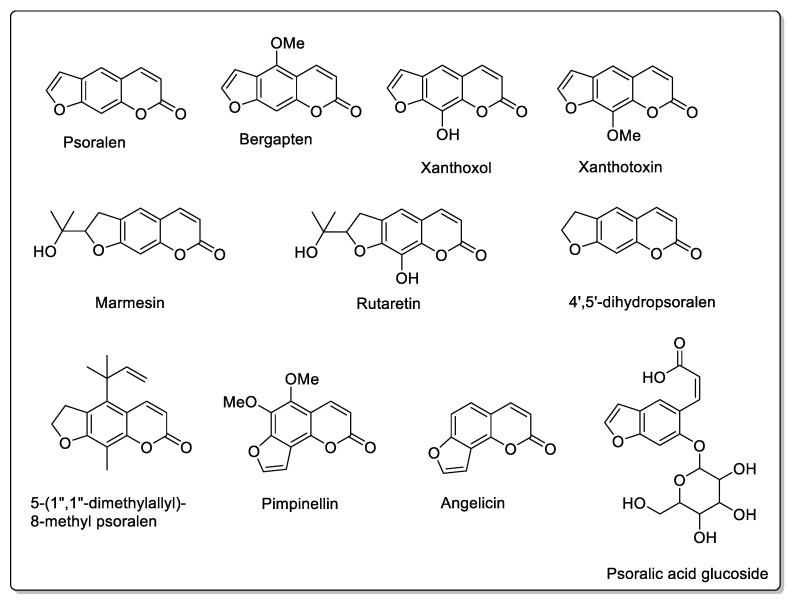
Drug interactions can have significant consequences for public health, especially given the growing importance of readily available dietary supplements. The same applies to the consumption of fruit and fruit juices, which are often praised for their health benefits, but which can generate drug interactions. These are well known and documented in the case of grapefruit, which should not be taken with certain medications. Grapefruit contains flavonoids and furanocoumarins, which are responsible for various interactions with the cytochrome P450 enzyme system. However, for young children and the elderly, fruit juices are often used to facilitate treatment. This review examines commonly used fruit juices, particularly from citrus, apple, and red fruits, and discusses potential interactions, disadvantages, and advantages, as well as the chemical structures involved in interactions with cytochromes P-450, P-glycoprotein, and organic anion transporter polypeptide (OATP), responsible for sometimes dangerous changes in bioavailability or potential accumulation of drugs in the body.
药物相互作用可能对公众健康产生重大影响,尤其是考虑到随时可得的膳食补充剂的重要性日益增加。这同样适用于水果和果汁的食用,它们常常因其对健康有益而受到赞誉,但也可能产生药物相互作用。在葡萄柚的案例中,这些相互作用是众所周知且有文献记载的,葡萄柚不应与某些药物一起服用。葡萄柚含有类黄酮和呋喃香豆素,它们与细胞色素P450酶系统发生各种相互作用。然而,对于幼儿和老年人来说,果汁常常被用来辅助治疗。本综述研究了常用的果汁,特别是柑橘类、苹果和红色水果的果汁,并讨论了潜在的相互作用、缺点和优点,以及与细胞色素P-450、P-糖蛋白和有机阴离子转运多肽(OATP)相互作用所涉及的化学结构,这些相互作用有时会导致生物利用度的危险变化或药物在体内的潜在蓄积。




 Zotero 插件