Guo Lei, Wang Cheng, Bai Xue, Tian Yukui, Shi Mengni, Fang Min, Li Jing Xian, Zhu Qingguang, Liu Junchang
College of Traditional Chinese Medicine, Xinjiang Medical University, Urumqi, China.
Yueyang Hospital of Integrated Traditional Chinese Medicine and Western Medicine, Shanghai University of Traditional Chinese Medicine, Shanghai, China.
JMIR Res Protoc. 2025 May 7;14:e67557. doi: 10.2196/67557.
Chronic low back pain (CLBP) is a common public health problem. Progressive loss of muscle strength leads to long-term chronic pain and disability. Yijinjing exercises, an ancient therapy dating back thousands of years, are widely used in China to treat low back pain. However, little is known about its benefits and scientific evidence for back extensor strength. This trial aimed to assess the efficacy of Yijinjing on disability and dorsal extensor strength in patients with CLBP.
We present a randomized controlled study to evaluate the efficacy of the traditional Chinese exercise Yijinjing on disability and back extensor strength in patients with CLBP.
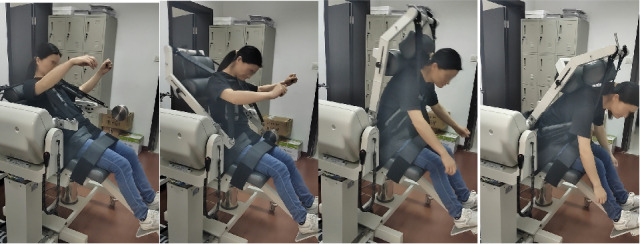
This is a 2-arm, parallel-design, assessor-blinded, and analyst-blinded randomized controlled trial. The 106 participants with CLBP who were recruited will first receive basic traditional Chinese manual therapy to help relieve their physical discomfort. Second, they will be randomly divided into a Yijinjing group (n=53) and a control group with functional exercises (n=53) at a ratio of 1:1. The interventions for both groups will be carried out twice a week for 4 weeks. Patients in both groups will be followed up at 1 and 3 months after the intervention. The primary outcome is disability (measured by the Oswestry Disability Index). The secondary outcomes included pain intensity (assessed by the Numerical Rating Scale), data from isokinetic dynamometry, flexibility (assessed by the fingertip-to-floor test), mood (evaluated by the Pain Catastrophizing Scale and Fear Avoidance Beliefs Questionnaire), and quality of life (measured by the EQ-5D-5L). All adverse effects will be assessed using the Treatment Emerging Symptoms Scale, and data will be analyzed using an intention-to-treat analysis.
The trial was funded in December 2023. The Institutional Ethics Committee of Yueyang Hospital of Integrative Medicine, Shanghai University of Traditional Chinese Medicine, approved this study. The first patient was enrolled in February 2024, and as of August 2024, a total of 106 participants have been recruited. Data analysis has not yet begun and is expected to be published in January 2025. The protocol has been registered with the Chinese Clinical Trial Registry (ChiCTR2400081105).
If this trial proves effective, it will guide the setup of a randomized controlled trial to demonstrate whether traditional Chinese exercise Yijinjing improves disability in patients with CLBP and is more effective than usual stretching exercises.
Chinese Clinical Trial Registry ChiCTR2400081105; https://www.chictr.org.cn/showprojEN.html?proj=214425.
INTERNATIONAL REGISTERED REPORT IDENTIFIER (IRRID): DERR1-10.2196/67557.
慢性下腰痛(CLBP)是一个常见的公共卫生问题。肌肉力量的逐渐丧失会导致长期慢性疼痛和残疾。易筋经练习是一种可追溯到数千年前的古老疗法,在中国被广泛用于治疗下腰痛。然而,对于其益处以及对背部伸肌力量的科学证据知之甚少。本试验旨在评估易筋经对CLBP患者残疾状况和背部伸肌力量的疗效。
我们开展一项随机对照研究,以评估传统中医运动易筋经对CLBP患者残疾状况和背部伸肌力量的疗效。
这是一项双臂、平行设计、评估者盲法和分析者盲法的随机对照试验。招募的106名CLBP参与者首先将接受基本的传统中医手法治疗,以帮助缓解身体不适。其次,他们将以1:1的比例随机分为易筋经组(n = 53)和功能锻炼对照组(n = 53)。两组的干预措施均为每周进行两次,共4周。两组患者将在干预后1个月和3个月进行随访。主要结局是残疾状况(采用Oswestry残疾指数测量)。次要结局包括疼痛强度(采用数字评定量表评估)、等速肌力测试数据、柔韧性(采用指尖触地试验评估)、情绪(采用疼痛灾难化量表和恐惧回避信念问卷评估)以及生活质量(采用EQ - 5D - 5L测量)。所有不良反应将使用治疗中出现的症状量表进行评估,数据将采用意向性分析进行分析。
该试验于2023年12月获得资助。上海中医药大学附属岳阳中西医结合医院伦理委员会批准了本研究。第一名患者于2024年2月入组,截至2024年8月,共招募了106名参与者。数据分析尚未开始,预计于2025年1月发表。该方案已在中国临床试验注册中心注册(ChiCTR2400081105)。
如果本试验证明有效,将指导开展一项随机对照试验,以证明传统中医运动易筋经是否能改善CLBP患者的残疾状况,且比常规伸展运动更有效。
中国临床试验注册中心ChiCTR2400081105;https://www.chictr.org.cn/showprojEN.html?proj=214425。
国际注册报告识别号(IRRID):DERR1 - 10.2196/67557。