Craig A, Mabetha K, Stephenson J, Schoenaker D, Norris S A
SAMRC/Wits Developmental Pathways for Health Research Unit, Department of Paediatrics, School of Clinical Medicine, Faculty of Health Sciences, University of the Witwatersrand, Johannesburg, South Africa.
DSI‑NRF Centre of Excellence in Human Development, Faculty of Health Sciences, University of Witwatersrand, Johannesburg, South Africa.
Reprod Health. 2025 May 7;22(1):66. doi: 10.1186/s12978-025-02015-z.
Preconception health-the health status of individuals prior to conception-is vital for positive pregnancy outcomes and long-term health. Despite its importance for maternal and infant well-being, it remains under-researched and often overlooked in global maternal and child healthcare.
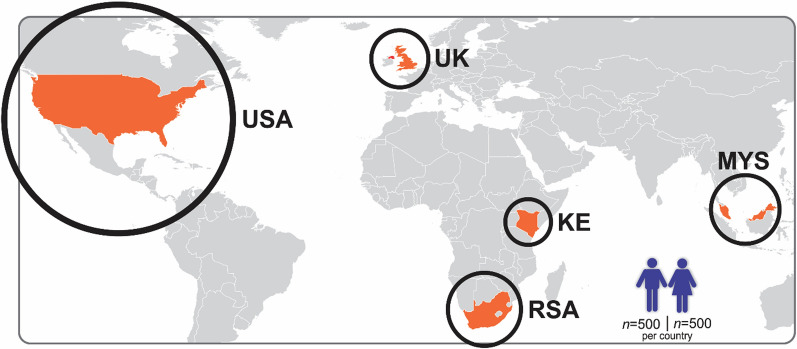
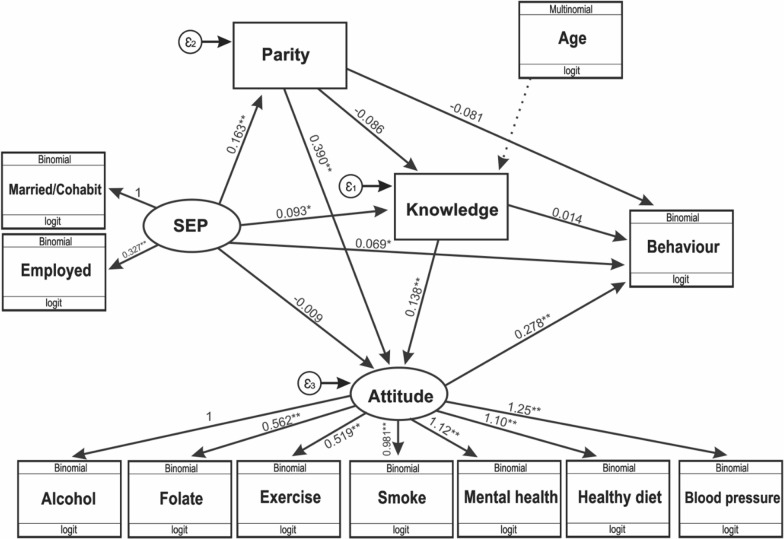
We conducted a cross-sectional online survey with adults (18-55 years old) from Kenya, South Africa, Malaysia, the United States, and the United Kingdom (n = 5000), gathering data on preconception health knowledge, attitudes, behavioural intent, and respondents' preferences regarding factors important before pregnancy and preferred sources of health information. A generalised structural equation model (gSEM) was constructed a priori to assess the relationship between socioeconomic position and preconception health knowledge, and whether this relationship was mediated by preconception attitudes and behavioural intent.
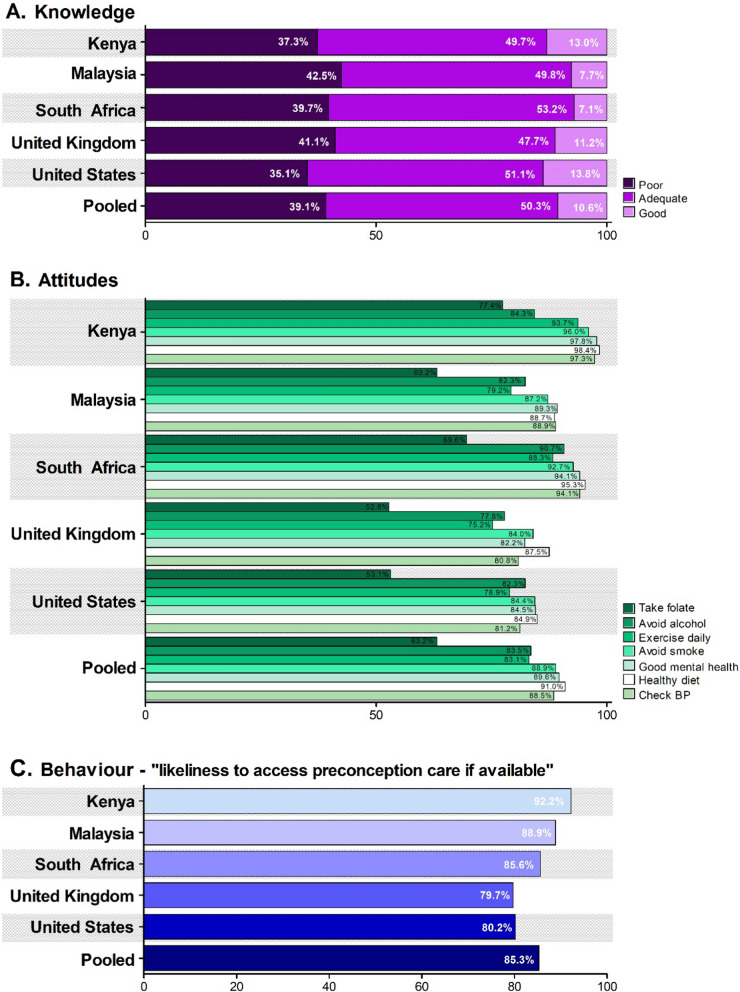
Preconception health knowledge, attitudes, and behavioural intent showed significant variation across the countries. Over half of the respondents reported having adequate preconception knowledge (50.3%), with the USA having the highest proportion of respondents with good knowledge (13.8%) and Malaysia having the highest proportion with poor knowledge (42.5%). In the pooled sample, physical health was considered the most important factor before pregnancy, followed by relationships and family. Clinic doctors were the most preferred source of information, followed by nurses and obstetricians/gynaecologists. The relationship between preconception knowledge and behavioural intent was fully mediated by a combination of preconception attitudes (71.7%).
Preconception health knowledge, attitudes, and behavioural intent differed across the five economically diverse countries. Pregnancy factors were prioritised differently across settings, likely reflecting disparities in culture, socioeconomic status, and healthcare access, with varying preferences for sources of preconception health information. These findings underscore the importance of designing tailored interventions that consider socioeconomic and cultural differences to enhance overall health outcomes.
孕前健康——即个体受孕前的健康状况——对于良好的妊娠结局和长期健康至关重要。尽管它对母婴健康至关重要,但在全球母婴保健中,它仍然研究不足且常常被忽视。
我们对来自肯尼亚、南非、马来西亚、美国和英国的18至55岁成年人(n = 5000)进行了一项横断面在线调查,收集有关孕前健康知识、态度、行为意图以及受访者对孕前重要因素和首选健康信息来源的偏好的数据。事先构建了一个广义结构方程模型(gSEM),以评估社会经济地位与孕前健康知识之间的关系,以及这种关系是否由孕前态度和行为意图介导。
孕前健康知识、态度和行为意图在不同国家之间存在显著差异。超过一半的受访者表示拥有足够的孕前知识(50.3%),美国拥有良好知识的受访者比例最高(13.8%),而马来西亚知识匮乏的受访者比例最高(42.5%)。在汇总样本中,身体健康被认为是怀孕前最重要的因素,其次是人际关系和家庭。临床医生是最受欢迎的信息来源,其次是护士和妇产科医生。孕前知识与行为意图之间的关系完全由孕前态度的综合作用介导(71.7%)。
在这五个经济状况各异的国家中,孕前健康知识、态度和行为意图各不相同。不同环境下对怀孕相关因素的优先级排序不同,这可能反映了文化、社会经济地位和医疗服务可及性方面的差异,对孕前健康信息来源的偏好也各不相同。这些发现强调了设计考虑社会经济和文化差异的针对性干预措施以改善整体健康结局的重要性。