Pahlevan Sharif Saeed, Naghavi Navaz, Esmaeelinezhad Osveh, She Long, Allen Kelly-Ann, Sharif-Nia Hamid, Rahmatpour Pardis
Sunway Business School, Sunway University, Sunway City, Malaysia.
College of Medicine and Public Health, Flinders University, Bedford Park, South Australia, Australia.
BMC Psychol. 2025 May 8;13(1):484. doi: 10.1186/s40359-025-02769-y.
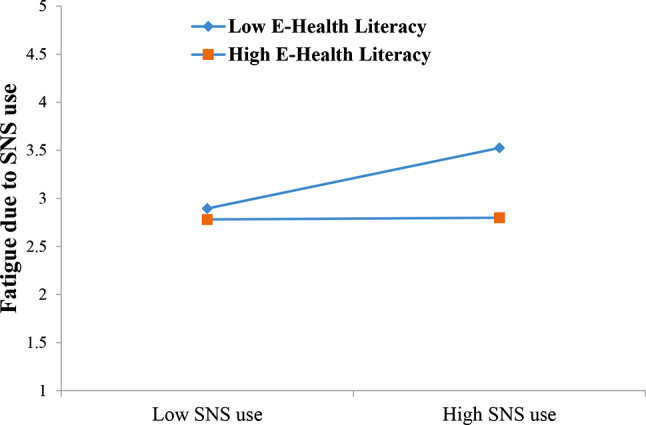
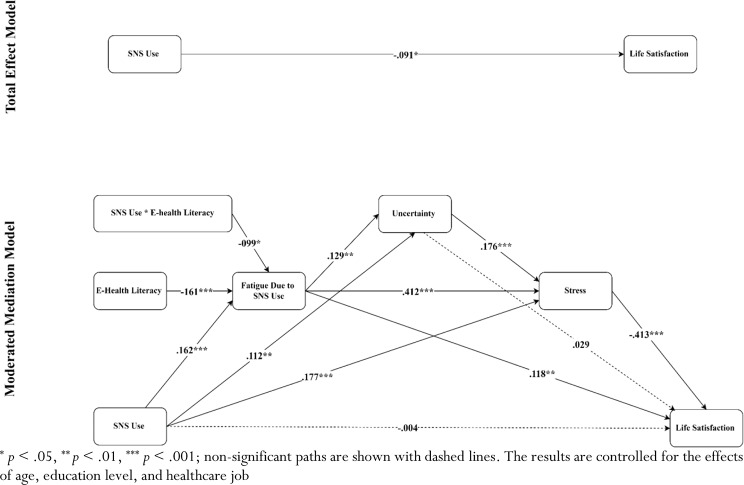
Excessive social media use during health crises can lead to information overload and psychological distress, yet the mechanisms underlying this relationship remain unclear. This study investigated how social networking sites (SNS) affected life satisfaction during the COVID-19 pandemic in Iran and whether this relationship was explained by SNS fatigue, uncertainty about disease, and stress. The research also examined whether e-health literacy was a protective factor in this process. Results confirmed that SNS use negatively affected life satisfaction through a sequential pathway of increased fatigue, uncertainty, and stress. E-health literacy moderated the initial link between SNS use and fatigue, with higher literacy weakening this relationship. The results demonstrate the complex relationship between SNS use and wellbeing during health crises and highlight the potential protective role of e-health literacy.
在健康危机期间过度使用社交媒体会导致信息过载和心理困扰,然而这种关系背后的机制仍不清楚。本研究调查了社交网站(SNS)在伊朗新冠疫情期间如何影响生活满意度,以及这种关系是否可以由SNS疲劳、疾病不确定性和压力来解释。该研究还考察了电子健康素养在这一过程中是否为一个保护因素。结果证实,SNS的使用通过疲劳、不确定性和压力增加的连续路径对生活满意度产生负面影响。电子健康素养调节了SNS使用与疲劳之间的初始联系,较高的素养会削弱这种关系。研究结果表明了在健康危机期间SNS使用与幸福感之间的复杂关系,并突出了电子健康素养的潜在保护作用。