Pan Vivian, Berman Natasha, Bauer Sasha, Bell Megan, Borle Kennedy, Carrion Prescilla, Massart Mylynda, Munro Christine, Austin Jehannine J
University of Illinois Chicago, Chicago, Illinois, USA.
Department of Family Medicine, University of Pittsburgh, Pittsburgh, Pennsylvania, USA.
J Genet Couns. 2025 Jun;34(3):e70051. doi: 10.1002/jgc4.70051.
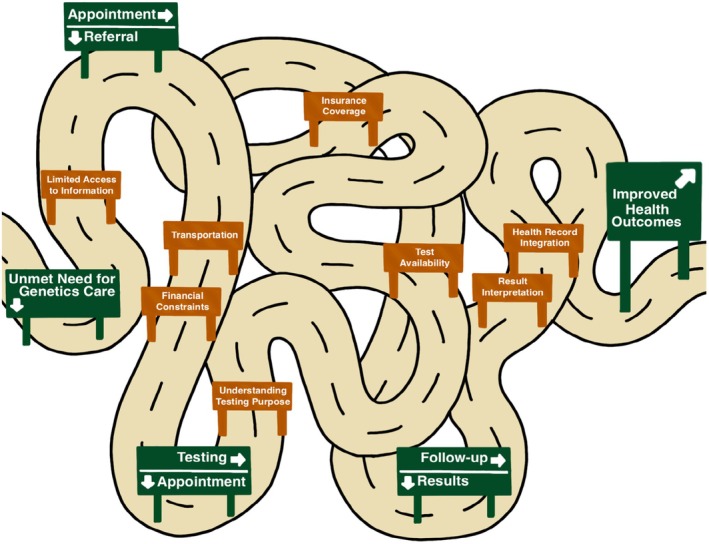
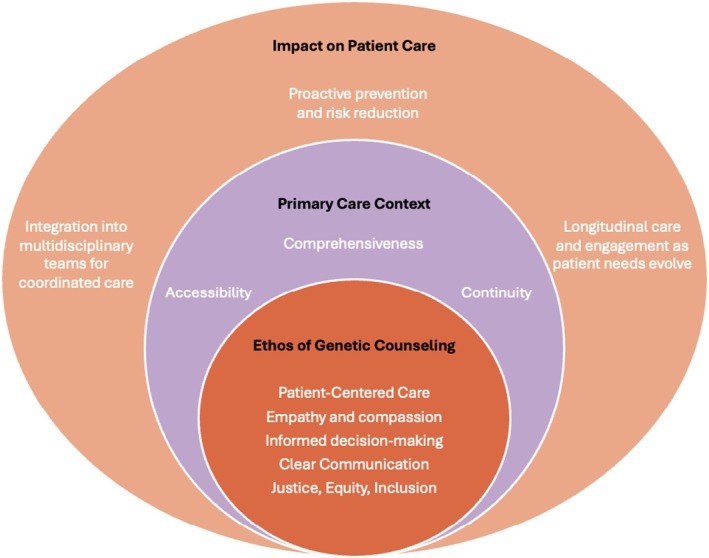
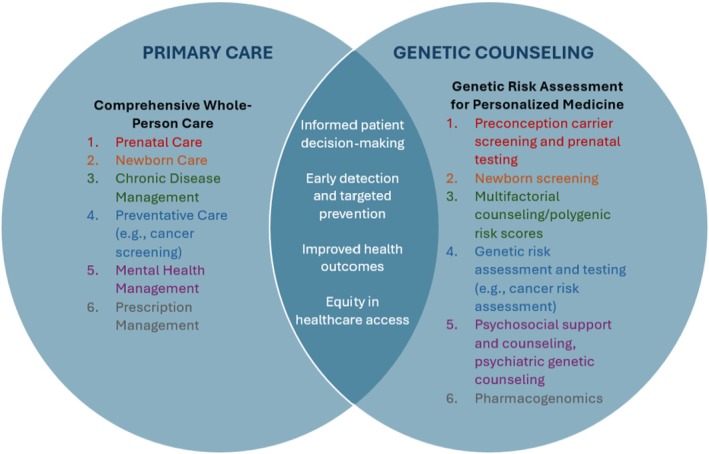
The integration of genetic counselors (GCs) into primary care represents an opportunity for a transformative shift in healthcare delivery, bridging the gap between the historical medical genetics delivery model and the increasing need for genetic services. This paradigm aligns the holistic ethos of primary care with the specialized expertise of genetic counseling and frontline access to preventive care, addressing critical barriers in genetic services. Current genetic service delivery models, concentrated in tertiary care settings, face limitations, including access disparities, fragmented care, and inefficiencies that disproportionately affect underserved populations. Embedding GCs within primary care leverages GCs' unique skills to enhance personalized healthcare delivery, improve risk assessment, and facilitate the implementation of precision medicine. GCs in primary care can streamline referrals, manage routine genetic concerns, and provide genetic continuity of care across the patient's lifespan. This integration ensures that genetic insights are contextualized within patients' day-to-day healthcare, fostering equitable and efficient access to genomic medicine. We explore the potential impact of primary care genetic counselors (PCGCs) on healthcare systems, emphasizing the alignment of their scope of practice with primary care principles such as accessibility, comprehensiveness, and continuity. By addressing evolving patient needs and collaborating with primary care teams, PCGCs can increase patient access, reduce system inefficiencies, alleviate pressures on specialty genetics services, and improve health equity. This paper advocates for a collaborative model where GCs are embedded within primary care, enabling proactive, prevention-focused interventions and enhancing patient outcomes. By integrating genetics into primary care settings, we reimagine genetic healthcare delivery to maximize the benefits of genomic medicine for all individuals. This paradigm shift underscores the urgency of addressing systemic barriers and advancing the role of GCs in healthcare to improve patient and clinician experiences, better population health, and achieve greater health equity.
将遗传咨询师(GCs)纳入初级保健为医疗服务带来变革性转变提供了契机,弥合了传统医学遗传学服务模式与对遗传服务日益增长的需求之间的差距。这种模式将初级保健的整体理念与遗传咨询的专业知识以及一线预防保健服务相结合,解决了遗传服务中的关键障碍。当前集中在三级医疗机构的遗传服务模式存在局限性,包括获取机会不平等、医疗服务碎片化以及效率低下等问题,这些问题对服务不足人群的影响尤为严重。在初级保健中引入遗传咨询师利用了他们的独特技能,以加强个性化医疗服务、改进风险评估并促进精准医学的实施。初级保健中的遗传咨询师可以简化转诊流程,处理常见的遗传问题,并在患者的整个生命周期内提供连续的遗传护理。这种整合确保了遗传见解在患者日常医疗保健中得到体现,促进了公平且高效地获取基因组医学服务。我们探讨了初级保健遗传咨询师(PCGCs)对医疗系统的潜在影响,强调了他们的执业范围与初级保健原则(如可及性、全面性和连续性)的一致性。通过满足不断变化的患者需求并与初级保健团队合作,初级保健遗传咨询师可以增加患者获得服务的机会,减少系统低效现象,减轻专科遗传服务的压力,并改善健康公平性。本文倡导一种合作模式,即遗传咨询师融入初级保健,实现积极主动、以预防为重点的干预措施并改善患者结局。通过将遗传学融入初级保健环境,我们重新构想遗传医疗服务,以最大化基因组医学对所有人的益处。这种范式转变凸显了解决系统性障碍以及提升遗传咨询师在医疗保健中的作用的紧迫性,以改善患者和临床医生的体验、提升人群健康水平并实现更大的健康公平。