Dey Souvik, Wallqvist Anders, AbdulHameed Mohamed Diwan M
Department of Defense Biotechnology High Performance Computing Software Applications Institute, Defense Health Agency Research and Development, Medical Research and Development Command, 504 Scott Street, Fort Detrick, MD, 21702-5012, USA.
The Henry M. Jackson Foundation for the Advancement of Military Medicine, Inc., Bethesda, MD, USA.
Sci Rep. 2025 May 12;15(1):16486. doi: 10.1038/s41598-025-00972-w.
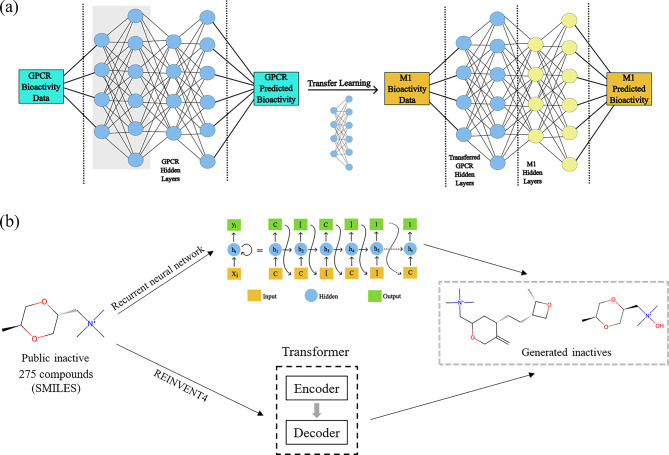
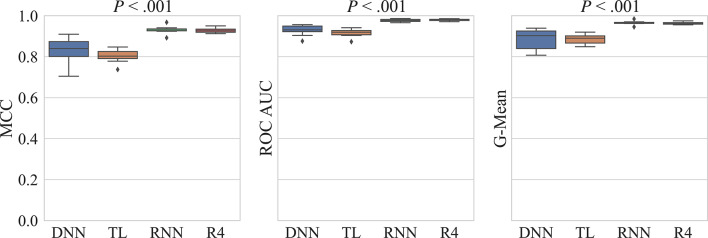
Muscarinic receptor subtype 1 (M1) is a G protein-coupled receptor (GPCR) and a key pharmacological target for peripheral neuropathy, chronic obstructive pulmonary disease, nerve agent exposures, and cognitive disorders. Screening and identifying compounds with potential to interact with M1 will aid in rational drug design for these disorders. In this work, we developed machine learning-based M1 classification models utilizing publicly available bioactivity data. As inactive compounds are rarely reported in the literature, we encountered the problem of imbalanced datasets. We investigated two strategies to overcome this bottleneck: 1) transfer learning and 2) using generative models to oversample the inactive class. Our analysis shows that these approaches reduced misclassification of the inactive class not only for M1 but also for other GPCR targets. Overall, we have developed classification models for M1 receptor that will enable rapid screening of large chemical databases and advance drug discovery.
毒蕈碱受体亚型1(M1)是一种G蛋白偶联受体(GPCR),是治疗周围神经病变、慢性阻塞性肺疾病、神经毒剂暴露和认知障碍的关键药理学靶点。筛选和鉴定具有与M1相互作用潜力的化合物将有助于针对这些疾病进行合理的药物设计。在这项工作中,我们利用公开可用的生物活性数据开发了基于机器学习的M1分类模型。由于文献中很少报道无活性化合物,我们遇到了数据集不平衡的问题。我们研究了两种策略来克服这一瓶颈:1)迁移学习和2)使用生成模型对无活性类别进行过采样。我们的分析表明,这些方法不仅减少了M1无活性类别的误分类,也减少了其他GPCR靶点无活性类别的误分类。总体而言,我们已经开发了M1受体的分类模型,该模型将能够快速筛选大型化学数据库并推动药物发现。