Wang Zhenwei, Dai Zhihong, Gao Yuren, Zhao Zhongxiang, Li Zhen, Wang Liang, Gao Xiang, Qiu Qiuqiu, Qiu Xiaofu, Liu Zhiyu
Department of Urology, Second Hospital of Dalian Medical University, Dalian, 116023, China.
Department of Urology, The Affiliated Guangdong Second Provincial General Hospital of Jinan University, Guangzhou, 510317, China.
Discov Oncol. 2025 May 13;16(1):744. doi: 10.1007/s12672-025-02484-5.
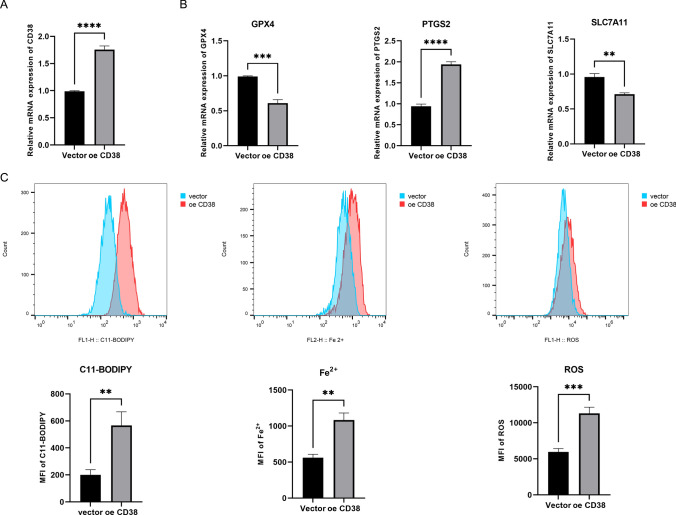
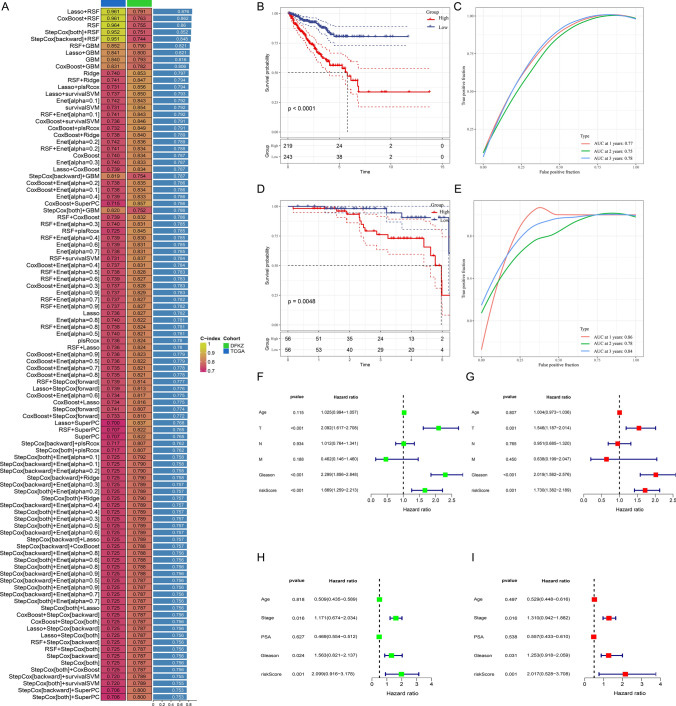
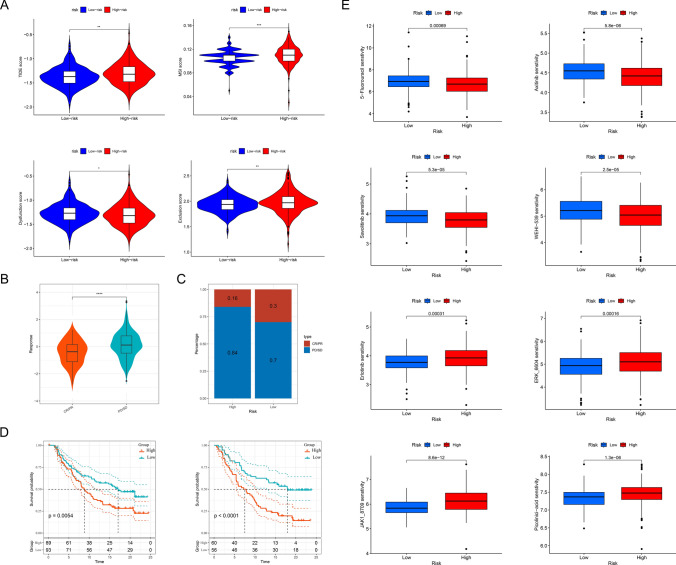
Prostate cancer (PCa) remains a leading cause of cancer-related mortality, necessitating robust prognostic models and personalized therapeutic strategies. This study integrated bulk RNA sequencing, single-cell RNA sequencing (scRNA-seq), and spatial transcriptomics to construct a prognostic model based on genes shared between ferroptosis and fatty acid metabolism (FAM). Using the TCGA-PRAD dataset, we identified 73 differentially expressed genes (DEGs) at the intersection of ferroptosis and FAM, of which 19 were significantly associated with progression-free survival (PFS). A machine learning-based prognostic model, optimized using the Lasso + Random Survival Forest (RSF) algorithm, achieved a high C-index of 0.876 and demonstrated strong predictive accuracy (1-, 2-, and 3-year AUCs: 0.77, 0.75, and 0.78, respectively). The model, validated in the DFKZ cohort, stratified patients into high- and low-risk groups, with the high-risk group exhibiting worse PFS and higher tumor mutation burden (TMB). Functional enrichment analysis revealed distinct pathway activities, with high-risk patients showing enrichment in immune-related and proliferative pathways, while low-risk patients were enriched in metabolic pathways. Immune microenvironment analysis revealed heightened immune activity in high-risk patients, characterized by increased infiltration of CD8 + T cells, regulatory T cells, and M2 macrophages, alongside elevated TIDE scores, suggesting immune evasion and resistance to immunotherapy. In contrast, low-risk patients exhibited higher infiltration of plasma cells and neutrophils and demonstrated better responses to immune checkpoint inhibitors (ICIs). Spatial transcriptomics and scRNA-seq further elucidated the spatial distribution of model genes, highlighting the central role of macrophages in mediating risk stratification. Additionally, chemotherapy sensitivity analysis identified potential therapeutic agents, such as Erlotinib and Picolinic acid, for low-risk patients. In vitro experiments showed that overexpression of CD38 in the PC-3 cell line led to elevated lipid peroxidation (C11-BODIPY) and reactive oxygen species (ROS), suggesting increased cell ferroptosis. These findings provide a comprehensive framework for risk stratification and personalized treatment in PCa, bridging molecular mechanisms with clinical outcomes.
前列腺癌(PCa)仍然是癌症相关死亡的主要原因,因此需要强大的预后模型和个性化治疗策略。本研究整合了批量RNA测序、单细胞RNA测序(scRNA-seq)和空间转录组学,以构建基于铁死亡和脂肪酸代谢(FAM)共同基因的预后模型。使用TCGA-PRAD数据集,我们在铁死亡和FAM的交叉点鉴定出73个差异表达基因(DEG),其中19个与无进展生存期(PFS)显著相关。基于机器学习的预后模型,使用套索+随机生存森林(RSF)算法进行优化,获得了0.876的高C指数,并显示出强大的预测准确性(1年、2年和3年AUC分别为0.77、0.75和0.78)。该模型在DFKZ队列中得到验证,将患者分为高风险和低风险组,高风险组的PFS较差且肿瘤突变负担(TMB)较高。功能富集分析揭示了不同的通路活性,高风险患者在免疫相关和增殖通路中富集,而低风险患者在代谢通路中富集。免疫微环境分析显示高风险患者的免疫活性增强,其特征是CD8 + T细胞、调节性T细胞和M2巨噬细胞的浸润增加,同时TIDE评分升高,提示免疫逃逸和对免疫治疗的抗性。相比之下,低风险患者表现出更高的浆细胞和中性粒细胞浸润,并对免疫检查点抑制剂(ICI)表现出更好的反应。空间转录组学和scRNA-seq进一步阐明了模型基因的空间分布,突出了巨噬细胞在介导风险分层中的核心作用。此外,化疗敏感性分析确定了潜在的治疗药物,如厄洛替尼和吡啶甲酸,用于低风险患者。体外实验表明,PC-3细胞系中CD38的过表达导致脂质过氧化(C11-硼二吡咯)和活性氧(ROS)升高,提示细胞铁死亡增加。这些发现为PCa的风险分层和个性化治疗提供了一个全面的框架,将分子机制与临床结果联系起来。