Shi Jintai, Cui Xiaoyan, Wang Junlin, Liu Guangqia, Meng Jiayin, Zhang Yingjie
College of Medicine, Shandong University of Traditional Chinese Medicine, Jinan, China.
Pharmacy Department, Jinan Huaiyin People's Hospital, Jinan, China.
Front Immunol. 2025 Apr 28;16:1564603. doi: 10.3389/fimmu.2025.1564603. eCollection 2025.
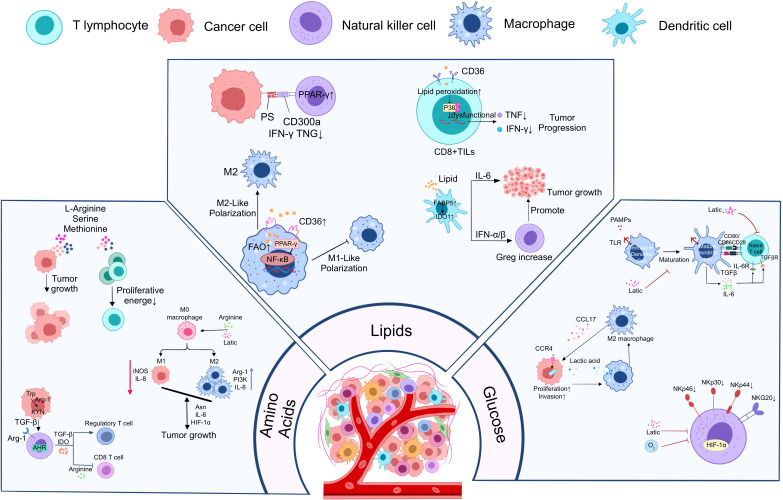
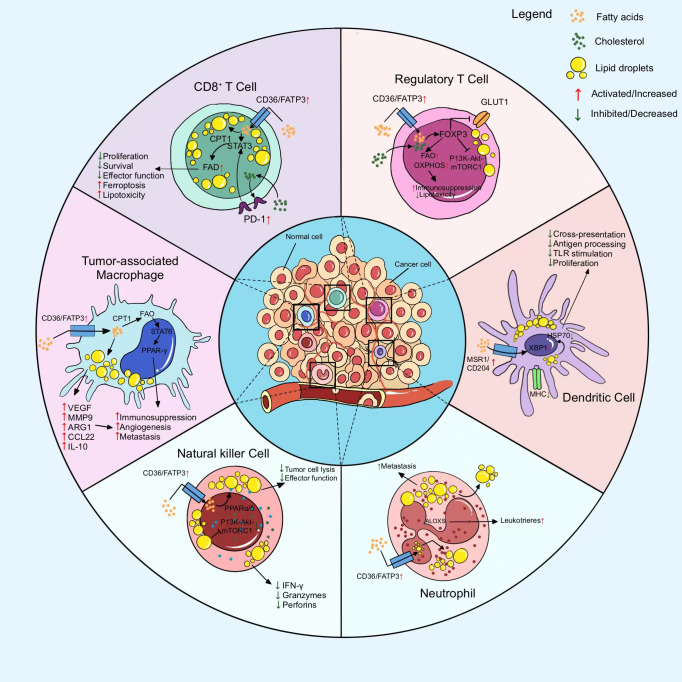
In recent years, the incidence and mortality of pancreatic cancer (PC) are increasing year by year. The highly heterogeneous nature of PC, its strong immune escape ability and easy metastasis make it the most lethal malignant tumor in the world. With the rapid development of sequencing technology, the complex components in the tumor microenvironment (TME) of PC have been gradually revealed. Interactions between pancreatic stellate cells, tumor-associated fibroblasts, various types of immune cells, and cancer cells collectively promote metabolic reprogramming of all types of cells. This metabolic reprogramming further enhances the immune escape mechanism of tumor cells and ultimately induces tumor cells to become severely resistant to chemotherapy and immunotherapy. On the one hand, PC cells achieve re and rational utilization of glucose, amino acids and lipids through metabolic reprogramming, which in turn accomplishes biosynthesis and energy metabolism requirements. Under such conditions, tumorigenesis, proliferation and metastasis are ultimately promoted. On the other hand, various types of immune cells in the tumor immune microenvironment (TIME) also undergo metabolic reprogramming, which leads to tumor progression and suppression of anti-immune responses by inhibiting the function of normal anti-tumor immune cells and enhancing the function of immunosuppressive cells. The aim of this review is to explore the interaction between the immune microenvironment and metabolic reprogramming in PC. The focus is to summarize the specific mechanisms of action of metabolic reprogramming of PC cells and metabolic reprogramming of immune cells. In addition, this review will summarize the mechanisms of immunotherapy resistance in PC cells. In the future, targeting specific mechanisms of metabolic reprogramming will provide a solid theoretical basis for the development of combination therapies for PC.
近年来,胰腺癌(PC)的发病率和死亡率逐年上升。PC的高度异质性、强大的免疫逃逸能力和易转移特性使其成为世界上最致命的恶性肿瘤。随着测序技术的快速发展,PC肿瘤微环境(TME)中的复杂成分逐渐被揭示。胰腺星状细胞、肿瘤相关成纤维细胞、各类免疫细胞与癌细胞之间的相互作用共同促进了所有类型细胞的代谢重编程。这种代谢重编程进一步增强了肿瘤细胞的免疫逃逸机制,并最终导致肿瘤细胞对化疗和免疫治疗产生严重抗性。一方面,PC细胞通过代谢重编程实现对葡萄糖、氨基酸和脂质的重新合理利用,进而满足生物合成和能量代谢需求。在这种情况下,最终促进肿瘤发生、增殖和转移。另一方面,肿瘤免疫微环境(TIME)中的各类免疫细胞也会发生代谢重编程,通过抑制正常抗肿瘤免疫细胞的功能并增强免疫抑制细胞的功能,导致肿瘤进展和抗免疫反应受到抑制。本综述的目的是探讨PC免疫微环境与代谢重编程之间的相互作用。重点是总结PC细胞代谢重编程和免疫细胞代谢重编程的具体作用机制。此外,本综述还将总结PC细胞免疫治疗抗性的机制。未来,针对代谢重编程的特定机制将为PC联合治疗的发展提供坚实的理论基础。