Hong Bin, Zhang Shan, Yuan Di, Shan Shan, Zhang Jing-Yi, Sha Di-Xin, Chen Da-Peng, Yin Wei-Wei, Lu Shu-Wen, Ren Chuan-Ying
Food Processing Research Institute, Heilongjiang Academy of Agricultural Sciences, Harbin 150086, China.
Heilongjiang Province Key Laboratory of Food Processing, Harbin 150086, China.
Foods. 2025 May 5;14(9):1630. doi: 10.3390/foods14091630.
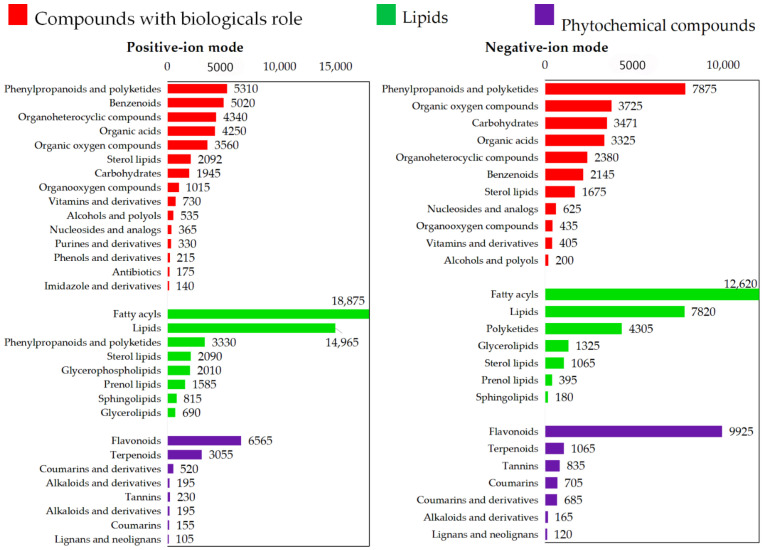
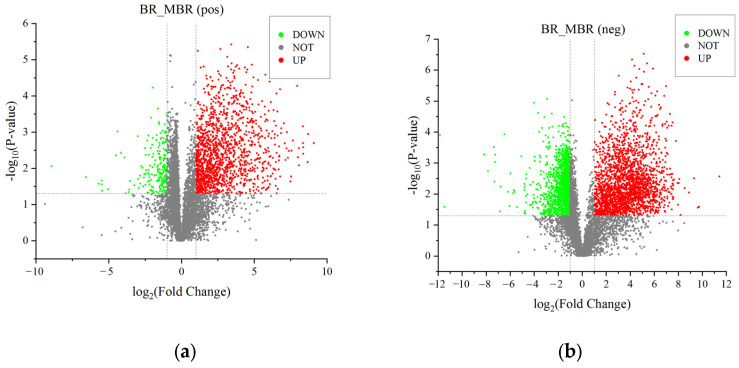
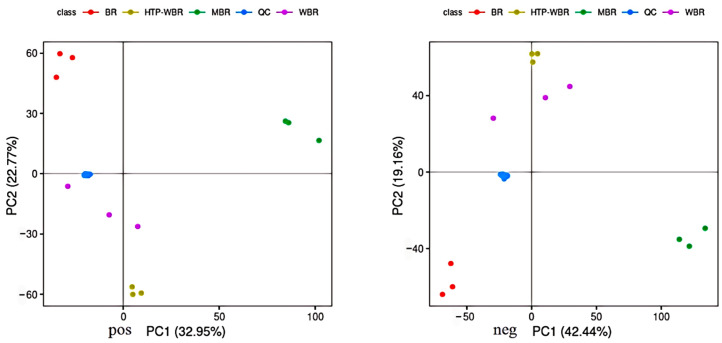
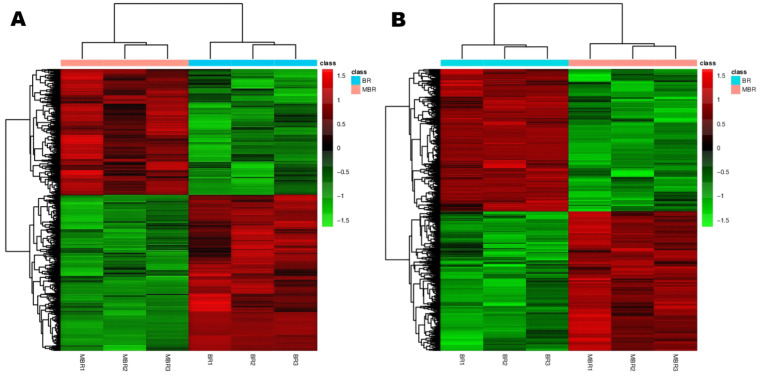
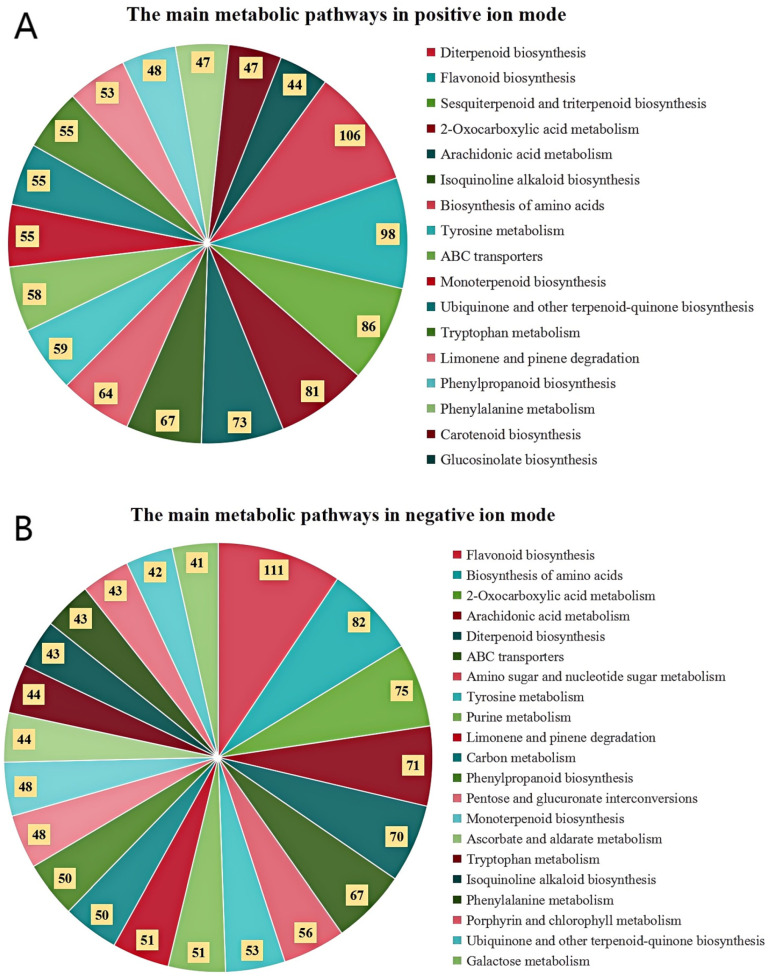
In this study, liquid chromatography-mass spectrometry (LC-MS) was employed to conduct untargeted metabolomics analysis on black rice (BR), milled black rice (MBR), wet germinated black rice (WBR), and high-temperature and high-pressure-treated WBR (HTP-WBR). A total of 6988 positive ions and 7099 negative ions (multiple difference ≥1.2 or ≤0.8333, < 0.05, and variable importance in projection ≥1) were isolated, and 98 and 100 differential metabolic pathways were identified between the different samples in the positive and negative ion modes, respectively. Distinctive variations in the metabolic compositions of BR, MBR, WBR, and HTP-WBR were observed. Flavonoids, fatty acids, lipids, phenylpropanoids, polyketides, benzenoids, and organooxygen were the dominant differential metabolites. Milling removed the majority of bran-associated bioactive components such as phenolic acids, anthocyanins, micronutrients, fatty acids, antioxidants, and dietary fiber. The germination process significantly reduced the number of flavonoids, polyketides, and lipid-related metabolites, while enzymatic activation notably increased the number of organic acids and amino acids. HTP treatment synergistically enhanced the content of heat-stable flavonoids and polyketides, while simultaneously promoting fatty acid β-oxidation. These findings establish novel theoretical foundations for optimizing processing methodologies and advancing functional characterization in black rice product development.
在本研究中,采用液相色谱 - 质谱联用(LC-MS)技术对黑米(BR)、糙米(MBR)、湿发芽黑米(WBR)以及高温高压处理的WBR(HTP-WBR)进行非靶向代谢组学分析。共分离出6988个正离子和7099个负离子(倍数差异≥1.2或≤0.8333,<0.05,且投影变量重要性≥1),并分别在正离子和负离子模式下鉴定出不同样品间98条和100条差异代谢途径。观察到BR、MBR、WBR和HTP-WBR的代谢组成存在显著差异。黄酮类化合物、脂肪酸、脂质、苯丙烷类、聚酮类、苯类化合物和有机氧化物是主要的差异代谢物。碾磨去除了大部分与麸皮相关的生物活性成分,如酚酸、花青素、微量营养素、脂肪酸、抗氧化剂和膳食纤维。发芽过程显著减少了黄酮类化合物、聚酮类和脂质相关代谢物的数量,而酶激活则显著增加了有机酸和氨基酸的数量。HTP处理协同提高了热稳定黄酮类化合物和聚酮类的含量,同时促进了脂肪酸β-氧化。这些发现为优化黑米产品开发中的加工方法和推进功能表征奠定了新的理论基础。