Winter Andreas, Nepper Pascal, Hermann Marcus, Bayer Franziska, Riess Stephanie, Salem Razan, Hlavicka Jan, Prinzing Anatol, Hecker Florian, Holubec Tomas, Zacharowski Kai, Walther Thomas, Emrich Fabian
Department of Cardiovascular Surgery, University Hospital Frankfurt, Goethe University, 60629 Frankfurt am Main, Germany.
Central Research Unit, Goethe University Frankfurt, 60629 Frankfurt am Main, Germany.
Int J Mol Sci. 2025 Apr 24;26(9):4040. doi: 10.3390/ijms26094040.
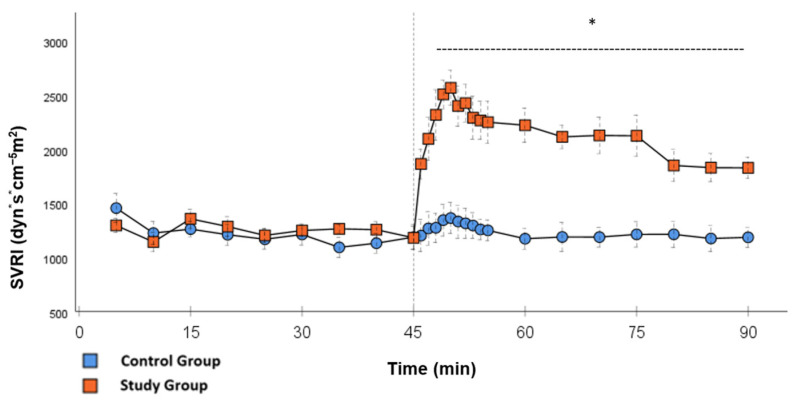
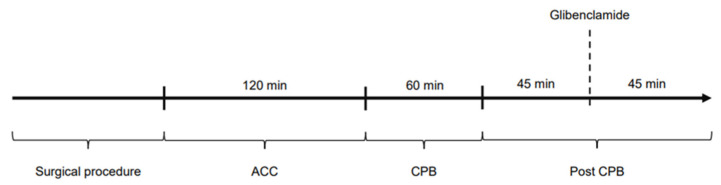
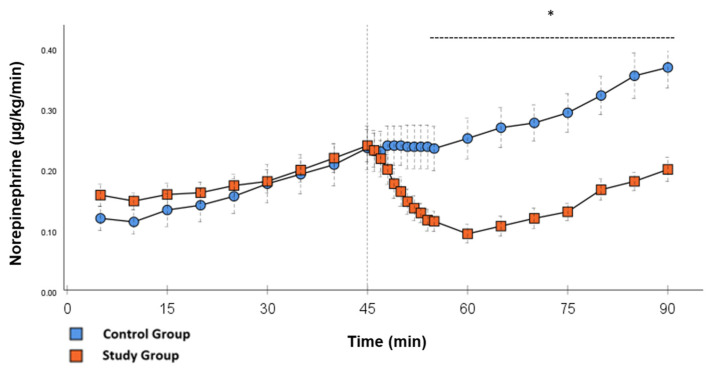
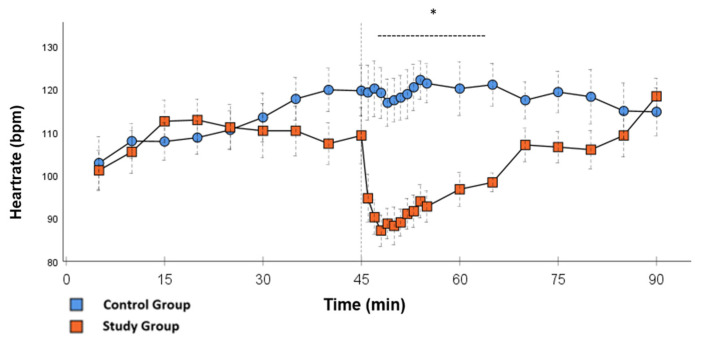
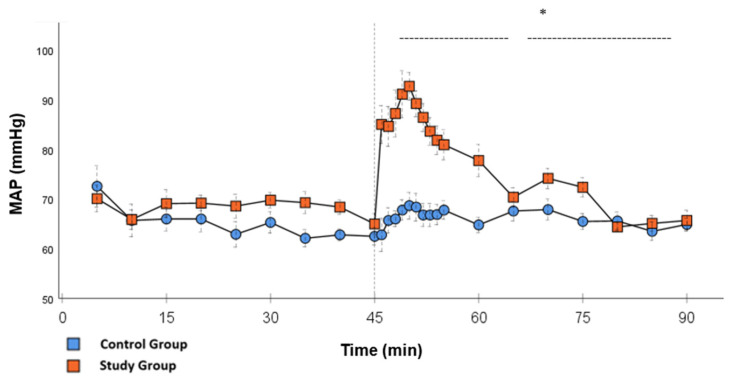
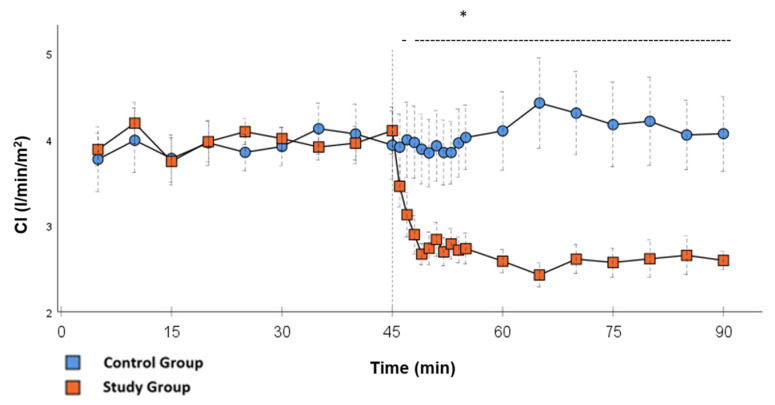
The hemodynamic stabilization of patients after complex cardiac surgery is a daily challenge. The use of high doses of catecholamines is common but has potential adverse effects. Glibenclamide, a K blocker, seems to attenuate vasoplegia in different animal models of septic shock. Therefore, the aim of this study was to investigate the impact of Glibenclamide on the vasoplegic syndrome after cardiopulmonary bypass in a porcine model. In this experimental study, 20 landrace pigs were randomized into two groups and examined: In the control group, standard medical therapy, including norepinephrine, was used, and in the study group standard medical therapy plus additional Glibenclamide was administered. Following general anesthesia, prolonged cardiopulmonary bypass and aortic cross-clamping was performed. In the study group, Glibenclamide was administered 45 min after weaning from cardiopulmonary bypass. The dosage used was 10 mg/kg as a bolus, followed by a continuous infusion of 10 mg/kg/h. Hemodynamic and laboratory measurements were performed. Glibenclamide had a relevant effect on circulatory parameters. With increasing vascular resistance and blood pressure, norepinephrine was able to be reduced. While the heart rate dropped to physiological levels, the cardiac index decreased as well. The results lead to the conclusion that Glibenclamide was able to break through vasoplegic syndrome and could therefore serve as a potent drug to stabilize patients after cardiac surgery.
复杂心脏手术后患者的血流动力学稳定是一项日常挑战。高剂量使用儿茶酚胺很常见,但有潜在的不良反应。格列本脲是一种钾通道阻滞剂,在不同的脓毒性休克动物模型中似乎能减轻血管麻痹。因此,本研究的目的是在猪模型中研究格列本脲对体外循环后血管麻痹综合征的影响。在这项实验研究中,将20头长白猪随机分为两组并进行检查:对照组采用包括去甲肾上腺素在内的标准药物治疗,研究组采用标准药物治疗加额外的格列本脲。全身麻醉后,进行长时间的体外循环和主动脉交叉阻断。在研究组中,体外循环撤机后45分钟给予格列本脲。使用的剂量为10mg/kg静脉推注,随后以10mg/kg/h持续输注。进行了血流动力学和实验室测量。格列本脲对循环参数有显著影响。随着血管阻力和血压升高,去甲肾上腺素用量能够减少。虽然心率降至生理水平,但心脏指数也下降了。结果得出结论,格列本脲能够突破血管麻痹综合征,因此可作为一种有效药物用于稳定心脏手术后的患者。