Department of Critical Care Medicine, Second Affiliated Hospital, Zhejiang University School of Medicine, Hangzhou 310009, China.
Institute of Immunology, and Department of Orthopaedics of the Second Affiliated Hospital, Zhejiang University School of Medicine, Hangzhou 310009, China.
Mediators Inflamm. 2022 Feb 11;2022:8457010. doi: 10.1155/2022/8457010. eCollection 2022.
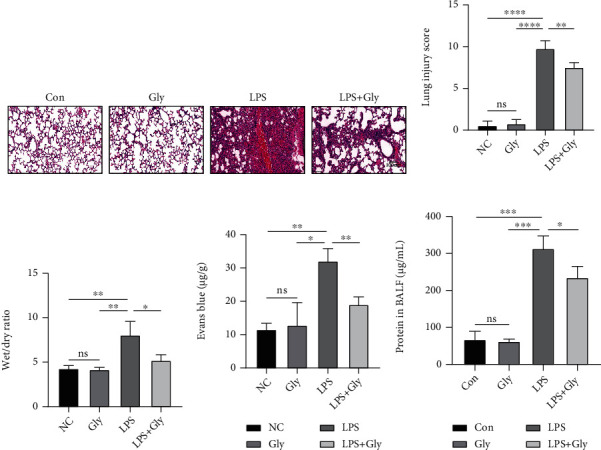
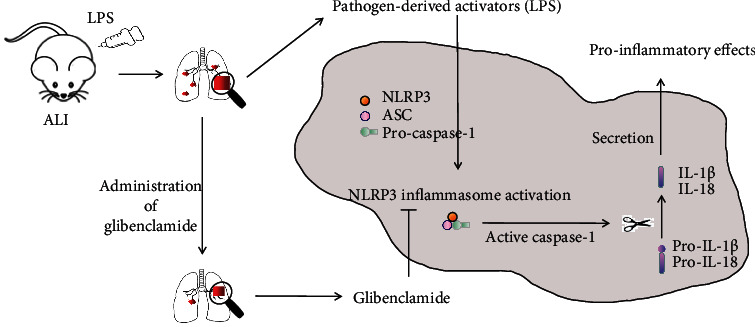
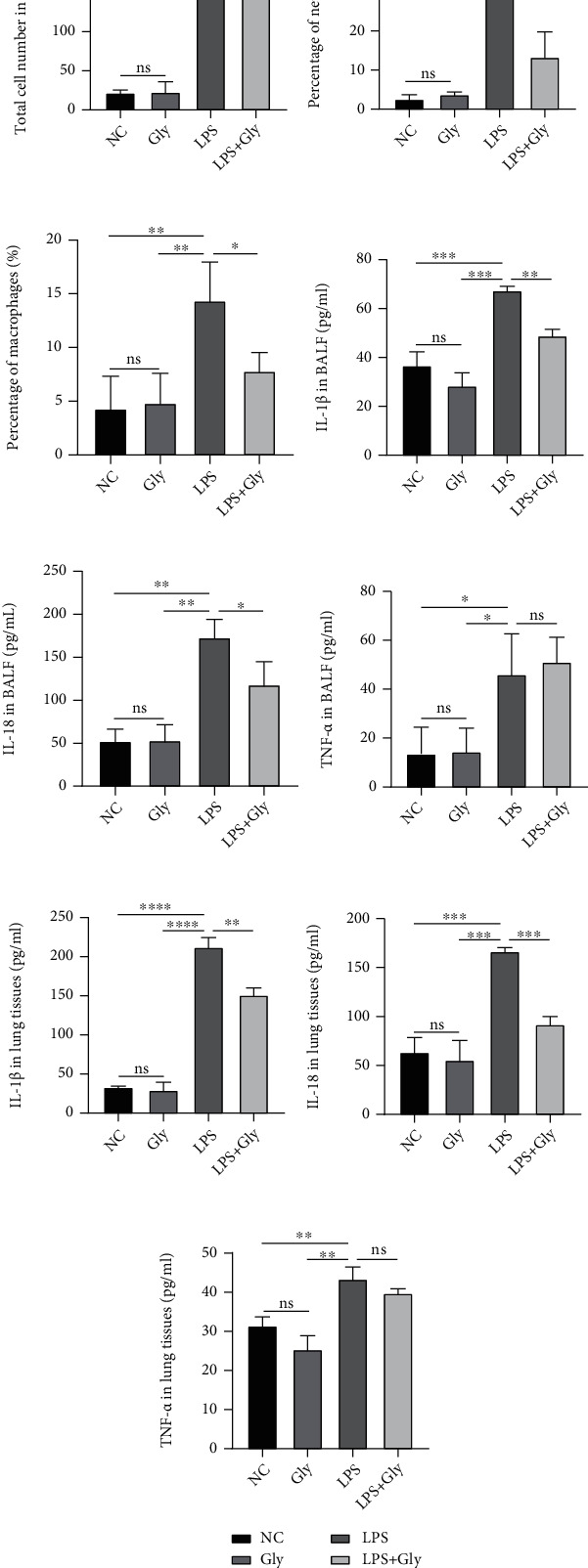
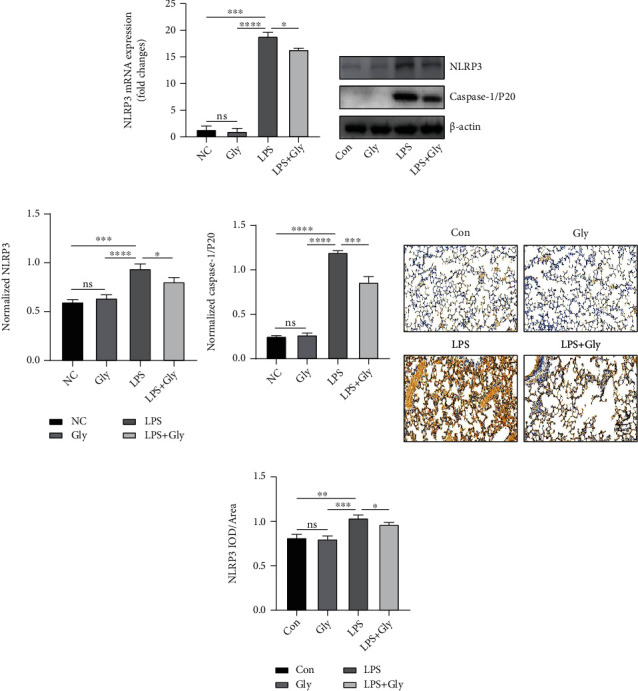
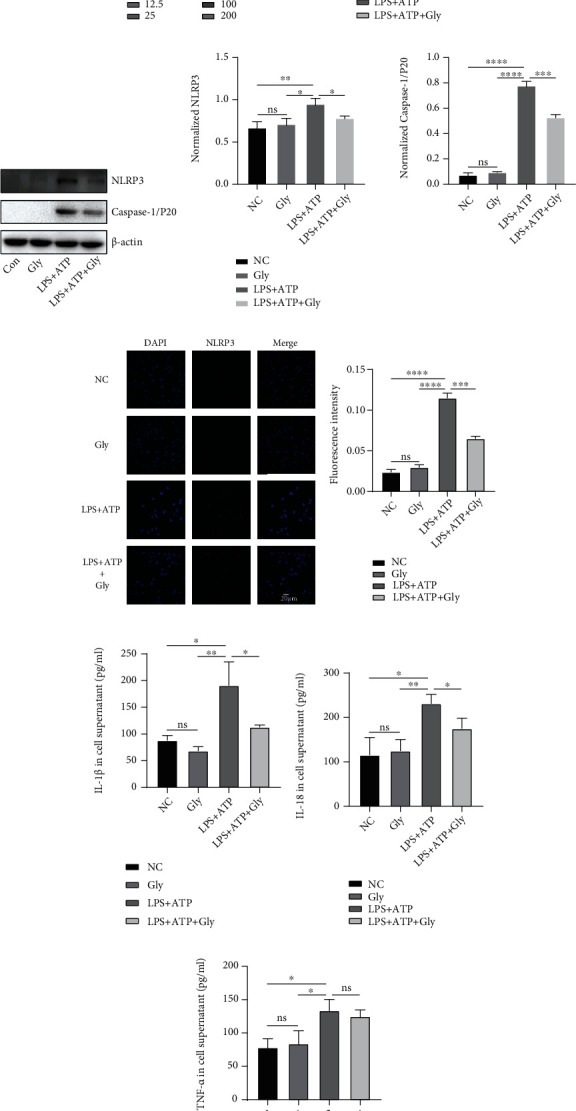
Glibenclamide displays an anti-inflammatory response in various pulmonary diseases, but its exact role in lipopolysaccharide- (LPS-) induced acute lung injury (ALI) or acute respiratory distress syndrome (ARDS) remains unknown. Herein, we aimed to explore the effect of glibenclamide in vivo and in vitro on the development of LPS-induced ALI in a mouse model. LPS stimulation resulted in increases in lung injury score, wet/dry ratio, and capillary permeability in lungs, as well as in total protein concentration, inflammatory cells, and inflammatory cytokines including IL-1, IL-18 in bronchoalveolar lavage fluid (BALF), and lung tissues, whereas glibenclamide treatment reduced these changes. Meanwhile, the increased proteins of NLRP3 and Caspase-1/p20 after LPS instillation in lungs were downregulated by glibenclamide. Similarly, in vitro experiments also found that glibenclamide administration inhibited the LPS-induced upregulations in cytokine secretions of IL-1 and IL-18, as well as in the expression of components in NLRP3 inflammasome in mouse peritoneal macrophages. Of note, glibenclamide had no effect on the secretion of TNF- in vivo nor in vitro, implicating that its anti-inflammatory effect is relatively specific to NLRP3 inflammasome. In conclusion, glibenclamide alleviates the development of LPS-induced ALI in a mouse model via inhibiting the NLRP3/Caspase-1/IL-1 signaling pathway, which might provide a new strategy for the treatment of LPS-induced ALI.
格列本脲在各种肺部疾病中表现出抗炎反应,但它在脂多糖(LPS)诱导的急性肺损伤(ALI)或急性呼吸窘迫综合征(ARDS)中的确切作用尚不清楚。在此,我们旨在探讨格列本脲在体内和体外对 LPS 诱导的小鼠模型中 ALI 发展的影响。LPS 刺激导致肺损伤评分、湿/干比和肺毛细血管通透性增加,以及支气管肺泡灌洗液(BALF)和肺组织中的总蛋白浓度、炎症细胞和炎症细胞因子(包括 IL-1、IL-18)增加,而格列本脲治疗则降低了这些变化。同时,格列本脲下调了 LPS 诱导的肺组织中 NLRP3 和 Caspase-1/p20 的增加蛋白。同样,体外实验也发现格列本脲给药抑制了 LPS 诱导的细胞因子 IL-1 和 IL-18 的分泌以及小鼠腹腔巨噬细胞中 NLRP3 炎性小体成分的表达上调。值得注意的是,格列本脲对体内和体外 TNF-的分泌没有影响,这表明其抗炎作用相对特异于 NLRP3 炎性小体。总之,格列本脲通过抑制 NLRP3/Caspase-1/IL-1 信号通路缓解了 LPS 诱导的小鼠模型中的 ALI 发展,这可能为治疗 LPS 诱导的 ALI 提供了一种新策略。