Joseph Davis
Faculty of Medicine, McGill University, Montreal, QC H3A 0G4, Canada.
Flogen Technologies Inc., Mount Royal, QC H3P 2T1, Canada.
Int J Mol Sci. 2025 Apr 27;26(9):4143. doi: 10.3390/ijms26094143.
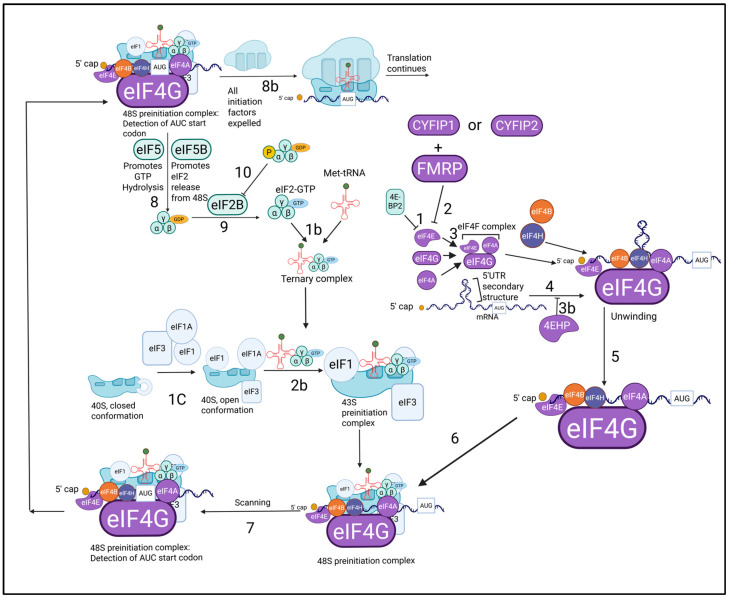
Until now, neurodegenerative diseases like Alzheimer's and Parkinson's have been studied separately in biochemistry and therapeutic drug development, and no causal link has ever been established between them. This study has developed a Unified Theory, which establishes that the regulation of axon and dendrite-specific 4E-BP2 deamidation rates controls the occurrence and progression of neurodegenerative diseases. This is based on identifying axon-specific 4E-BP2 deamidation as a universal denominator for the biochemical processes of deamidation, translational control, oxidative stress, and neurodegeneration. This was achieved by conducting a thorough and critical review of 224 scientific publications regarding (a) deamidation, (b) translational control in protein synthesis initiation, (c) neurodegeneration and (d) oxidative stress, and by applying my discovery of the fundamental neurobiological mechanism behind neuron-specific 4E-BP2 deamidation to practical applications in medicine. Based on this newly developed Unified Theory and my critical review of the scientific literature, I also designed three biochemical flowsheets of (1) in-vivo deamidation, (2) protein synthesis initiation and translational control, and (3) 4E-BP2 deamidation as a control system of the four biochemical processes. The Unified Theory of Neurodegeneration Pathogenesis based on axon deamidation, developed in this work, paves the way to controlling the occurrence and progression of neurodegenerative diseases such as Alzheimer's and Parkinson's through a unique, neuron-specific regulatory system that is 4E-BP2 deamidation, caused by the proteasome-poor environment in neuronal projections, consisting mainly of axons.
到目前为止,像阿尔茨海默病和帕金森病这样的神经退行性疾病在生物化学和治疗药物开发方面一直是分开研究的,而且它们之间从未建立起因果联系。本研究提出了一个统一理论,该理论表明轴突和树突特异性4E-BP2脱酰胺率的调节控制着神经退行性疾病的发生和发展。这是基于将轴突特异性4E-BP2脱酰胺确定为脱酰胺、翻译控制、氧化应激和神经退行性变等生化过程的一个共同特征。这是通过对224篇关于(a)脱酰胺、(b)蛋白质合成起始中的翻译控制、(c)神经退行性变和(d)氧化应激的科学出版物进行全面而批判性的综述,并将我所发现的神经元特异性4E-BP2脱酰胺背后的基本神经生物学机制应用于医学实际应用中而实现的。基于这个新提出的统一理论以及我对科学文献的批判性综述,我还设计了三个生化流程图,分别是(1)体内脱酰胺、(2)蛋白质合成起始和翻译控制,以及(3)作为四个生化过程控制系统的4E-BP2脱酰胺。本研究中基于轴突脱酰胺提出的神经退行性病变发病机制统一理论,为通过一种独特的、神经元特异性调节系统——由神经元突起(主要是轴突)中蛋白酶体缺乏环境导致的4E-BP2脱酰胺,来控制阿尔茨海默病和帕金森病等神经退行性疾病的发生和发展铺平了道路。