
原发性干燥综合征与桥本甲状腺炎之间潜在的共同机制:一项基于公共数据库的研究
Potential common mechanisms between primary Sjögren's syndrome and Hashimoto's thyroiditis: a public databases-based study.
作者信息
Lin Yanjun, Tang Shupin, Lin Yan, Wang Rihui, Xing Yifeng, Xu Zonghe, Li Yan, Fang Qingxia, Wei Wenwei, Wu Dong, Chen Jiang
机构信息
Fujian Key Laboratory of Oral Diseases, School and Hospital of Stomatology, Fujian Medical University, Fuzhou, Fujian, China.
Department of Otorhinolaryngology-Head and Neck Surgery, the First Affiliated Hospital, Fujian Medical University, Fuzhou, Fujian, China.
出版信息
Front Genet. 2025 Apr 29;16:1520332. doi: 10.3389/fgene.2025.1520332. eCollection 2025.
OBJECTIVE
Primary Sjögren's syndrome (pSS) and Hashimoto thyroiditis (HT) can occur in the same patient population, but the mechanism of co-occurrence remains unknown. This study aims to explore the underlying mechanism.
METHODS
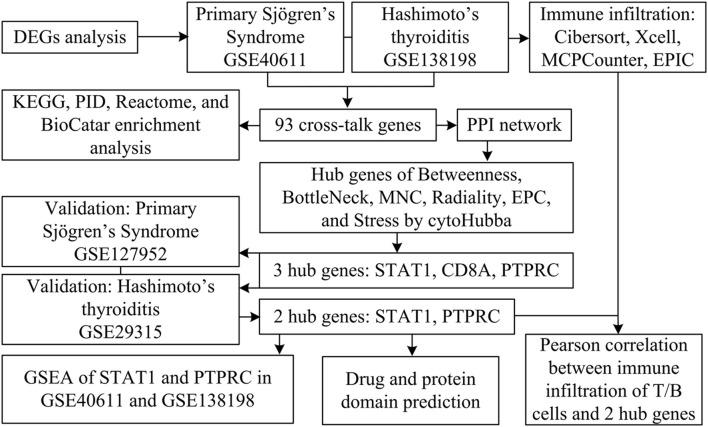
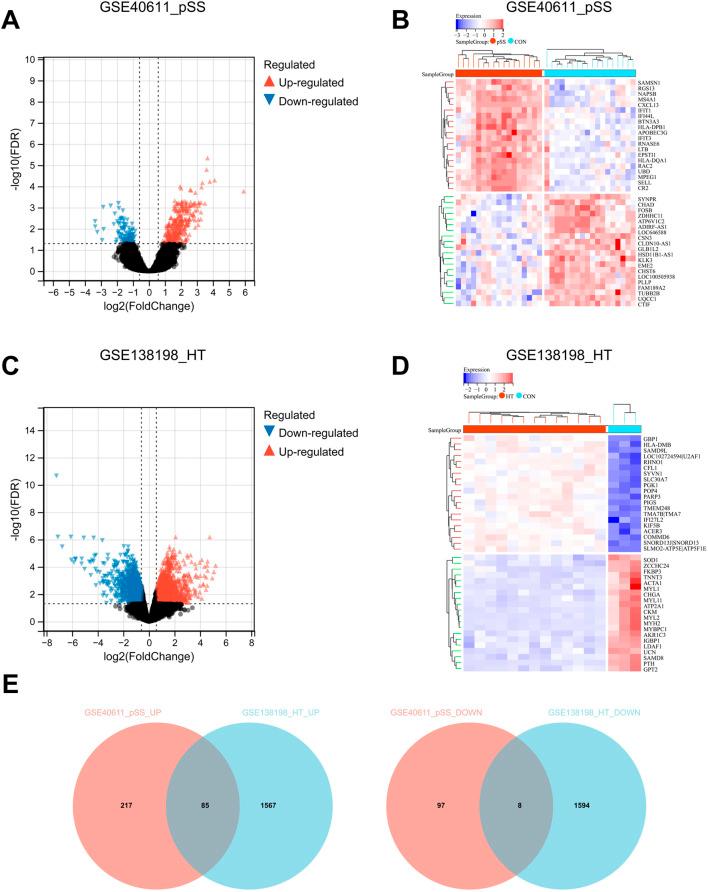
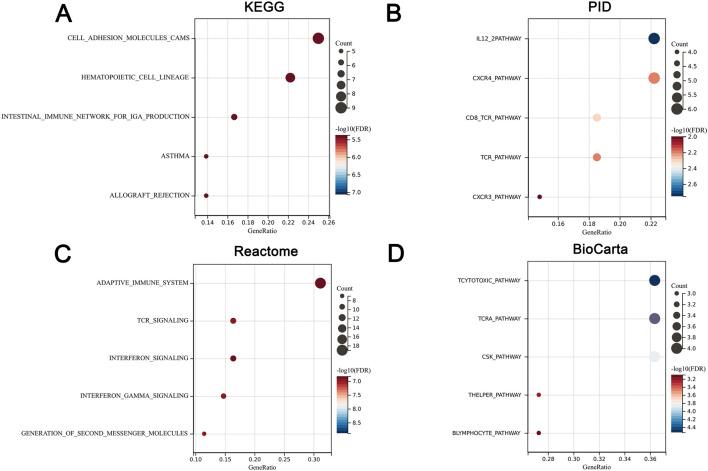
We screened differentially expressed genes (DEGs) in the pSS and HT-related transcriptomic microarrays. Based on KEGG, PID, Reactome, and BioCarta enrichment analysis, pathway annotations were performed. A PPI network was developed using STRING. Betweenness, BottleNeck, MNC, Radiality EPC, and Stress topological analyses were performed to identify hub genes. Then, we used two more datasets to validate the key genes. Immune infiltration landscape of pSS and HT were profiled based on CIBERSORT, Xcell, MCPCounter, and EPIC. Correlation between T/B cells and key genes was performed. Single gene GSEA analysis was performed to further explore enriched pathways of key genes. Finally, we predicted the drugs of key genes and the cross-talk genes targeted in the protein domain.
RESULTS
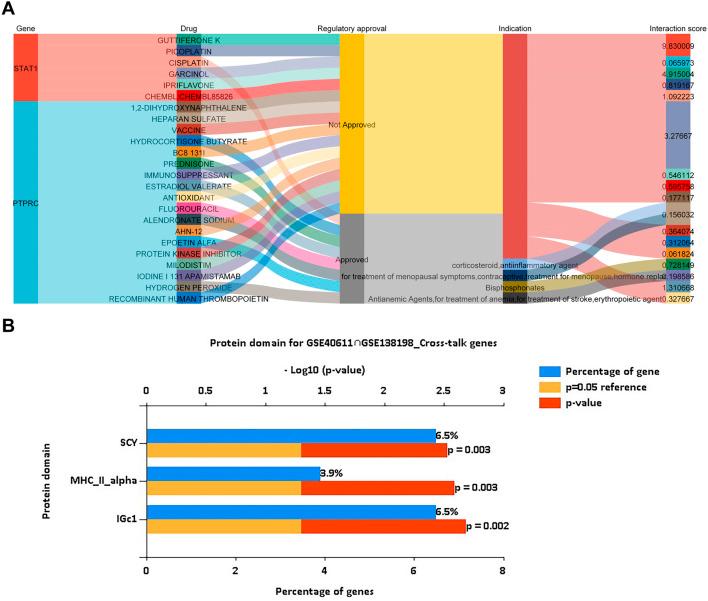
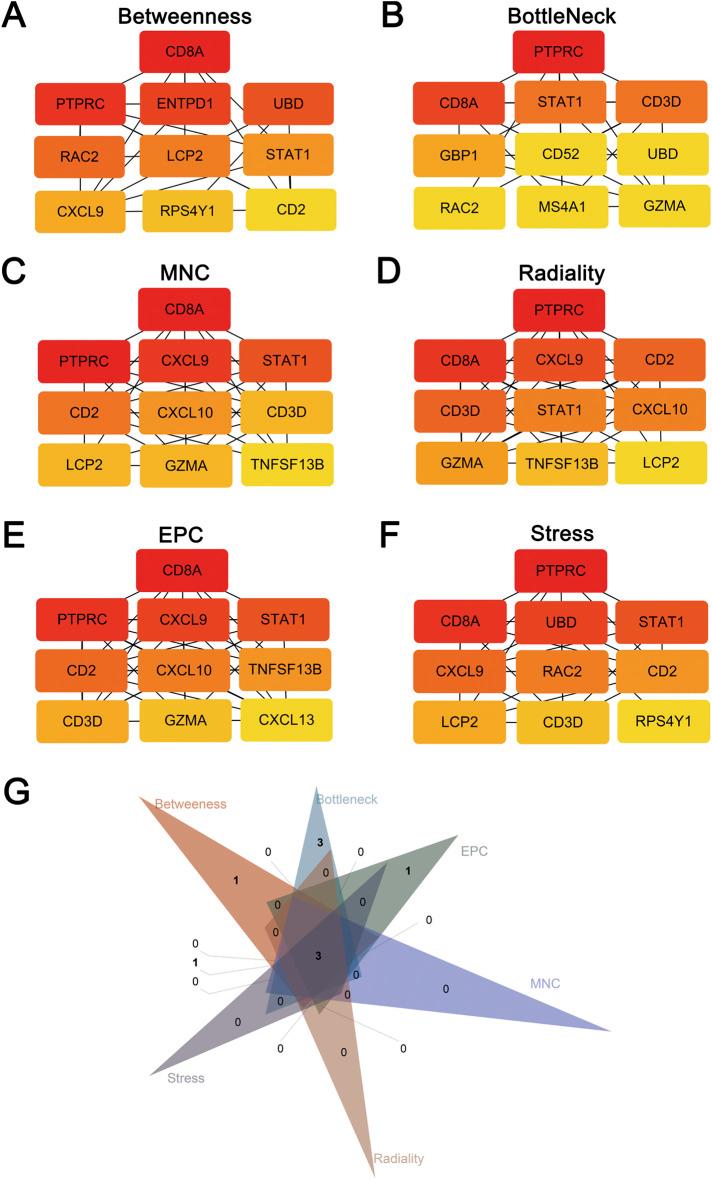
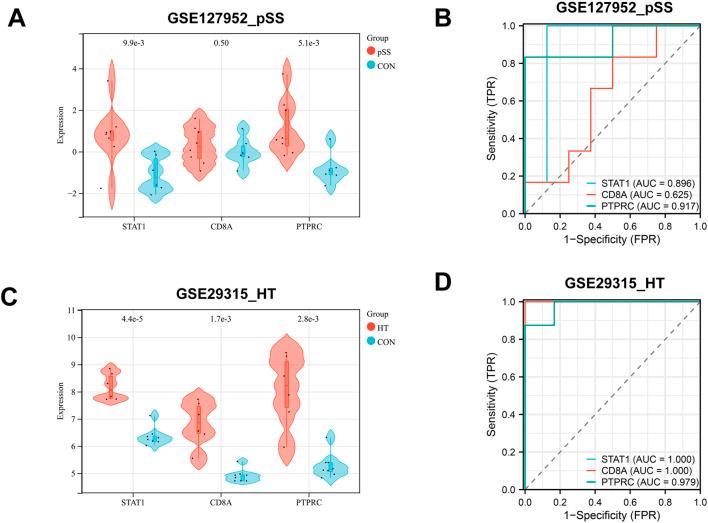
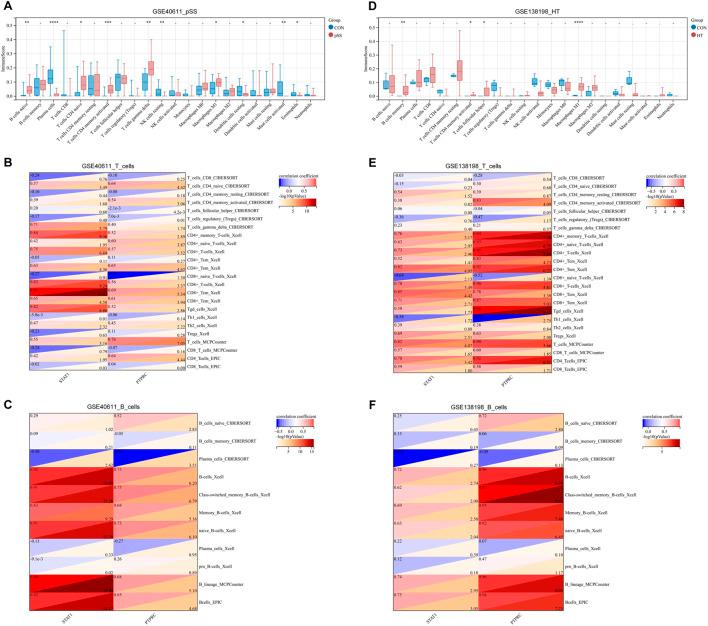
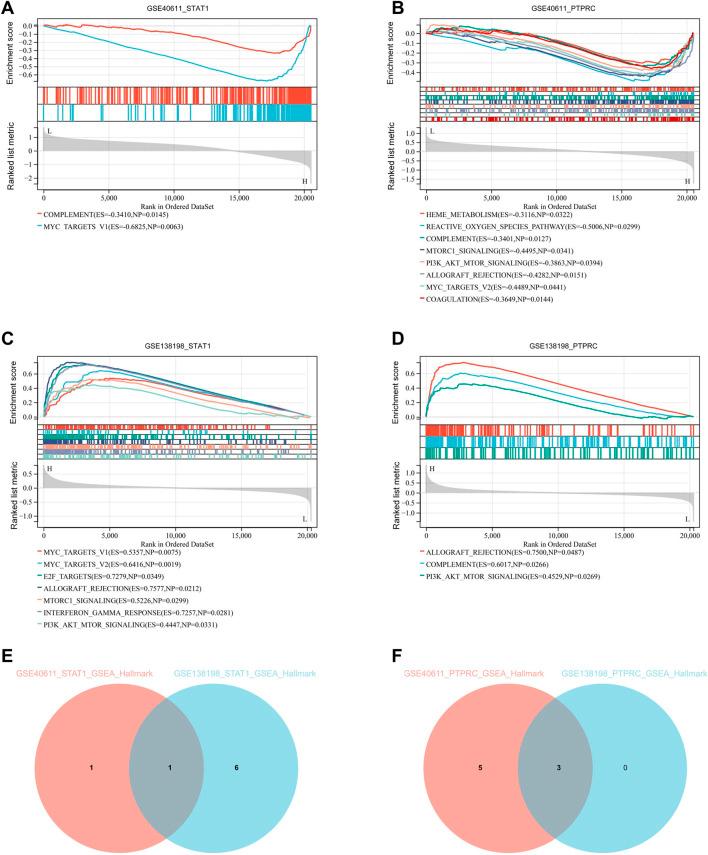
A total of 93 cross-talk genes were found. These genes were mainly related to the immune system. STAT1, CD8A, and PTPRC were identified as hub genes using six topological methods. STAT1 and PTPRC are considered key genes after validation. STAT1 and PTPRC were linked to CD8 Tcm and other immune cells in the pSS and HT dataset. GSEA analysis showed that STAT1 and PTPRC may play a role in pSS and HT through several pathways, including IFNγ response, IFNα response, allograft rejection, E2F targets, complement, G2M checkpoint, IL6-JAK-STAT3 signaling, KRAS signaling up, IL2-STAT5 signaling, IL6-JAK-STAT3-signaling, and inflammatory response. Guttiferone K and picoplatin may be the candidate drugs for the treatment of pSS and HT. Cross-talk genes were mainly enriched in IGc1, MHCIIα and SCY.
CONCLUSION
We analysed databases and gene expression data for pSS and HT. We identified two genes (STAT1, PTPRC) as potential biomarkers of disease activity in pSS and HT. We also gained new insights into the cellular and molecular mechanisms associated with pSS and HT. Based on the key genes and cross-talk genes, we predicted potential drugs and protein domains for pSS and HT.
目的
原发性干燥综合征(pSS)和桥本甲状腺炎(HT)可发生于同一患者群体,但二者共病机制尚不清楚。本研究旨在探索其潜在机制。
方法
我们在pSS和HT相关的转录组微阵列中筛选差异表达基因(DEG)。基于KEGG、PID、Reactome和BioCarta富集分析进行通路注释。使用STRING构建蛋白质-蛋白质相互作用(PPI)网络。进行介数、瓶颈、模块度中心性、辐射度、边介数中心性和应力拓扑分析以识别枢纽基因。然后,我们使用另外两个数据集验证关键基因。基于CIBERSORT、Xcell、MCPCounter和EPIC分析pSS和HT的免疫浸润格局。分析T/B细胞与关键基因之间的相关性。进行单基因基因集富集分析(GSEA)以进一步探索关键基因的富集通路。最后,我们预测了关键基因的药物以及蛋白质结构域中的靶向串扰基因。
结果
共发现93个串扰基因。这些基因主要与免疫系统相关。使用六种拓扑方法将信号转导和转录激活因子1(STAT1)、CD8α(CD8A)和蛋白酪氨酸磷酸酶,受体型C(PTPRC)鉴定为枢纽基因。经验证后,STAT1和PTPRC被视为关键基因。在pSS和HT数据集中,STAT1和PTPRC与中央记忆性CD8 T细胞(CD8 Tcm)和其他免疫细胞相关。GSEA分析表明,STAT1和PTPRC可能通过多种途径在pSS和HT中发挥作用,包括γ干扰素(IFNγ)应答、α干扰素(IFNα)应答、同种异体移植排斥、E2F靶标、补体、G2/M期检查点、白细胞介素6- Janus激酶-信号转导和转录激活因子3(IL6-JAK-STAT3)信号通路、KRAS信号通路激活、白细胞介素2-信号转导和转录激活因子5(IL2-STAT5)信号通路、IL6-JAK-STAT3信号通路以及炎症反应。藤黄双黄酮K和吡铂可能是治疗pSS和HT的候选药物。串扰基因主要富集于免疫球蛋白c1(IGc1)、主要组织相容性复合体II类α链(MHCIIα)和信号肽CUB和EGF结构域包含蛋白(SCY)。
结论
我们分析了pSS和HT的数据库及基因表达数据。我们鉴定出两个基因(STAT1、PTPRC)作为pSS和HT疾病活动的潜在生物标志物。我们还对与pSS和HT相关的细胞和分子机制有了新的认识。基于关键基因和串扰基因,我们预测了pSS和HT的潜在药物及蛋白质结构域。
 Zotero 插件