Second Clinical Medical College, Zhejiang Chinese Medical University, Hangzhou, Zhejiang Province, People's Republic of China.
First Clinical Medical College, Zhejiang Chinese Medical University, Hangzhou, Zhejiang Province, People's Republic of China.
Medicine (Baltimore). 2023 Sep 29;102(39):e35188. doi: 10.1097/MD.0000000000035188.
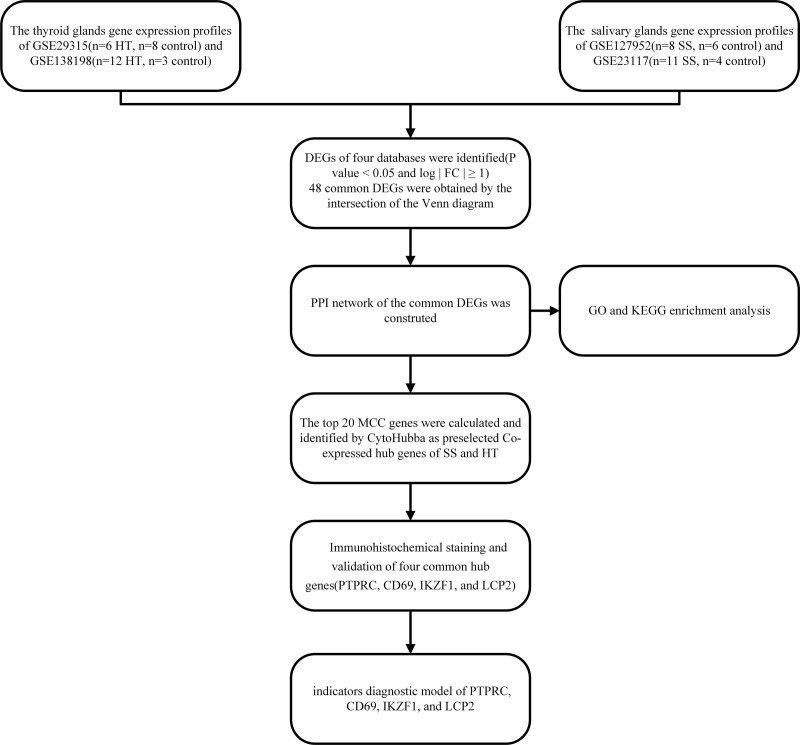
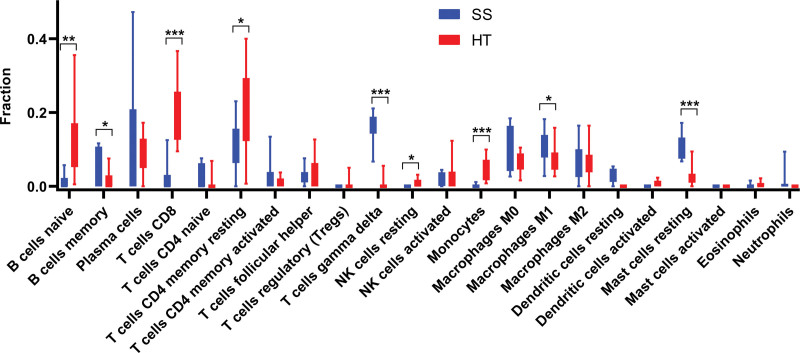
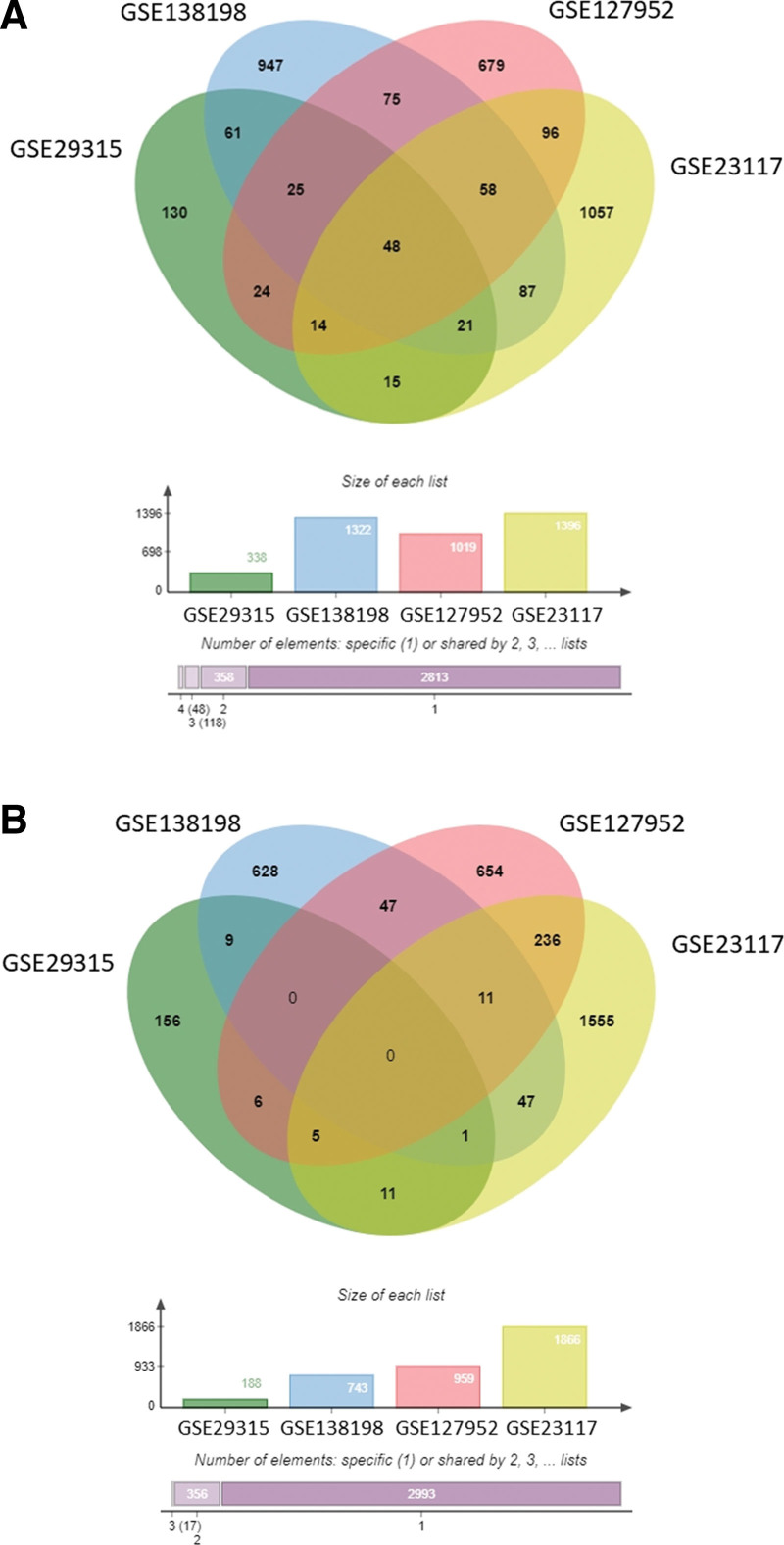
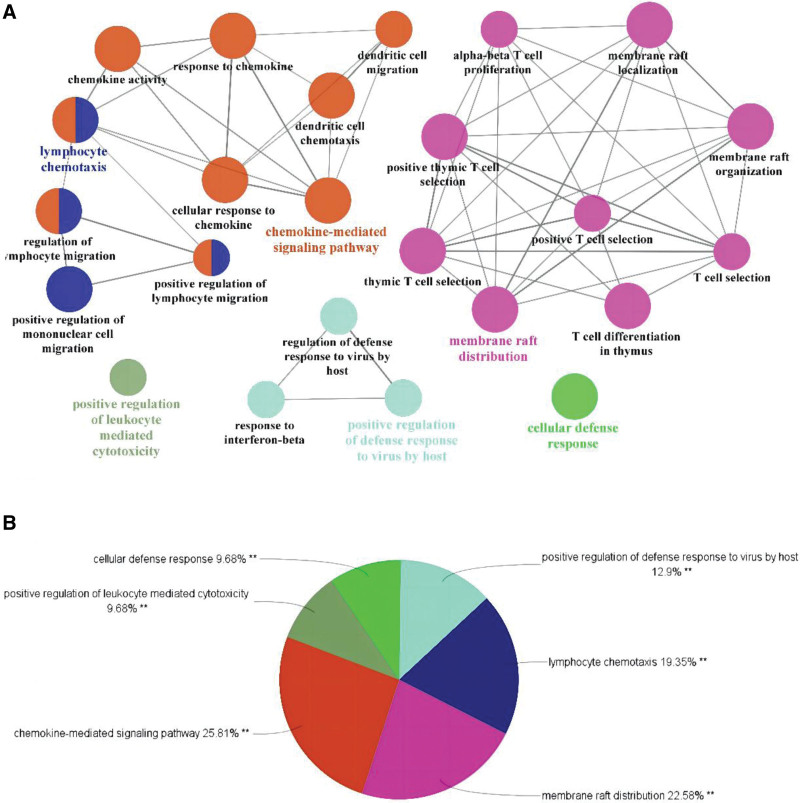
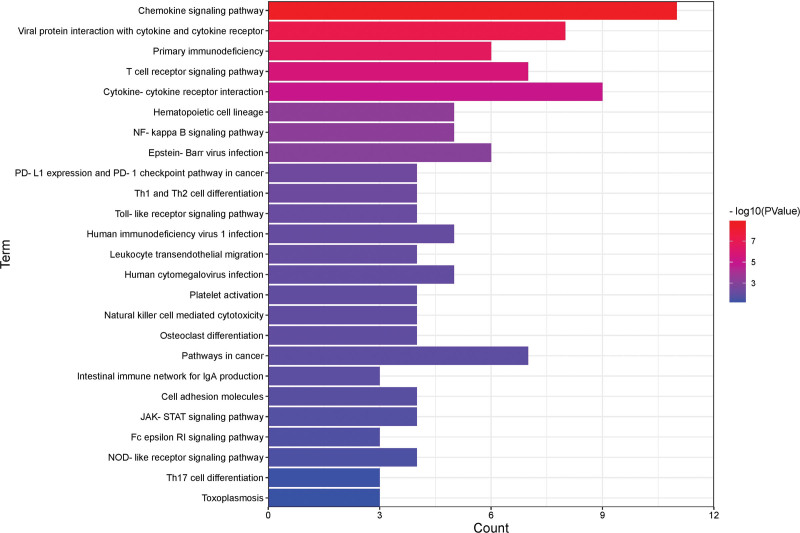
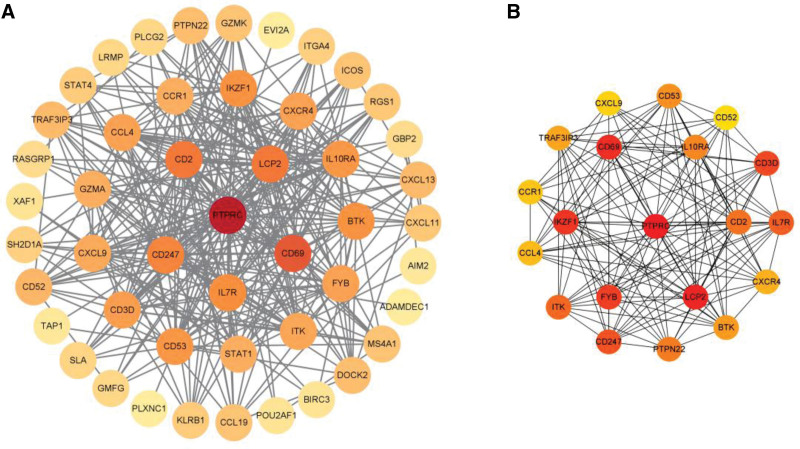
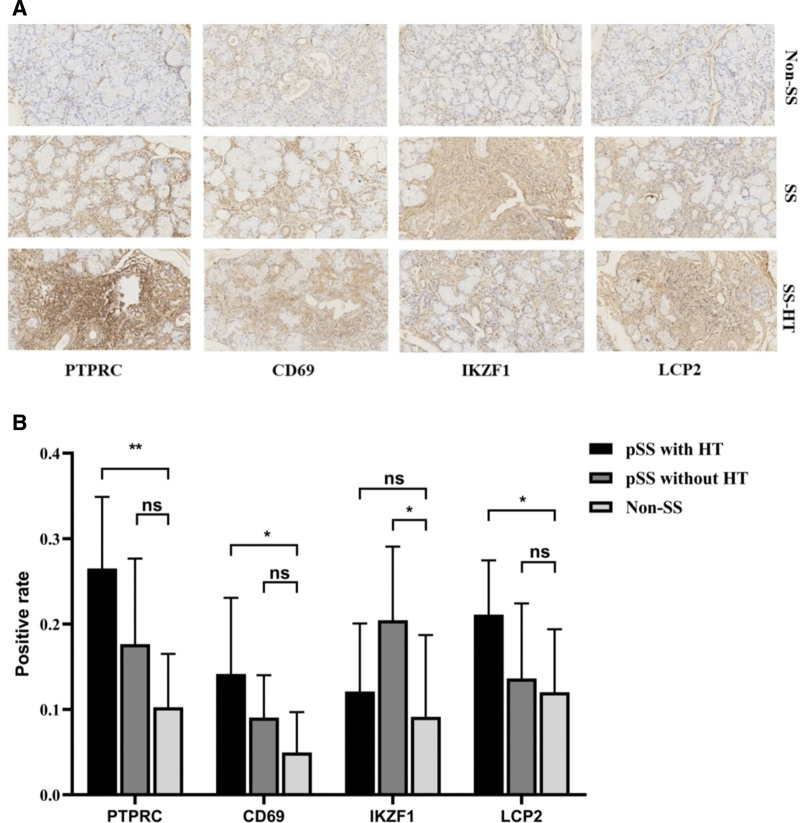
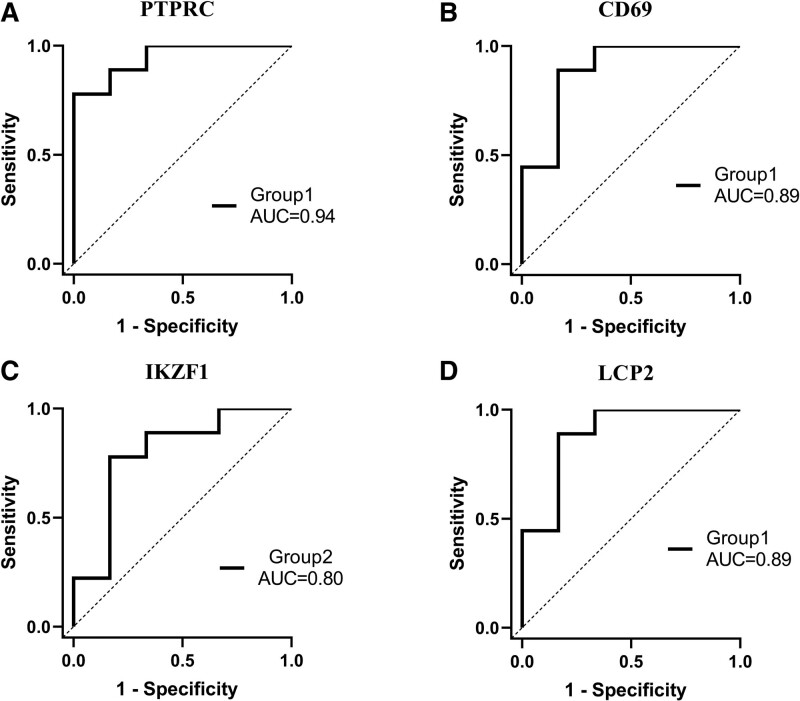
The coexistence of Sjögren's syndrome (SS) and Hashimoto thyroiditis (HT) has been confirmed, but the common mechanism of its co-occurrence remains unknown. This study aims to further explore the underlying mechanism and biomarkers for the co-occurrence of SS and HT. The Gene Expression Omnibus databases were used to obtain gene expression profiles for SS (GSE127952 and GSE23117) and HT (GSE29315 and GSE138198). Following identifying SS and HT's shared differentially expressed genes, functional annotation, protein-protein interaction network creation, and module assembly were performed to discover hub genes. H&E staining and immunohistochemistry were performed to validate the expression of the hub genes in salivary glands. Finally, the receiver operating characteristic (ROC) curve was utilized to assess the discrimination of the hub genes as biomarkers in predicting SS, this study applied CIBERSORTx to analyze the immune infiltration in SS and HT in addition. A total of 48 common differentially expressed genes (48 upregulated genes and 0 downregulated genes) were chosen for further investigation. We analyzed the expression and function of PTPRC, CD69, IKZF1, and lymphocyte cytosolic protein 2 via H&E, immunohistochemistry, and ROC analysis. The 4 hub genes were mainly enriched in the T-cell receptor signaling pathway. We then evaluated and verified the diagnosis value of 4 hub genes in clinical minor labial gland biopsy of SS with HT, SS without HT, and non-SS. ROC analysis revealed that the 4 hub genes had a strong diagnostic value. Our study showed the common pathogenesis of SS and HT. These hub genes and diagnostic models may put forward some new insights for diagnosing and treating SS complicated with HT.
干燥综合征(SS)和桥本甲状腺炎(HT)的共存已得到证实,但两者共同发病的机制尚不清楚。本研究旨在进一步探讨 SS 和 HT 共同发病的潜在机制和生物标志物。使用基因表达综合数据库获得 SS(GSE127952 和 GSE23117)和 HT(GSE29315 和 GSE138198)的基因表达谱。在确定 SS 和 HT 的共同差异表达基因后,进行功能注释、蛋白质-蛋白质相互作用网络创建和模块组装,以发现枢纽基因。进行 H&E 染色和免疫组织化学染色以验证唾液腺中枢纽基因的表达。最后,使用受试者工作特征(ROC)曲线评估枢纽基因作为预测 SS 生物标志物的区分能力,此外,本研究还应用 CIBERSORTx 分析 SS 和 HT 中的免疫浸润。选择了总共 48 个共同差异表达基因(48 个上调基因和 0 个下调基因)进行进一步研究。我们通过 H&E、免疫组织化学和 ROC 分析分析了 PTPRC、CD69、IKZF1 和淋巴细胞胞质蛋白 2 的表达和功能。这 4 个枢纽基因主要富集在 T 细胞受体信号通路中。然后,我们评估和验证了 4 个枢纽基因在 SS 伴 HT、SS 无 HT 和非 SS 的临床小唇腺活检中的诊断价值。ROC 分析表明,这 4 个枢纽基因具有很强的诊断价值。本研究表明了 SS 和 HT 的共同发病机制。这些枢纽基因和诊断模型可能为诊断和治疗 SS 合并 HT 提供一些新的见解。