Saha Amrita, Islam Mohammad Mirazul, Kumar Rahul, Ismail Ashrafali Mohamed, Garcia Emanuel, Gullapali Rama R, Chodosh James, Rajaiya Jaya
Department of Ophthalmology, Massachusetts Eye and Ear, Harvard Medical School, Boston, Massachusetts, United States of America.
Department of Molecular Genetics and Microbiology, University of New Mexico Health Sciences Center, Albuquerque, New Mexico, United States of America.
PLoS Pathog. 2025 May 14;21(5):e1013184. doi: 10.1371/journal.ppat.1013184. eCollection 2025 May.
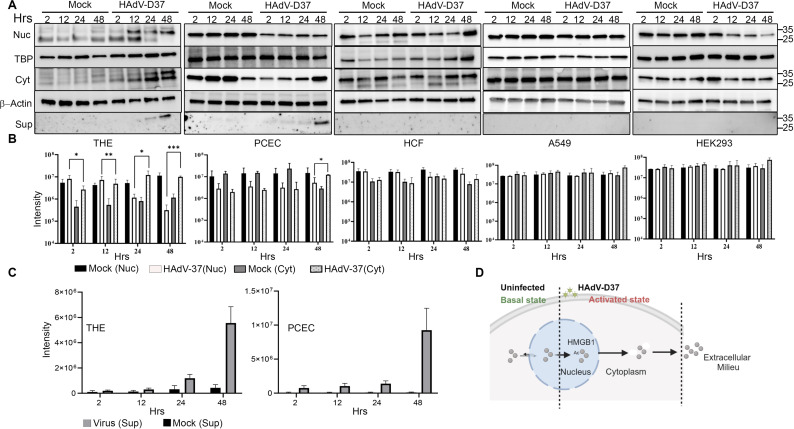
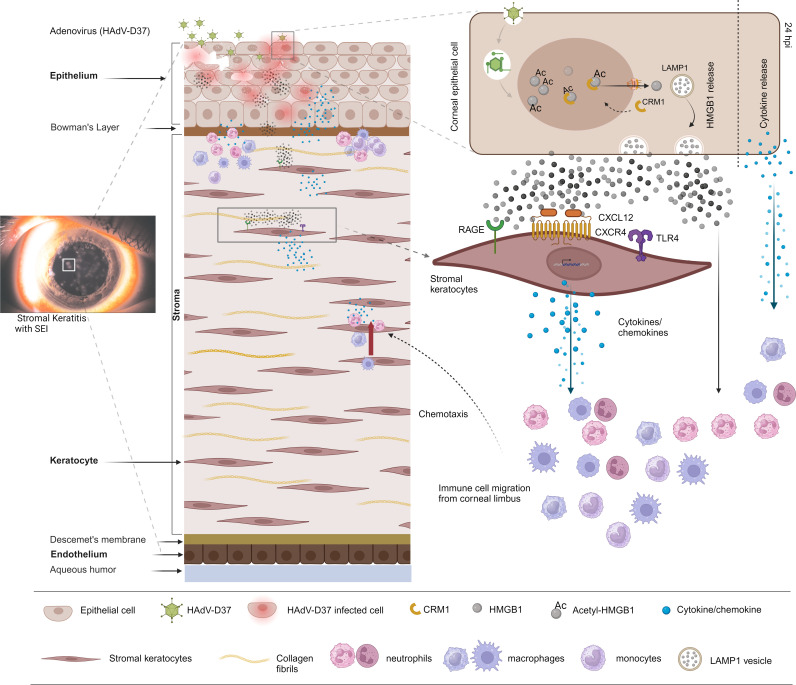
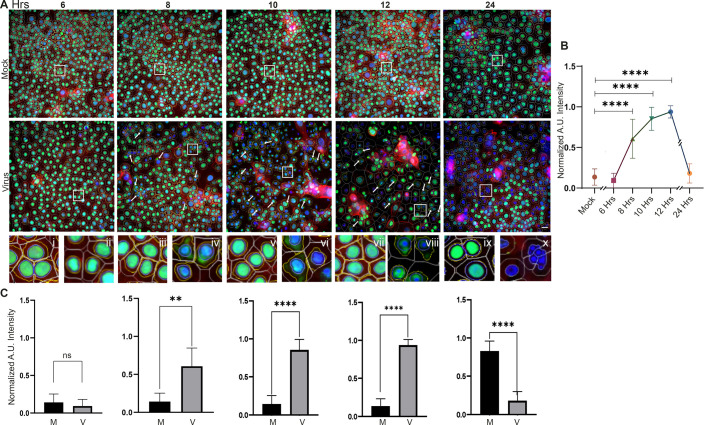
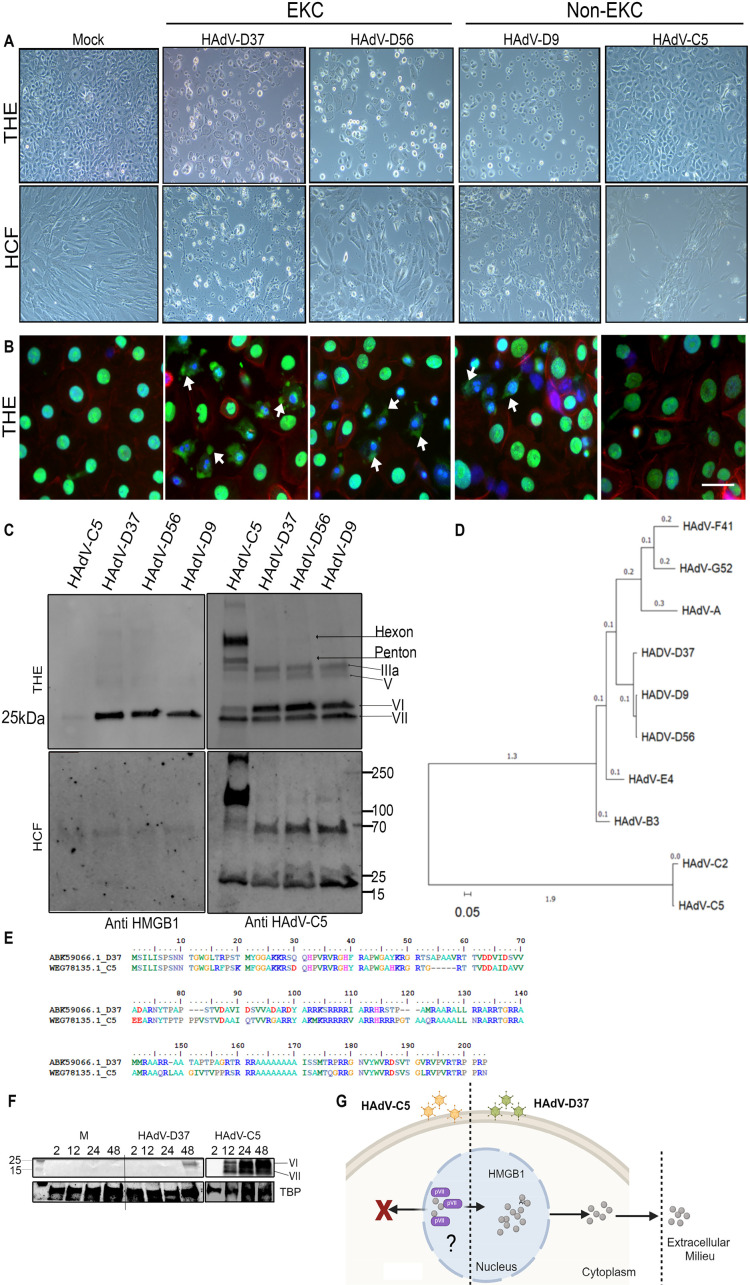
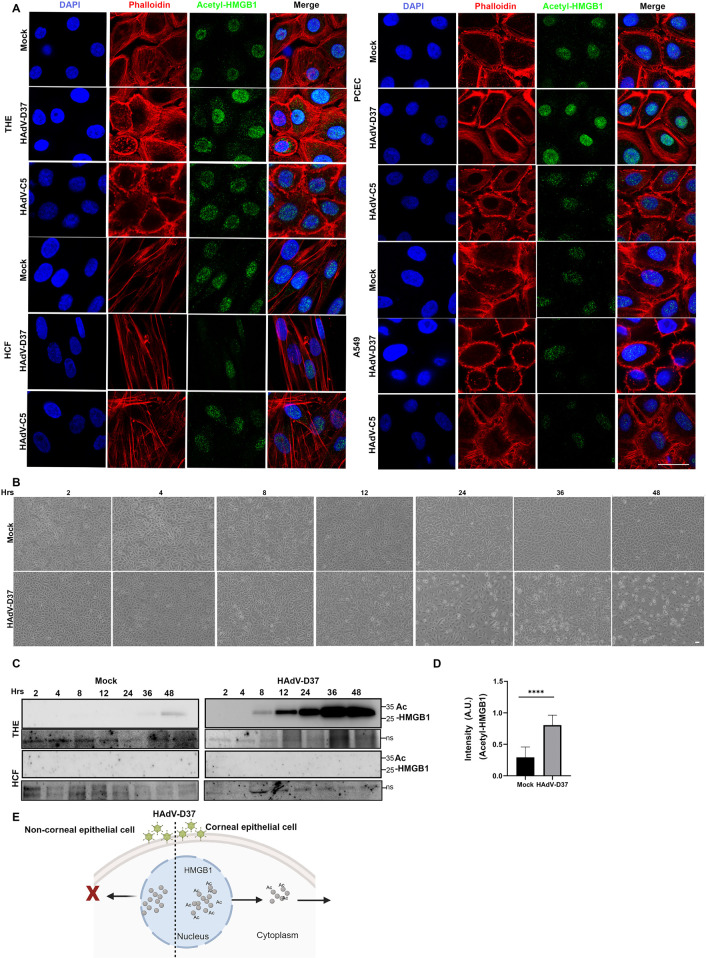
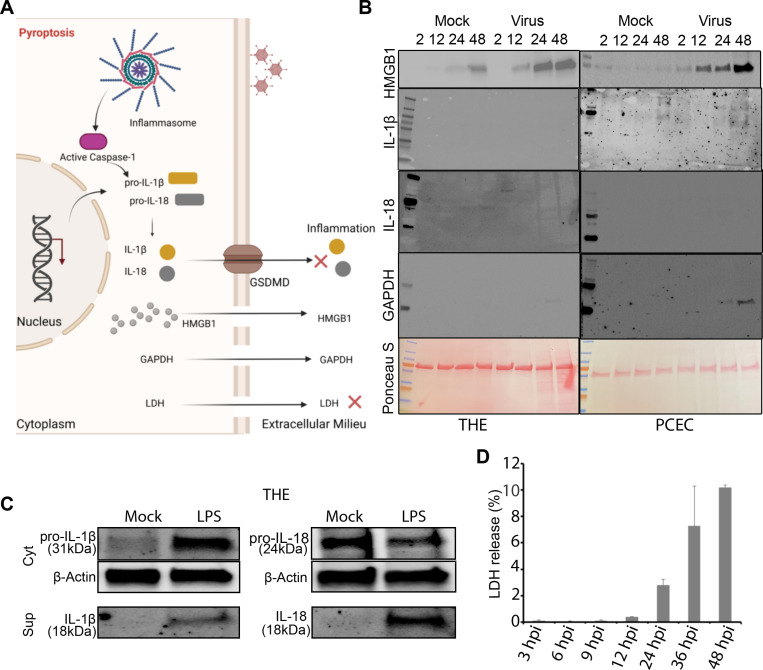
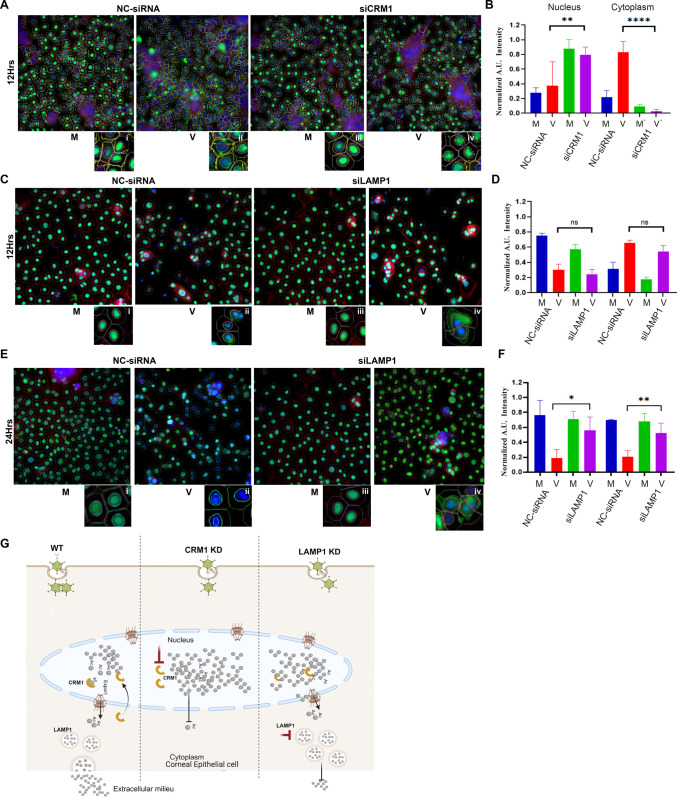
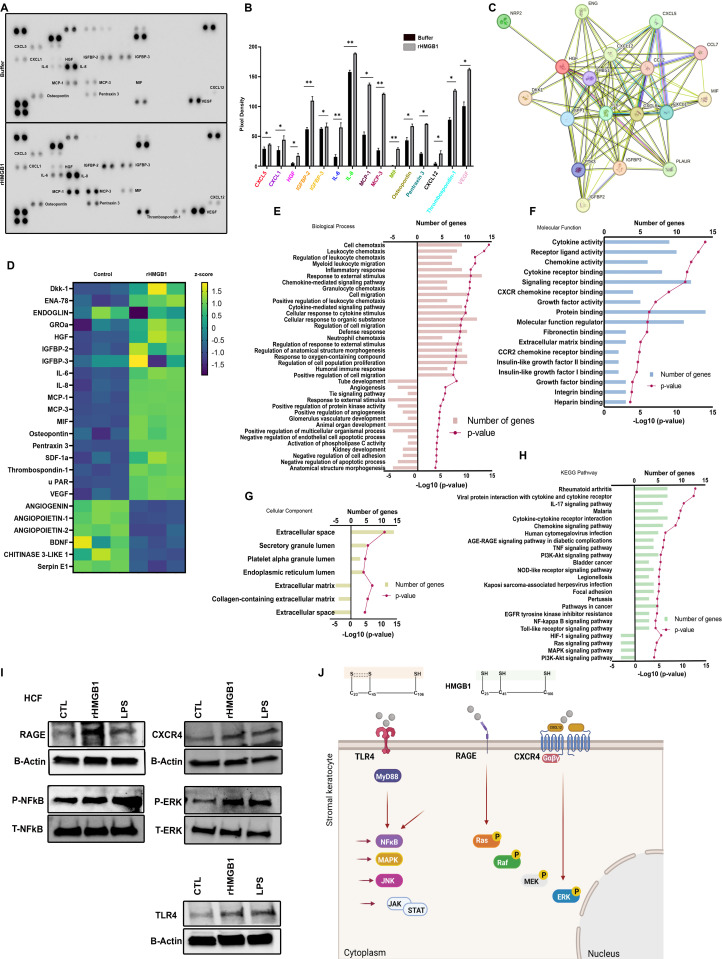
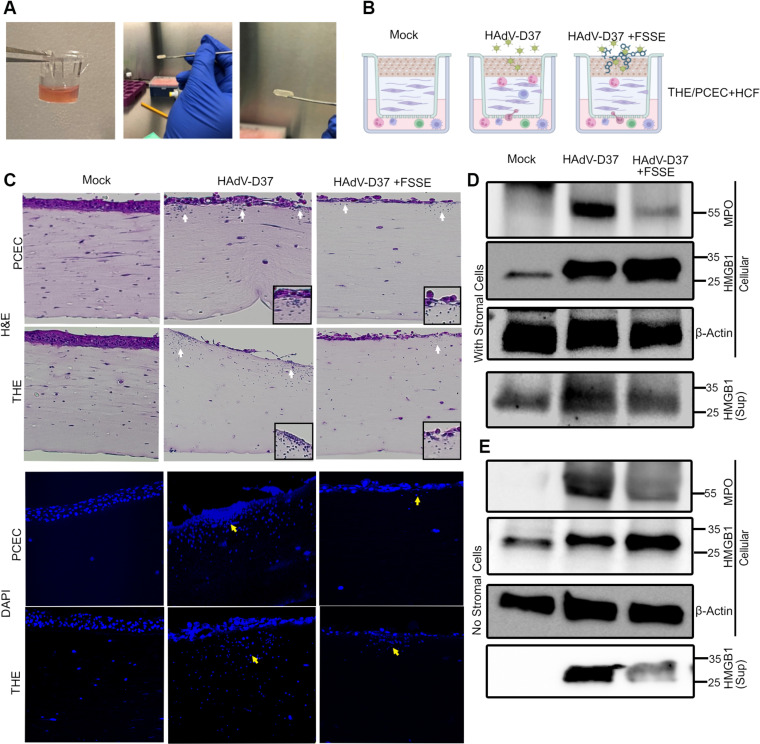
A highly contagious infection caused by human adenovirus species D (HAdV-D), epidemic keratoconjunctivitis (EKC) results in corneal subepithelial infiltration (SEI) by leukocytes, the hallmark of the infection. To date, the pathogenesis of corneal SEI formation in EKC is unresolved. HMGB1 (high-mobility group box 1 protein) is an alarmin expressed in response to infection and a marker of sepsis. Earlier studies using a different adenovirus species, HAdV-C, showed retention of HMGB1 in the infected cell nucleus by adenovirus protein VII, enabling immune evasion. Here, using HAdV-D we show cell-specific HMGB1 secretion by infected cells, and provide an HAdV-D specific mechanism for SEI formation in EKC. HMGB1 was secreted only upon infection of human corneal epithelial cells, not from other cell types, and only upon infection by HAdV-D types associated with EKC. Acetylated HMGB1 translocation from the nucleus to the cytoplasm, then to the extracellular milieu, was tightly controlled by CRM1 and LAMP1, respectively. Primary stromal cells when stimulated by rHMGB1 expressed proinflammatory chemokines. In a novel 3D culture system in tune with the architecture of the cornea, HMGB1 released by infected corneal epithelial cells induced leukocytic infiltrates either directly and/or indirectly via stimulated stromal cells, which together explains SEI formation in EKC.
由人类腺病毒D种(HAdV-D)引起的一种高度传染性感染,流行性角膜结膜炎(EKC)会导致白细胞在角膜上皮下浸润(SEI),这是该感染的标志。迄今为止,EKC中角膜SEI形成的发病机制尚未明确。高迁移率族蛋白B1(HMGB1)是一种在感染时表达的警报素,也是脓毒症的标志物。早期使用不同腺病毒种HAdV-C的研究表明,腺病毒蛋白VII可使HMGB1保留在受感染的细胞核中,从而实现免疫逃逸。在此,我们使用HAdV-D证明了受感染细胞的细胞特异性HMGB1分泌,并为EKC中SEI的形成提供了一种HAdV-D特异性机制。HMGB1仅在人类角膜上皮细胞感染时分泌,而非其他细胞类型,且仅在被与EKC相关的HAdV-D型感染时分泌。乙酰化HMGB1分别由CRM1和LAMP1严格控制从细胞核向细胞质,然后向细胞外环境的转运。原代基质细胞在受到重组HMGB1刺激时会表达促炎趋化因子。在一种与角膜结构相匹配的新型三维培养系统中,受感染的角膜上皮细胞释放的HMGB1可直接和/或通过刺激的基质细胞间接诱导白细胞浸润,这共同解释了EKC中SEI的形成。