Maj Maciej, Hernik Karolina, Tyszkiewicz Kaja, Owe-Larsson Maja, Sztokfisz-Ignasiak Alicja, Malejczyk Jacek, Janiuk Izabela
Department of Histology and Embryology, Center of Biostructure Research, Medical University of Warsaw, Warsaw, Poland.
Institute of Health Sciences, Faculty of Medical and Health Sciences, University of Siedlce, Siedlce, Poland.
Front Immunol. 2025 Apr 30;16:1567874. doi: 10.3389/fimmu.2025.1567874. eCollection 2025.
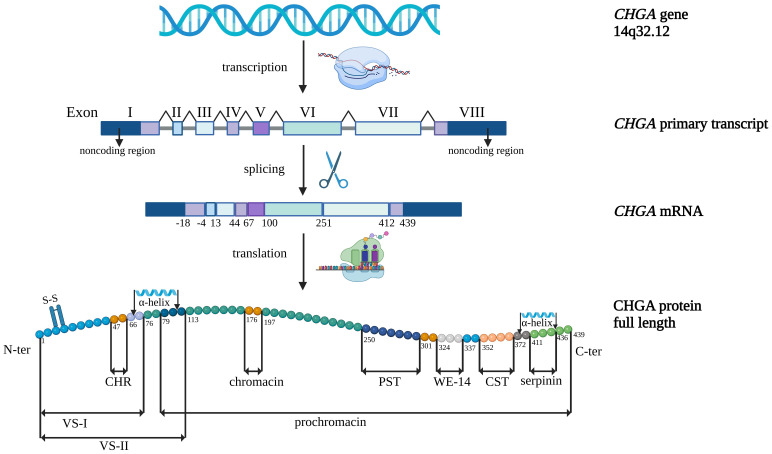
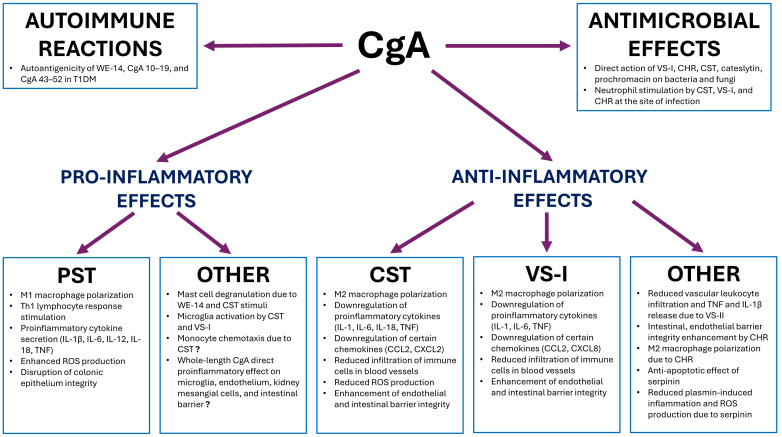
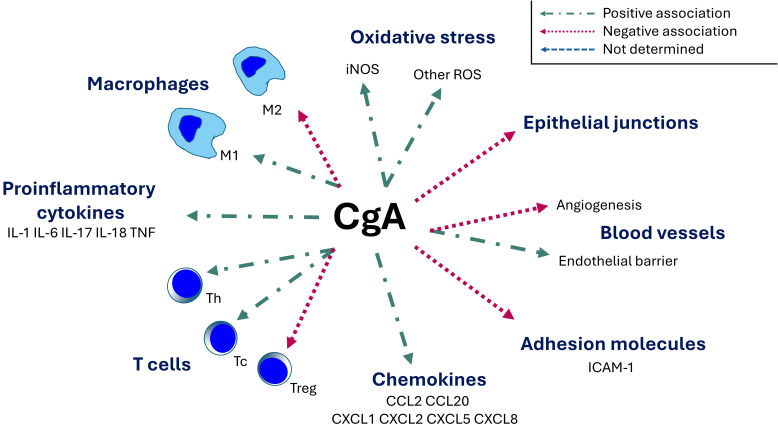
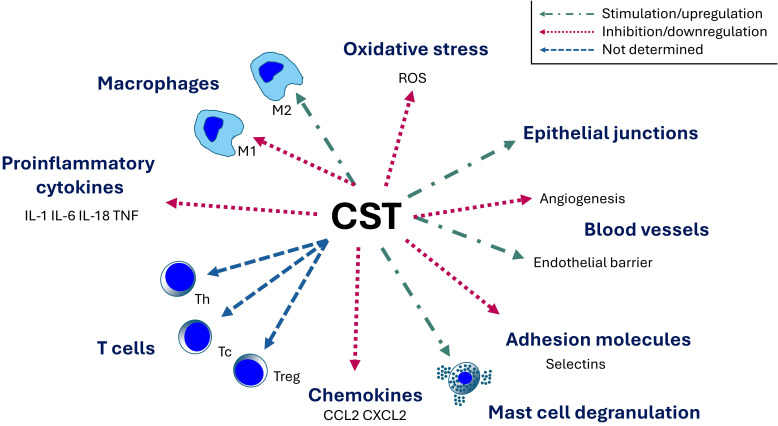
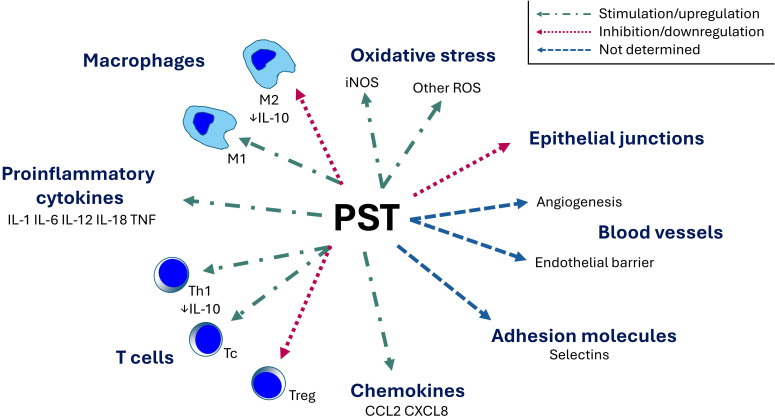
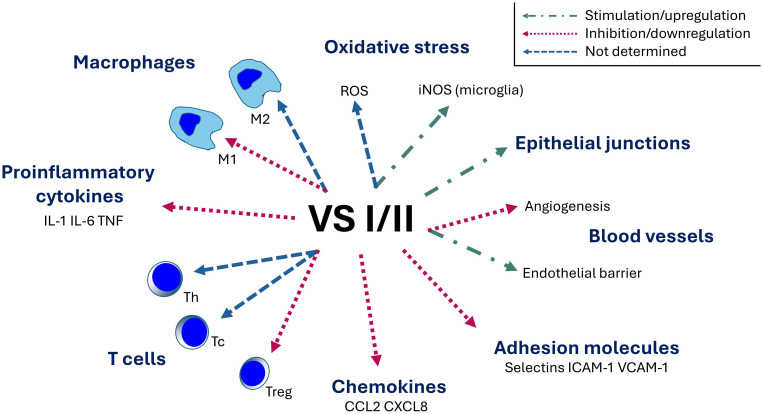
Chromogranin A (CgA), mostly known as a nonspecific neuroendocrine tumor marker, was the first glycoprotein from the granin family characterized as a prohormone for various bioactive peptides including vasostatin I/II (VS-I, VS-II), catestatin (CST), chromofungin (CHR), pancreastatin (PST), WE-14, and others. CgA and its derivatives present various functions, often antagonistic, in maintaining body homeostasis and influencing the immune system. This review aims to summarize the not fully understood role of CgA and its derivatives in inflammation, autoimmunity, and infections. CgA seems to be involved in the complex pathophysiology of cardiovascular disorders, neurodegenerative diseases, and other conditions where immune system dysfunction plays a role in the onset and development of the disease (e.g. systemic lupus erythematosus (SLE), inflammatory bowel disease (IBD), or rheumatoid arthritis (RA)). However, the direct immunomodulatory role of CgA is difficult to assess since many of its activities may be linked with its peptides. CST and VS-I are considered anti-inflammatory molecules, due to M2 macrophage polarization stimulation and downregulation of certain proinflammatory cytokines. Conversely, PST is reported to stimulate proinflammatory M1 macrophage polarization and Th1 lymphocyte response. Thus, the final effects of CgA in inflammation may depend on its cleavage pattern. Additionally, peptides like CST, VS-I, or CHR exert direct antimicrobial/antifungal activities. CgA, WE-14, and other less-known CgA-derived peptides have also been reported to trigger autoimmune responses, highly studied in type 1 diabetes mellitus. Overall, CgA and its derivatives have an interesting but complex role in immunity, however, their specific roles require further research.
嗜铬粒蛋白A(CgA),大多被认为是一种非特异性神经内分泌肿瘤标志物,是颗粒蛋白家族中首个被鉴定为多种生物活性肽前体激素的糖蛋白,这些生物活性肽包括血管抑素I/II(VS-I、VS-II)、抑制素(CST)、嗜铬菌素(CHR)、胰抑制素(PST)、WE-14等。CgA及其衍生物在维持体内稳态和影响免疫系统方面具有多种功能,且常常相互拮抗。本综述旨在总结CgA及其衍生物在炎症、自身免疫和感染中尚未完全明确的作用。CgA似乎参与了心血管疾病、神经退行性疾病以及其他免疫系统功能障碍在疾病发生和发展中起作用的病症(如系统性红斑狼疮(SLE)、炎症性肠病(IBD)或类风湿性关节炎(RA))的复杂病理生理过程。然而,由于CgA的许多活性可能与其肽段相关,其直接的免疫调节作用难以评估。CST和VS-I被认为是抗炎分子,因为它们可刺激M2巨噬细胞极化并下调某些促炎细胞因子。相反,据报道PST可刺激促炎性M1巨噬细胞极化和Th1淋巴细胞反应。因此,CgA在炎症中的最终作用可能取决于其裂解模式。此外,像CST、VS-I或CHR这样的肽具有直接的抗菌/抗真菌活性。CgA、WE-14和其他一些鲜为人知的CgA衍生肽也被报道可引发自身免疫反应,在1型糖尿病中对此有深入研究。总体而言,CgA及其衍生物在免疫中具有有趣但复杂的作用,然而,它们的具体作用仍需进一步研究。