
通过16S rRNA扩增子测序对胆管癌、胰腺癌和胆总管结石患者进行胆汁微生物群分析。
Biliary microbiome profiling via 16 S rRNA amplicon sequencing in patients with cholangiocarcinoma, pancreatic carcinoma and choledocholithiasis.
作者信息
Mizutani Hiroki, Fukui Shunsuke, Oosuka Kazuki, Ikeda Kohei, Kobayashi Mayu, Shimada Yasuaki, Nakazawa Yuuichi, Nishiura Yuuki, Suga Daisuke, Moritani Isao, Yamanaka Yutaka, Inoue Hidekazu, Nakagawa Hayato, Dohi Kaoru, Kaiju Hiroyuki, Takaba Kei, Wada Hideo, Shiraki Katsuya
机构信息
Department of Gastroenterology, Mie Prefectural General Medical Center, Yokkaichi, 5450-132, 510-8561, Mie, Japan.
Department of Gastroenterology, Mie University Graduate School of Medicine, Tsu, Japan.
出版信息
Sci Rep. 2025 May 15;15(1):16966. doi: 10.1038/s41598-025-00976-6.
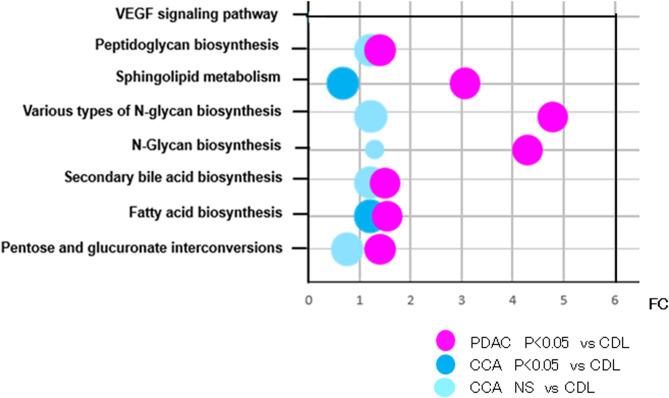
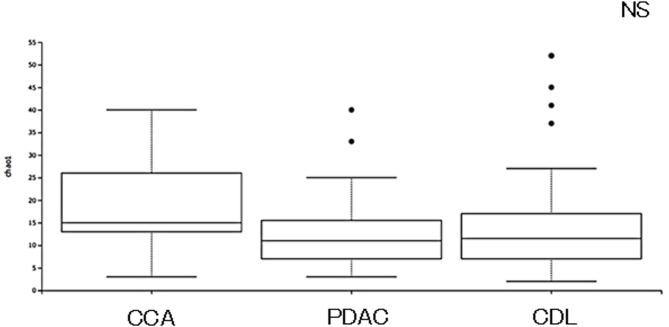
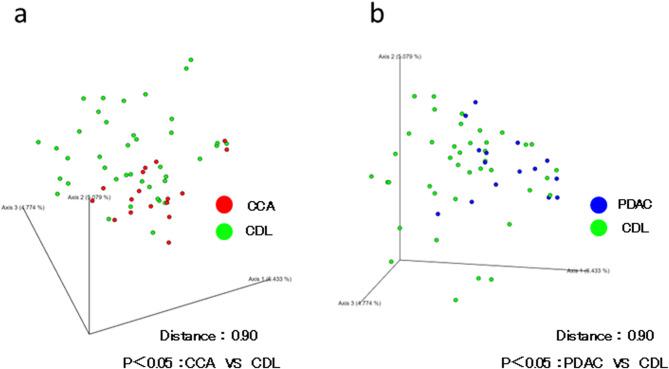
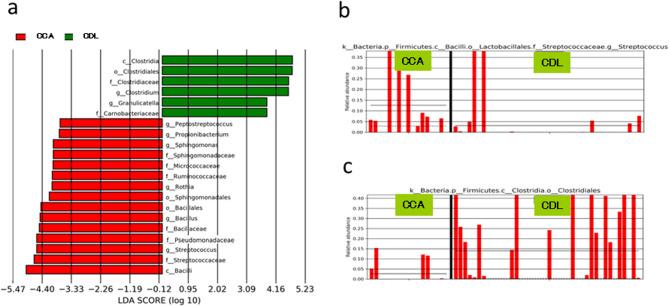
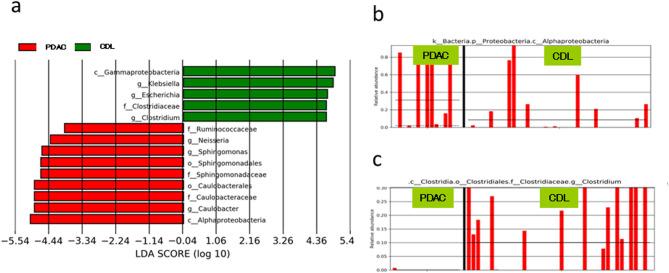
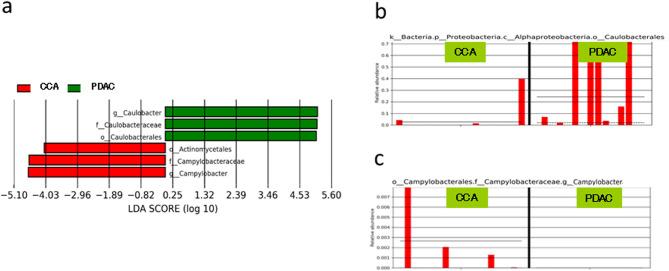
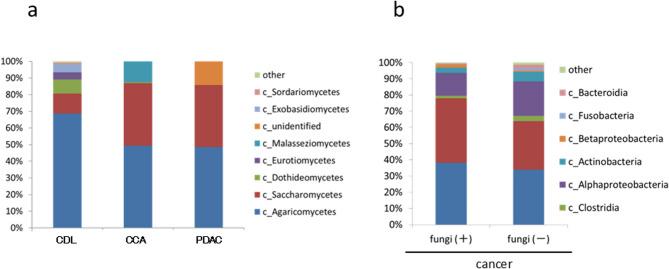
Recent studies have revealed that oral, gut, and intratumoral microbial dysbiosis significantly affects tumor progression, therapy resistance, and prognosis in cholangiocarcinoma (CCA) and pancreatic ductal adenocarcinoma (PDAC) patients. However, the biliary microbiome, which directly interacts with malignant tissues, remains poorly understood. In this study, we analyzed the bile microbiota from 17 CCA, 15 PDAC, and 40 choledocholithiasis (CDL) patients using bacterial 16 S rRNA and fungal ITS sequencing. Principal coordinate analysis revealed significant differences in microbial communities between the cancer and CDL groups. The microbial community structure in each group demonstrated a specific pattern. Linear discriminant analysis revealed Streptococcus, Sphingomonas, and Bacillus enrichment in CCA patients, Neisseria, Sphingomonas, and Caulobacter in PDAC patients were more prevalent compared with CDL patients. Caulobacter was more prevalent, wheares Campylobacter was less in PDAC patients than in CCA patients. Fungal DNA was detected in ~ 50% of the samples, with CCA and PDAC patients. KEGG pathway analysis revealed altered metabolic pathways, including peptidoglycan, sphingolipid, and fatty acid metabolism and bile acid metabolism, in CCA and PDAC patients. These findings highlight the potential role of the biliary microbiome in CCA and PDAC pathogenesis, offering new insights into disease mechanisms and biomarkers.
近期研究表明,口腔、肠道及肿瘤内微生物群失调显著影响胆管癌(CCA)和胰腺导管腺癌(PDAC)患者的肿瘤进展、治疗耐药性及预后。然而,与恶性组织直接相互作用的胆道微生物群仍知之甚少。在本研究中,我们使用细菌16S rRNA和真菌ITS测序分析了17例CCA患者、15例PDAC患者和40例胆总管结石(CDL)患者的胆汁微生物群。主坐标分析显示,癌症组和CDL组的微生物群落存在显著差异。每组的微生物群落结构呈现出特定模式。线性判别分析显示,CCA患者中链球菌、鞘氨醇单胞菌和芽孢杆菌富集,与CDL患者相比,PDAC患者中奈瑟菌、鞘氨醇单胞菌和柄杆菌更为普遍。柄杆菌在PDAC患者中更为普遍,而弯曲杆菌在PDAC患者中比在CCA患者中更少。在约50%的CCA和PDAC患者样本中检测到真菌DNA。KEGG通路分析显示,CCA和PDAC患者的代谢通路发生改变,包括肽聚糖、鞘脂和脂肪酸代谢以及胆汁酸代谢。这些发现突出了胆道微生物群在CCA和PDAC发病机制中的潜在作用,为疾病机制和生物标志物提供了新的见解。

 Zotero 插件