Jechel Elena, Nedelcu Alin Horatiu, Dragan Felicia, Lupu Vasile Valeriu, Starcea Iuliana Magdalena, Mocanu Adriana, Rosu Solange Tamara, Streanga Violeta, Russu Ruxandra, Baciu Ginel, Danielescu Ciprian, Salaru Delia Lidia, Morariu Ionela Daniela, Cirstea Olga, Anton Emil, Lupu Ancuta
Pediatrics, Faculty of Medicine, "Grigore T. Popa" University of Medicine and Pharmacy, Iasi, Romania.
Faculty of Medicine, "Grigore T. Popa" University of Medicine and Pharmacy, Iasi, Romania.
Front Immunol. 2025 May 1;16:1542735. doi: 10.3389/fimmu.2025.1542735. eCollection 2025.
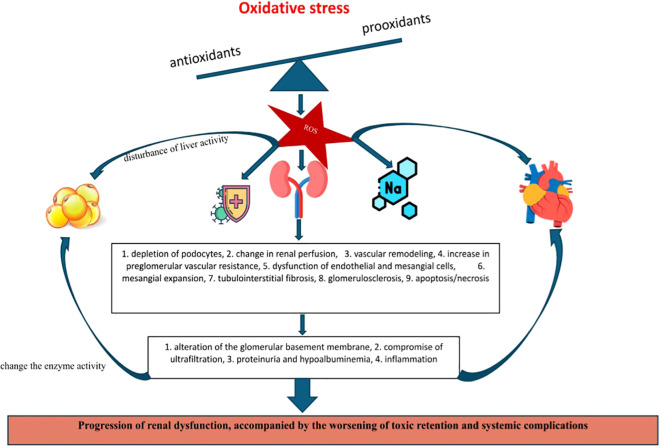
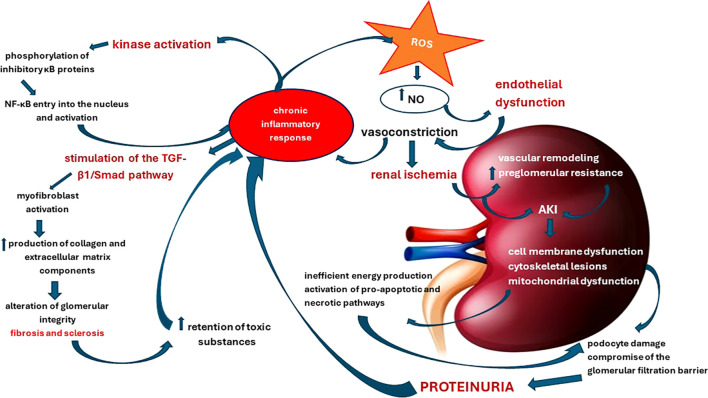
Pediatric nephrotic syndrome remains a complex clinical entity, with incompletely elucidated pathogenetic mechanisms, in which oxidative stress appears to have a substantial etiopathogenic role. Recent evidence supports the involvement of redox imbalance in podocyte damage, impaired glomerular function, and systemic decline. All this suggests that antioxidant interventions can favorably modulate the course of the disease. This narrative review aims to synthesize the most relevant data from the current literature on the interaction between oxidative stress and nephrotic syndrome in children, with a focus on the therapeutic potential of antioxidants. The analysis focuses on the molecular mechanisms by which oxidative stress contributes to the progression of renal dysfunction, the role of oxidative biomarkers in disease monitoring, and the ability of antioxidants to reduce the need for immunosuppressants and corticosteroids, thus contributing to the decrease in associated morbidity. The translational perspectives of antioxidant therapy are also discussed, in the context of the urgent need for effective adjuvant strategies with a safety profile superior to conventional therapies. By integrating these data, the paper supports the valorization of antioxidant interventions as an emerging direction in the management of pediatric nephrotic syndrome and substantiates the need for controlled clinical trials, with rigorous design, in this field.
小儿肾病综合征仍然是一个复杂的临床实体,其发病机制尚未完全阐明,氧化应激似乎在病因学中起着重要作用。最近的证据支持氧化还原失衡参与足细胞损伤、肾小球功能受损和全身功能衰退。所有这些都表明抗氧化干预可以有利地调节疾病进程。这篇叙述性综述旨在综合当前文献中关于氧化应激与儿童肾病综合征之间相互作用的最相关数据,重点关注抗氧化剂的治疗潜力。分析集中在氧化应激导致肾功能障碍进展的分子机制、氧化生物标志物在疾病监测中的作用,以及抗氧化剂减少免疫抑制剂和皮质类固醇需求的能力,从而有助于降低相关发病率。在迫切需要具有优于传统疗法安全性的有效辅助策略的背景下,还讨论了抗氧化治疗的转化前景。通过整合这些数据,本文支持将抗氧化干预作为小儿肾病综合征管理的一个新兴方向,并证实了在该领域进行严格设计的对照临床试验的必要性。