Wang Ernuo, Gao Yiyi, Lu Fang, Chen Wufei, Liu Haiquan
Department of Radiology, Huadong Hospital, Fudan University, Shanghai, China.
Quant Imaging Med Surg. 2025 May 1;15(5):3942-3949. doi: 10.21037/qims-24-1880. Epub 2025 Apr 27.
Kirsten rat sarcoma viral oncogene homolog (KRAS) is a key oncogenic driver in lung adenocarcinoma (LUAD). The correlation between KRAS mutations and the computed tomographic (CT) texture features in LUAD patients is not well established. This study aimed to investigate the relationship between the CT texture features of LUAD and the KRAS mutation.
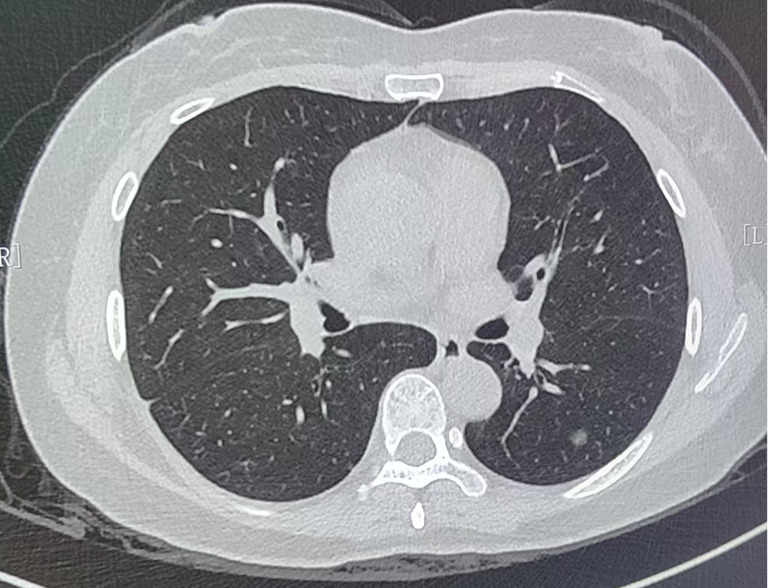
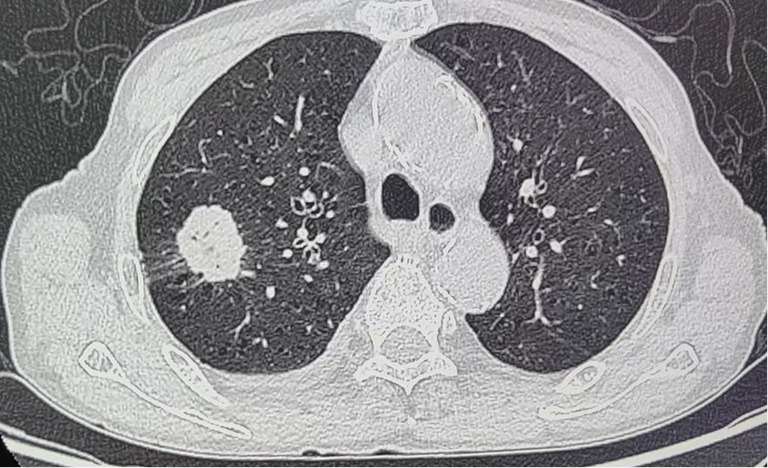
This study included 808 LUAD patients who were diagnosed with the KRAS mutation and underwent surgical resection at the Huadong Hospital. Of the 808 patients, 720 had preoperative chest CT data, which were collected for retrospective analysis. Further, all the CT images of lesions were classified into different categories based on the CT texture features. Moreover, the association between KRAS status and the clinical features and CT texture features was evaluated.
The results revealed that KRAS mutations were more common in the male patients than the female patients [8.5% (29/341) 2.4% (11/467), P<0.0001] and were more frequent in the older patients than the younger patients [6.5% (29/448) 3.1% (11/360), P=0.02]. The CT texture feature of mixed ground-glass opacity (mGGO) indicated a lower incidence of KRAS mutations than the CT texture features of pure ground-glass opacity (pGGO) [1.3% (3/232) 6.7% (15/225), P=0.0032] and pure solid opacity (pSO) [1.3% (3/232) 6.1% (16/263), P=0.0056]. Moreover, a comparison of the frequency of pGGOs and pSOs ≤1 cm showed that the frequency of PGOs was higher than that of pSOs for KRAS mutations wild type, but the statistical significance was marginal [12.0% (11/92) 0% (0/27), P=0.05].
This study revealed that KRAS mutations were more common in male and older LUAD patients. Further, in most LUAD patients with KRAS mutations, pGGOs changed into pSOs at the size of >1 cm at least.
Kirsten 大鼠肉瘤病毒癌基因同源物(KRAS)是肺腺癌(LUAD)的关键致癌驱动因素。KRAS 突变与 LUAD 患者的计算机断层扫描(CT)纹理特征之间的相关性尚未明确。本研究旨在探讨 LUAD 的 CT 纹理特征与 KRAS 突变之间的关系。
本研究纳入了 808 例在华东医院被诊断为 KRAS 突变并接受手术切除的 LUAD 患者。在这 808 例患者中,720 例有术前胸部 CT 数据,收集这些数据用于回顾性分析。此外,根据 CT 纹理特征将所有病变的 CT 图像分为不同类别。而且,评估了 KRAS 状态与临床特征及 CT 纹理特征之间的关联。
结果显示,KRAS 突变在男性患者中比女性患者更常见[8.5%(29/341)对 2.4%(11/467),P<0.0001],在老年患者中比年轻患者更频繁[6.5%(29/448)对 3.1%(11/360),P = 0.02]。混合磨玻璃影(mGGO)的 CT 纹理特征显示 KRAS 突变的发生率低于纯磨玻璃影(pGGO)[1.3%(3/232)对 6.7%(15/225),P = 0.0032]和纯实性结节(pSO)[1.3%(3/232)对 6.1%(16/263),P = 0.0056]的 CT 纹理特征。此外,对直径≤1 cm 的 pGGO 和 pSO 的频率进行比较显示,对于 KRAS 突变型和野生型,pGGO 的频率高于 pSO,但统计学意义不显著[12.0%(11/92)对 0%(0/27),P = 0.05]。
本研究表明,KRAS 突变在男性和老年 LUAD 患者中更常见。此外,在大多数 KRAS 突变的 LUAD 患者中,至少在直径>1 cm 时 pGGO 会转变为 pSO。