Mahmoudnezhad Aydin, Bayrami Mahsa, Saadati Mahdiyeh, Ertaş Yavuz Nuri, Abasi Mozhgan, Ebrahimi Aylar, Pilehvar Younes
Department of Medical Microbiology, Faculty of Medicine, Ataturk University, Erzurum, Turkey.
Department of Biochemistry, Faculty of Medicine, Ataturk University, Erzurum, Turkey.
J Biol Eng. 2025 May 19;19(1):46. doi: 10.1186/s13036-025-00511-1.
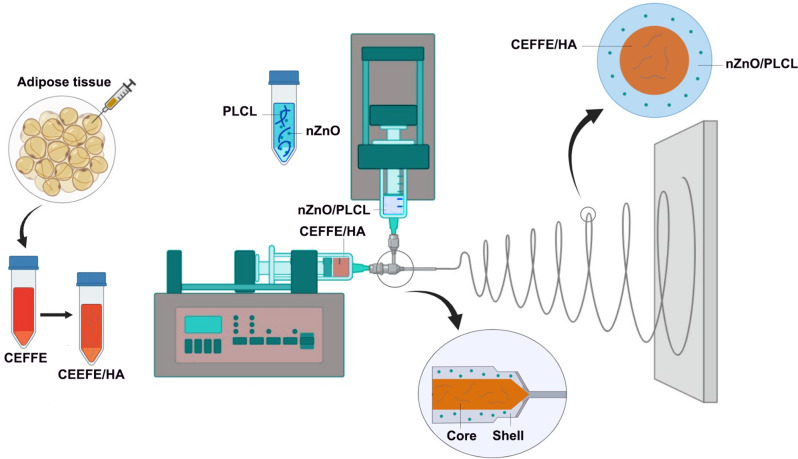
This study presents the development and characterization of innovative core-shell nanofiber wound dressings incorporating zinc oxide nanoparticles (nZnO) and cell-free fat extract (CEFFE) to enhance fibroblast activity and antibacterial efficacy.
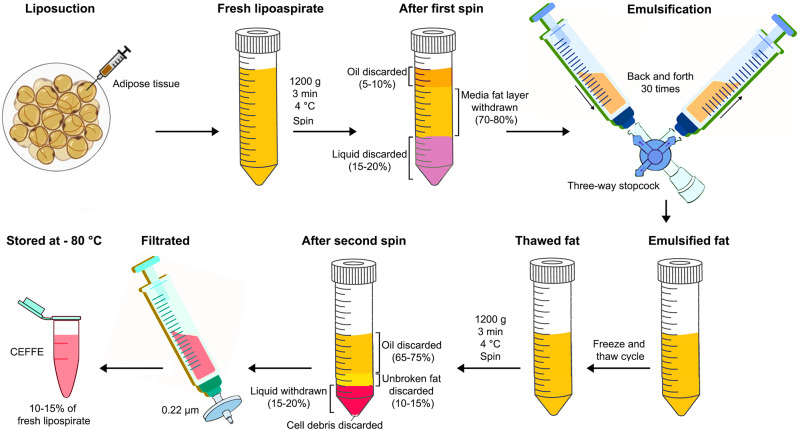
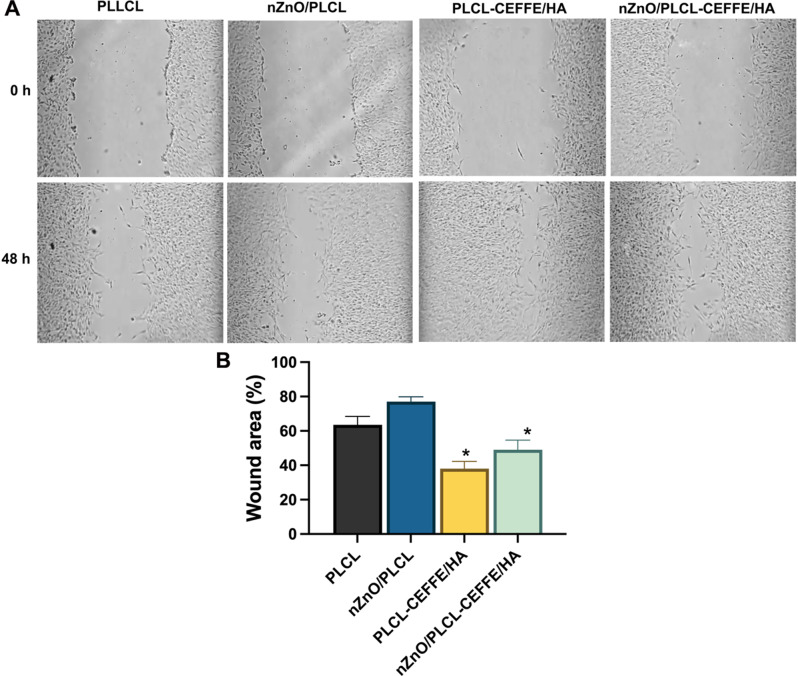
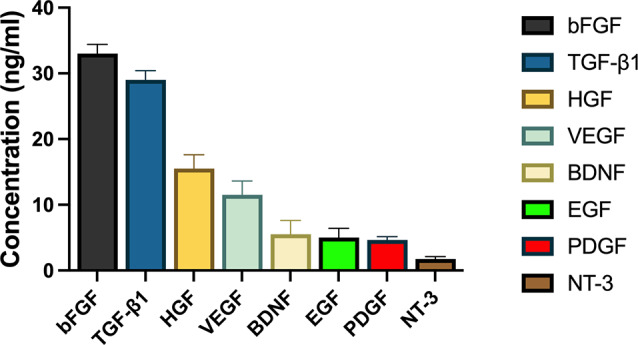
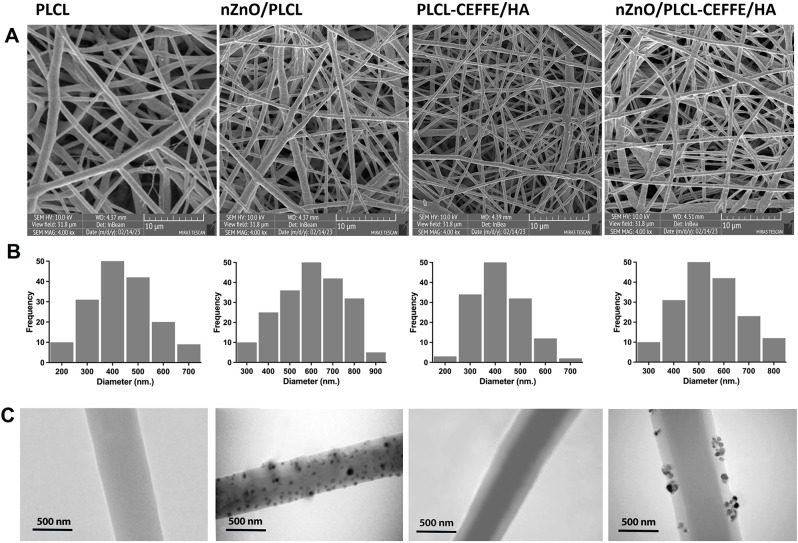
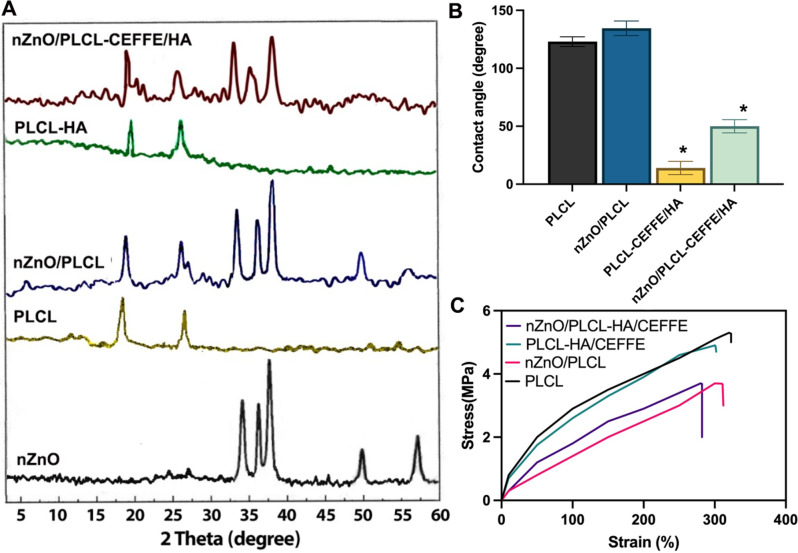
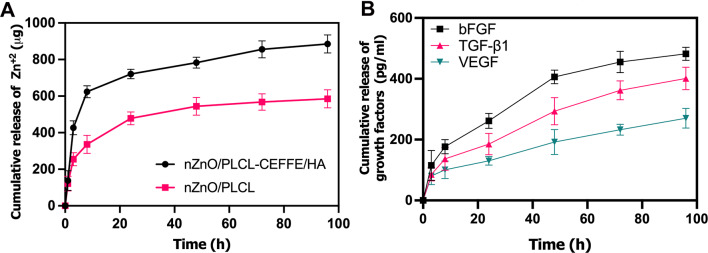
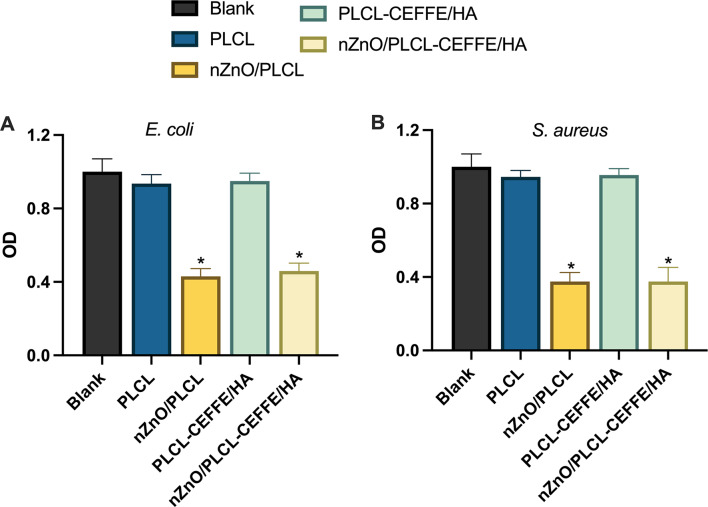
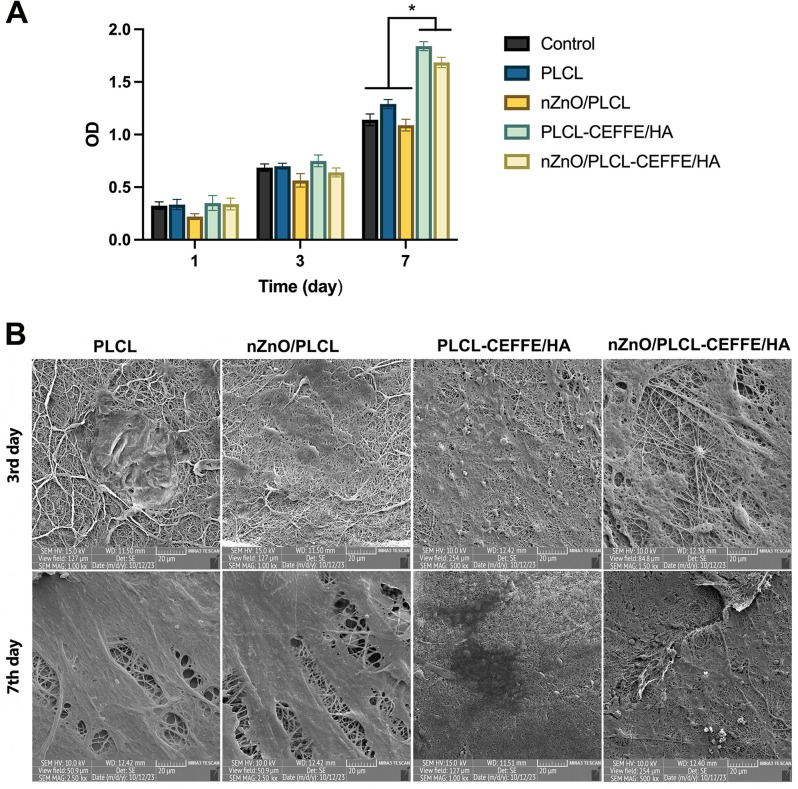
CEFFE was prepared and analyzed, revealing high concentrations of essential growth factors, particularly bFGF and TGF-β1, supporting its therapeutic potential in tissue regeneration. The fabricated nanofibers (PLCL, nZnO/PLCL, PLCL-CEFFE/HA, and nZnO/PLCL-CEFFE/HA) were examined using FE-SEM and TEM, demonstrating successful encapsulation and morphological variations due to nZnO incorporation. XRD analysis confirmed the structural integrity and effective loading of nZnO and CEFFE. Hydrophilicity assessment via water contact angle measurements showed that CEFFE/HA significantly enhanced the hydrophilicity of PLCL membranes, crucial for wound exudate management. Mechanical tests indicated that CEFFE/HA addition maintained the scaffold's mechanical robustness, while nZnO slightly reduced mechanical properties. In vitro release studies revealed a biphasic release pattern of Zn²⁺ ions and growth factors from nZnO/PLCL-CEFFE/HA nanofibers, ensuring prolonged antibacterial activity and sustained therapeutic effects. Antibacterial assays demonstrated significant efficacy against E. coli and S. aureus, attributed to nZnO. MTT assays and FE-SEM analysis confirmed enhanced NIH-3T3 cell proliferation and adhesion on PLCL-CEFFE/HA nanofibers due to the controlled release of growth factors. The scratch assay showed superior cell migration and wound healing potential for PLCL-CEFFE/HA formulations.
These findings underscore the potential of nZnO/PLCL-CEFFE/HA core-shell nanofibers as multifunctional wound dressings, combining antibacterial properties with enhanced tissue regeneration capabilities. However, further studies are needed to assess long-term stability and in vivo performance, which represent key challenges for future research.
本研究介绍了一种创新的核壳纳米纤维伤口敷料的开发与特性,该敷料包含氧化锌纳米颗粒(nZnO)和无细胞脂肪提取物(CEFFE),以增强成纤维细胞活性和抗菌功效。
制备并分析了CEFFE,发现其含有高浓度的必需生长因子,尤其是碱性成纤维细胞生长因子(bFGF)和转化生长因子-β1(TGF-β1),这支持了其在组织再生中的治疗潜力。使用场发射扫描电子显微镜(FE-SEM)和透射电子显微镜(TEM)对制备的纳米纤维(聚乳酸-羟基乙酸共聚物(PLCL)、nZnO/PLCL、PLCL-CEFFE/透明质酸(HA)和nZnO/PLCL-CEFFE/HA)进行了检查,结果表明由于掺入了nZnO,实现了成功包封且形态发生了变化。X射线衍射(XRD)分析证实了nZnO和CEFFE的结构完整性及有效负载。通过水接触角测量进行的亲水性评估表明,CEFFE/HA显著提高了PLCL膜的亲水性,这对伤口渗出液管理至关重要。力学测试表明,添加CEFFE/HA可保持支架的机械强度,而nZnO会略微降低机械性能。体外释放研究揭示了nZnO/PLCL-CEFFE/HA纳米纤维中锌离子(Zn²⁺)和生长因子的双相释放模式,确保了持久的抗菌活性和持续的治疗效果。抗菌试验证明对大肠杆菌和金黄色葡萄球菌具有显著疗效,这归因于nZnO。噻唑蓝(MTT)试验和FE-SEM分析证实,由于生长因子的控释,NIH-3T3细胞在PLCL-CEFFE/HA纳米纤维上的增殖和黏附增强。划痕试验表明PLCL-CEFFE/HA制剂具有卓越的细胞迁移和伤口愈合潜力。
这些发现强调了nZnO/PLCL-CEFFE/HA核壳纳米纤维作为多功能伤口敷料的潜力,它将抗菌特性与增强的组织再生能力相结合。然而,需要进一步研究来评估其长期稳定性和体内性能,这是未来研究的关键挑战。