Yang Yuying, Zhu Lin, Xu Yantao, Liang Long, Liu Li, Chen Xiang, Li Hui, Liu Hong
Department of Dermatology, Hunan Engineering Research Center of Skin Health and Disease, Hunan Key Laboratory of Skin Cancer and Psoriasis, Xiangya Hospital, Central South University, Changsha, Hunan, 410008, China.
National Engineering Research Center of Personalized Diagnostic and Therapeutic Technology, Central South University, Changsha, Hunan, 410008, China.
Biomark Res. 2025 May 19;13(1):75. doi: 10.1186/s40364-025-00784-0.
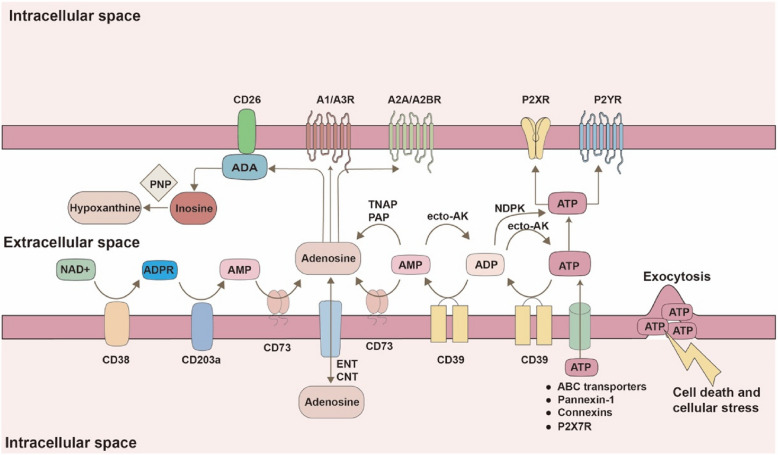
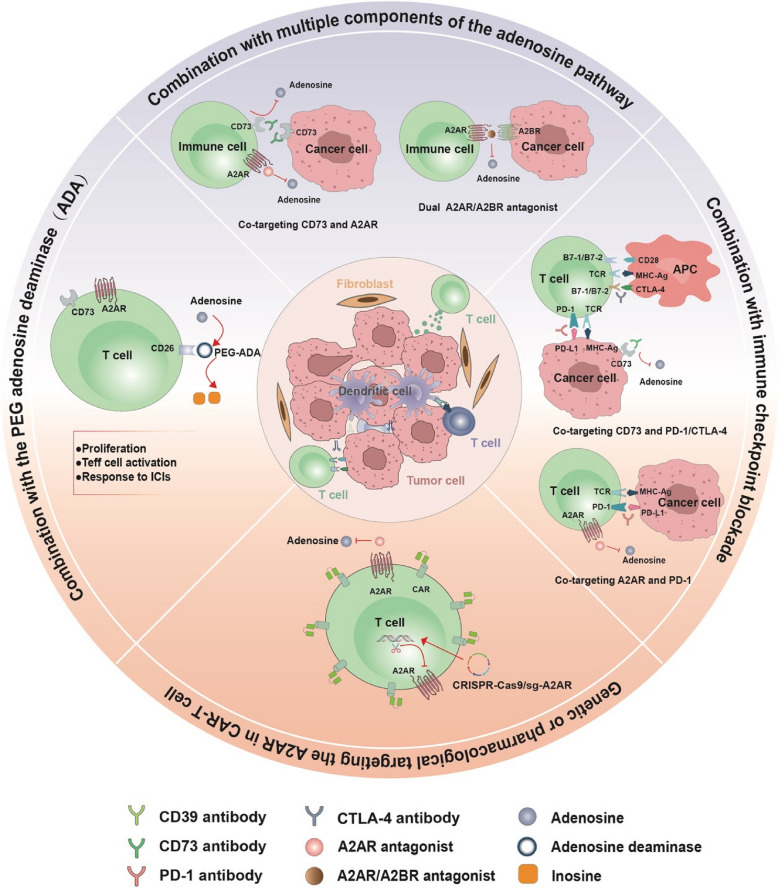
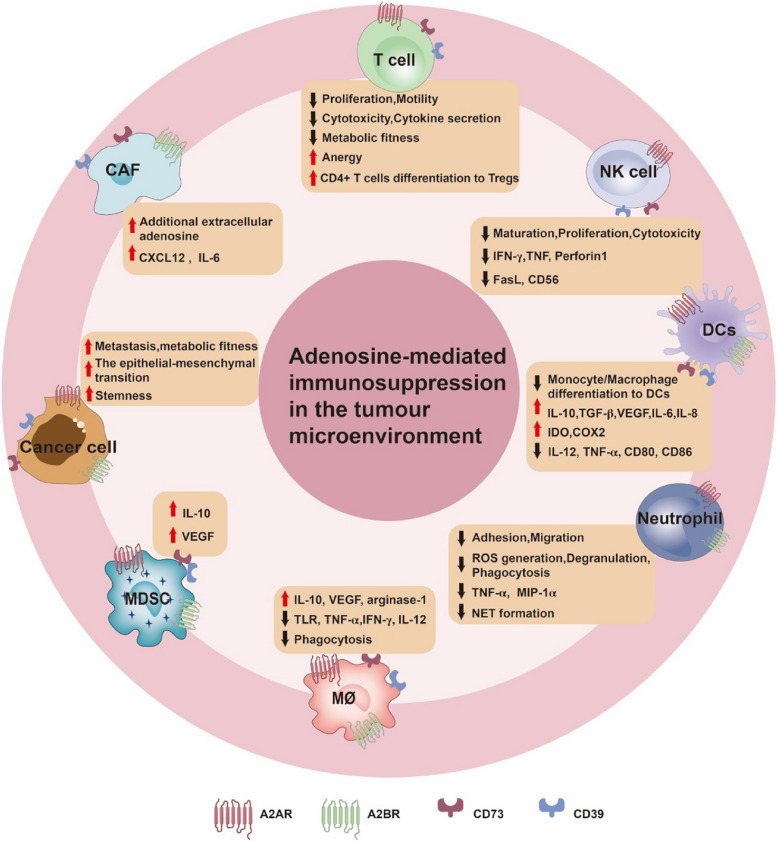
Despite the notable success of cancer immunotherapy, its effectiveness is often limited in a significant proportion of patients, highlighting the need to explore alternative tumor immune evasion mechanisms. Adenosine, a key metabolite accumulating in hypoxic tumor regions, has emerged as a promising target in oncology. Inhibiting the adenosinergic pathway not only inhibits tumor progression but also holds potential to enhance immunotherapy outcomes. Multiple therapeutic strategies targeting this pathway are being explored, ranging from preclinical studies to clinical trials. This review examines the complex interactions between adenosine, its receptors, and the tumor microenvironment, proposing strategies to target the adenosinergic axis to boost anti-tumor immunity. It also evaluates early clinical data on pharmacological inhibitors of the adenosinergic pathway and discusses future directions for improving clinical responses.
尽管癌症免疫疗法取得了显著成功,但其有效性在很大一部分患者中往往受到限制,这凸显了探索其他肿瘤免疫逃逸机制的必要性。腺苷是一种在缺氧肿瘤区域积累的关键代谢产物,已成为肿瘤学中一个有前景的靶点。抑制腺苷能途径不仅能抑制肿瘤进展,还有增强免疫治疗效果的潜力。目前正在探索多种针对该途径的治疗策略,从临床前研究到临床试验都有涉及。本综述探讨了腺苷、其受体与肿瘤微环境之间的复杂相互作用,提出了针对腺苷能轴以增强抗肿瘤免疫力的策略。它还评估了腺苷能途径药理学抑制剂的早期临床数据,并讨论了改善临床反应的未来方向。