Jamaluddin Aqfan, Wyatt Rachael, Pasaliu Andreea, Ruggles Oliver, Calebiro Davide, Gorvin Caroline M, Ronchi Cristina L
Department of Metabolism and Systems Science, University of Birmingham, Birmingham, United Kingdom.
Centre of Membrane Proteins and Receptors (COMPARE), Universities of Birmingham and Nottingham, Birmingham, United Kingdom.
Endocr Oncol. 2025 May 16;5(1):e250009. doi: 10.1530/EO-25-0009. eCollection 2025 Jan.
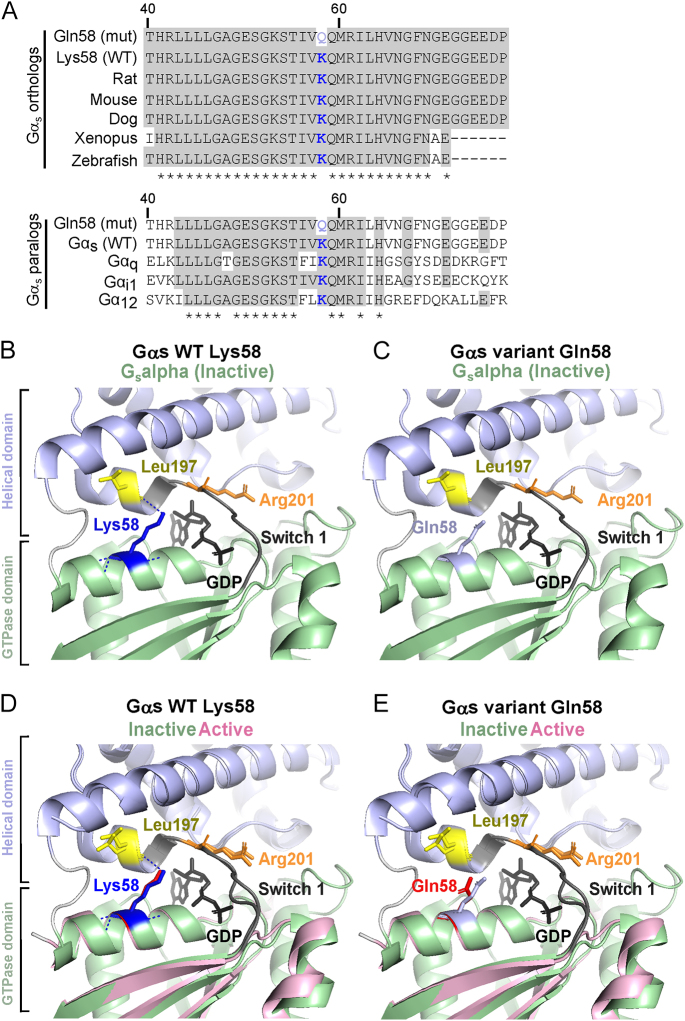
Adrenocortical adenomas are frequent in the general population and can be associated with autonomous cortisol excess, increasing morbidity and mortality. Altered cAMP/PKA signalling is common in sporadic cortisol-producing adenomas, typically due to somatic activating mutations in the catalytic subunit α of PKA () or the G-protein α subunit, Gα (), which activate cAMP signalling. We previously identified a novel p.Lys58Gln somatic variant in a patient with a 5.3 cm adenoma and overt Cushing's syndrome. This novel mutation was not charactersised before but provided enough evidence to warrant further investigation.
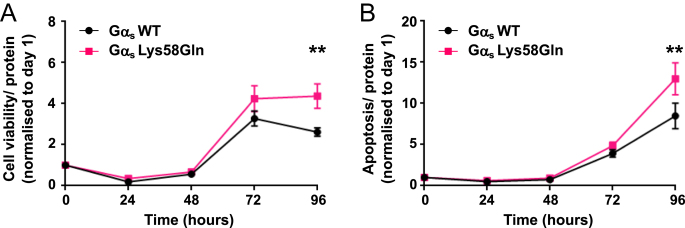
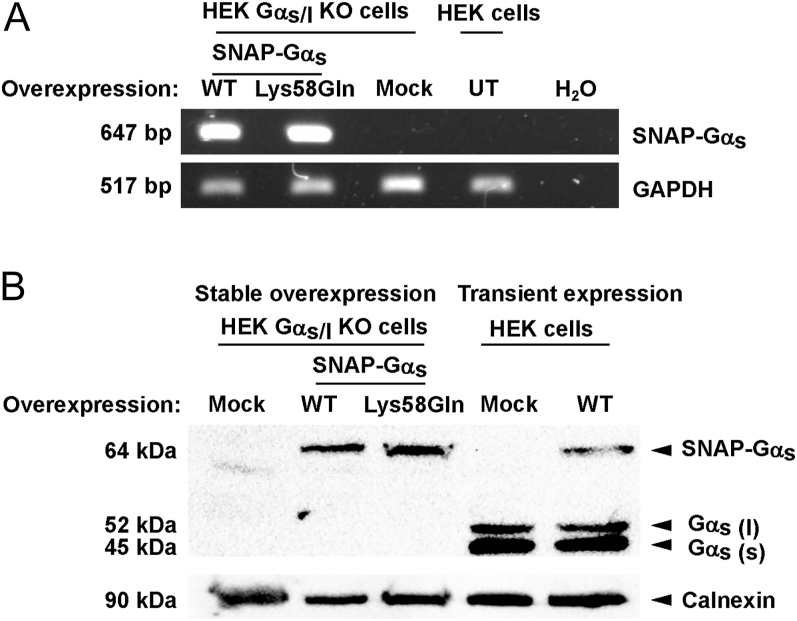
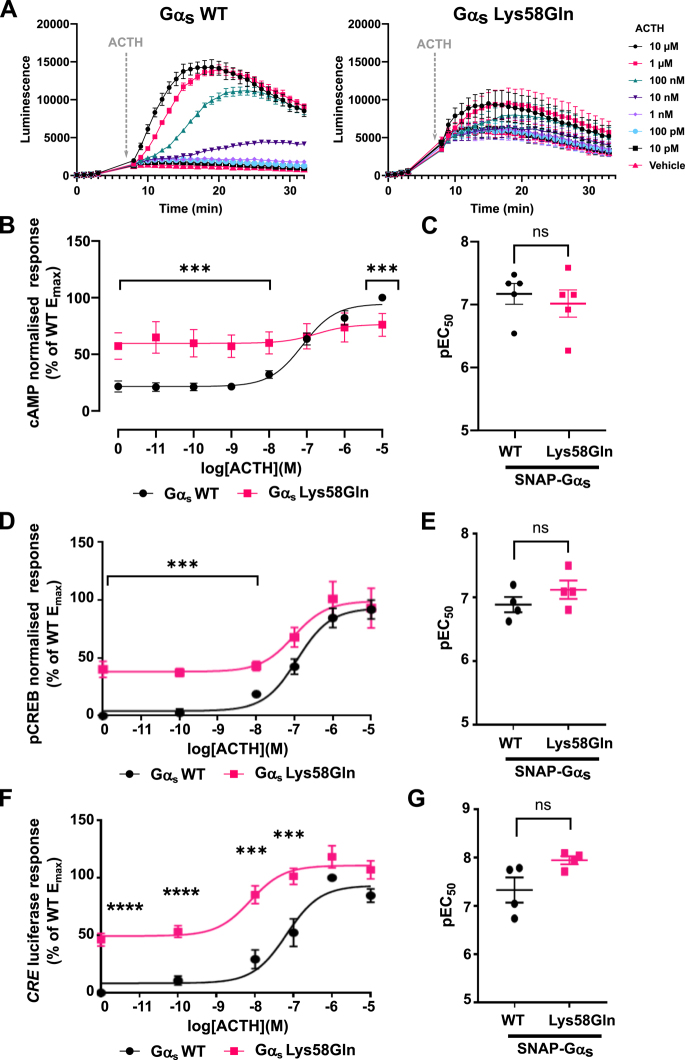
Using HEK293 cells depleted of , we established wild-type (WT) Gα and Gα-Lys58Gln stable cell lines and evaluated adrenocorticotropic hormone (ACTH) receptor signalling using a cAMP GloSensor assay, measured CREB transcription factor phosphorylation (pCREB) by AlphaLISA and assessed luciferase reporter activity. Cell viability and apoptosis were also assessed over 5 days.
The Gα-Lys58Gln variant showed a significantly higher basal cAMP, pCREB and luciferase reporter concentration and a greater response to ACTH (0-10 nM, < 0.001) compared to WT Gα. The variant had no effect on ligand potency. There was also significantly enhanced cell viability and apoptosis in cells with the Gα-Lys58Gln variant.
In conclusion, our study demonstrated that the Gα-Lys58Gln variant is associated with constitutive activation of GNAS signalling, similar to Arg201 mutations previously reported in adrenocortical adenomas, potentially representing a new pathogenic mechanism in a subset of patients with adrenal Cushing syndrome. This variant may also affect cell proliferation and requires further study.
肾上腺皮质腺瘤在普通人群中很常见,可伴有自主性皮质醇分泌过多,增加发病率和死亡率。cAMP/PKA信号通路改变在散发性皮质醇分泌腺瘤中很常见,通常是由于PKA催化亚基α()或G蛋白α亚基Gα()的体细胞激活突变,从而激活cAMP信号通路。我们之前在一名患有5.3 cm腺瘤和明显库欣综合征的患者中鉴定出一种新的p.Lys58Gln体细胞变异。这种新突变以前未被表征,但提供了足够的证据值得进一步研究。
我们使用缺失的HEK293细胞,建立了野生型(WT)Gα和Gα-Lys58Gln稳定细胞系,并使用cAMP GloSensor检测法评估促肾上腺皮质激素(ACTH)受体信号通路,通过AlphaLISA检测CREB转录因子磷酸化(pCREB),并评估荧光素酶报告基因活性。还在5天内评估了细胞活力和凋亡情况。
与WT Gα相比,Gα-Lys58Gln变异体显示出显著更高的基础cAMP、pCREB和荧光素酶报告基因浓度,以及对ACTH(0-10 nM,<0.001)的更大反应。该变异体对配体效力没有影响。具有Gα-Lys58Gln变异体的细胞中细胞活力和凋亡也显著增强。
总之,我们的研究表明,Gα-Lys58Gln变异体与GNAS信号通路的组成性激活有关,类似于先前在肾上腺皮质腺瘤中报道的Arg201突变,可能代表肾上腺库欣综合征患者亚组中的一种新的致病机制。这种变异体也可能影响细胞增殖,需要进一步研究。