Yang Mengyao, Fu Yin, Dhakal Pitambar, Yan Zi, Lang Jiashu, Ma Chaofeng, Jiang Yuhong, Wang Congzhou, Zhang Longxian
College of Veterinary Medicine, Henan Agricultural University, Zhengzhou, Henan, People's Republic of China.
International Joint Research Laboratory for Zoonotic Diseases of Henan, Zhengzhou, People's Republic of China.
PLoS Negl Trop Dis. 2025 May 20;19(5):e0013117. doi: 10.1371/journal.pntd.0013117. eCollection 2025 May.
Cryptosporidium spp. are prevalent zoonotic pathogens that affect both humans and animals. The pathogens are spread through feces and represent a major cause of diarrhea. As they are both abundant and widely distributed, wild rodents play a significant role in the transmission of Cryptosporidium spp. The Dabie Mountains in southeast Henan Province are rich in wildlife resources as well as various species of livestock. However, the epidemiological characteristics of Cryptosporidium spp. among local wild rodents remain poorly understood. Therefore, the infection rate and genetic characteristics of Cryptosporidium spp. in wild rodents within this region should be determined.
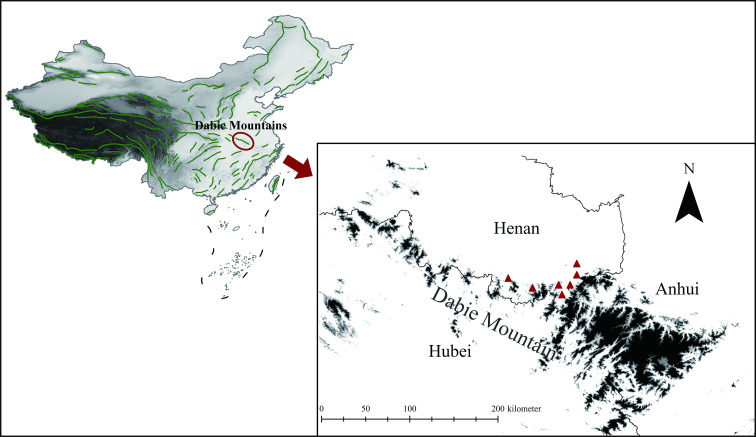
Between March 2023 and April 2024, a total of 267 wild rodents were captured in the northern foothills of the Dabie Mountains, and fecal samples were collected from their intestines for DNA extraction. Species identification of wild rodents was conducted using PCR amplification of the universal vertebrate cytochrome b (cytb) gene. Nested PCR was subsequently used to amplify the small subunit (SSU) rRNA, actin, heat shock protein 70 (HSP70), and 60 kDa glycoprotein (gp60) genes for the analysis of Cryptosporidium species, genotypes, and subtypes in the fecal samples.
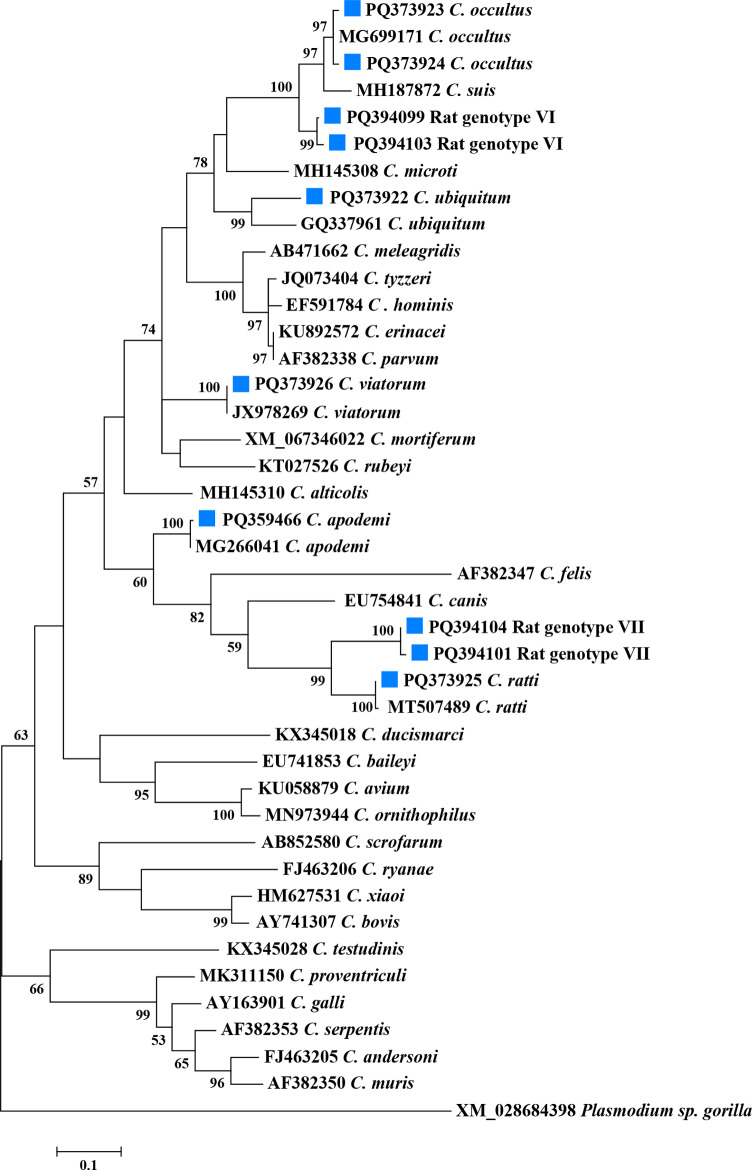
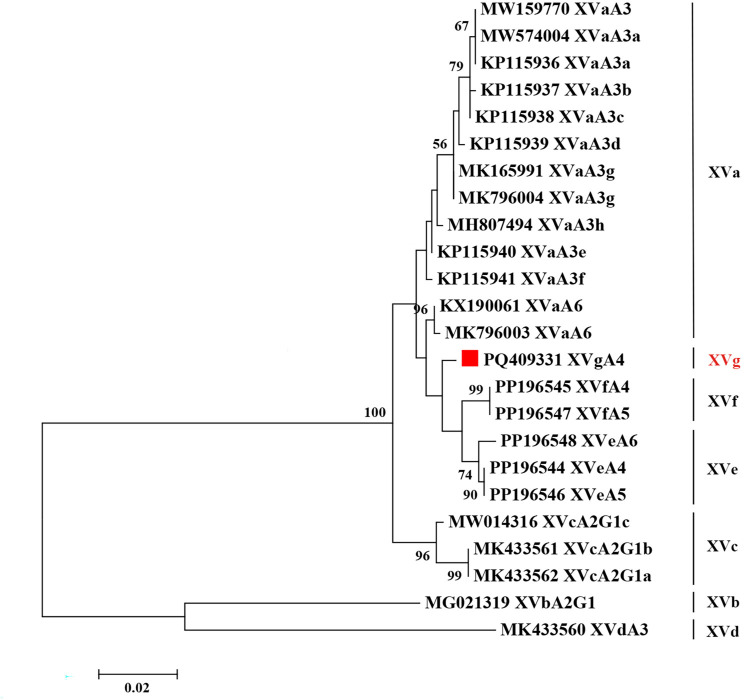
The infection rate of Cryptosporidium spp. in wild rodents from the northern foothills of the Dabie Mountains was 21.3% (57/267). Seven species of wild rodents were identified, and the infection rates for Cryptosporidium spp. varied among host species. In particular, the infection rate was 21.4% (25/117) in Niviventer lotipes, 22.4% (22/98) in Apodemus agrarius, 17.2% (5/29) in Rattus nitidus, 22.2% (4/18) in Apodemus draco, and 33.3% (1/3) in Rattus tanezumi. The identification results indicated the presence of five Cryptosporidium species: Cryptosporidium apodemi (n = 12), C. ubiquitum (n = 11), C. viatorum (n = 7), C. ratti (n = 2), and C. occultus (n = 2). Moreover, two novel genotypes were identified: Cryptosporidium sp. rat genotype VI (n = 8) and Cryptosporidium sp. rat genotype VII (n = 15). Notably, a new subtype of C. viatorum designated as XVgA4 was discovered.
This study revealed the prevalence of Cryptosporidium spp. in wild rodents in the northern foothills of the Dabie Mountains and identified two novel Cryptosporidium genotypes, along with a new subtype, C. viatorum-XVgA4. The findings highlight the genetic diversity of Cryptosporidium spp., underscoring the increased risk of Cryptosporidium spp. transmission posed by local wild rodents population. It suggests that host-specific factors should be considered in epidemiological surveillance and control strategies of Cryptosporidium spp., which is of great significance for the prevention and control of Cryptosporidiosis.
隐孢子虫属是影响人类和动物的常见人畜共患病原体。这些病原体通过粪便传播,是腹泻的主要原因。由于野生啮齿动物数量众多且分布广泛,它们在隐孢子虫属的传播中起着重要作用。河南省东南部的大别山区拥有丰富的野生动物资源以及各种家畜。然而,当地野生啮齿动物中隐孢子虫属的流行病学特征仍知之甚少。因此,应确定该地区野生啮齿动物中隐孢子虫属的感染率和遗传特征。
在2023年3月至2024年4月期间,在大别山区北麓共捕获267只野生啮齿动物,并从其肠道收集粪便样本进行DNA提取。使用通用脊椎动物细胞色素b(cytb)基因的PCR扩增对野生啮齿动物进行物种鉴定。随后采用巢式PCR扩增粪便样本中的小亚基(SSU)rRNA、肌动蛋白、热休克蛋白70(HSP70)和60 kDa糖蛋白(gp60)基因,以分析隐孢子虫的种类、基因型和亚型。
大别山区北麓野生啮齿动物中隐孢子虫属的感染率为21.3%(57/267)。鉴定出7种野生啮齿动物,隐孢子虫属在不同宿主物种中的感染率有所不同。特别是,社鼠的感染率为21.4%(25/117),黑线姬鼠为22.4%(22/98),大足鼠为17.2%(5/29),中华姬鼠为22.2%(4/18),黄胸鼠为33.3%(1/3)。鉴定结果表明存在5种隐孢子虫:田鼠隐孢子虫(n = 12)、泛在隐孢子虫(n = 11)、微小隐孢子虫(n = 7)、鼠隐孢子虫(n = 2)和隐匿隐孢子虫(n = 2)。此外,还鉴定出两种新基因型:隐孢子虫属大鼠基因型VI(n = 8)和隐孢子虫属大鼠基因型VII(n = 15)。值得注意的是,发现了一种新的微小隐孢子虫亚型,命名为XVgA4。
本研究揭示了大别山区北麓野生啮齿动物中隐孢子虫属的流行情况,鉴定出两种新的隐孢子虫基因型以及一种新亚型,即微小隐孢子虫-XVgA4。研究结果突出了隐孢子虫属的遗传多样性,强调了当地野生啮齿动物种群带来的隐孢子虫属传播风险增加。这表明在隐孢子虫属的流行病学监测和控制策略中应考虑宿主特异性因素,这对隐孢子虫病的预防和控制具有重要意义。