Gang Sujin, Kwon Yong Jae, Kwon Hyunhee, Ha Suhyun, Park Jueun, Lee Byong Sop, Jung Euiseok, Jeong Jiyoon, Kim Soo Hyun, Namgoong Jung-Man
Division of Pediatric Surgery, Asan Medical Center Children's Hospital, Asan Medical Center, University of Ulsan College of Medicine, Seoul, Korea.
Division of Pediatric Surgery, Department of Surgery, Jeonbuk National University Hospital, Jeonju, Korea.
BMC Pediatr. 2025 May 21;25(1):406. doi: 10.1186/s12887-025-05755-w.
Congenital diaphragmatic hernia (CDH) and bronchopulmonary sequestration (BPS) are rare congenital anomalies that can coexist, with studies suggesting that 25-40% of CDH cases are accompanied by BPS. The association between CDH and BPS is thought to arise from embryological disruptions during early gestation, with BPS potentially serving as an anatomical barrier. This study aimed to evaluate the incidence, clinical characteristics, and outcomes of patients with concurrent CDH and BPS at a single institution to improve therapeutic approaches.
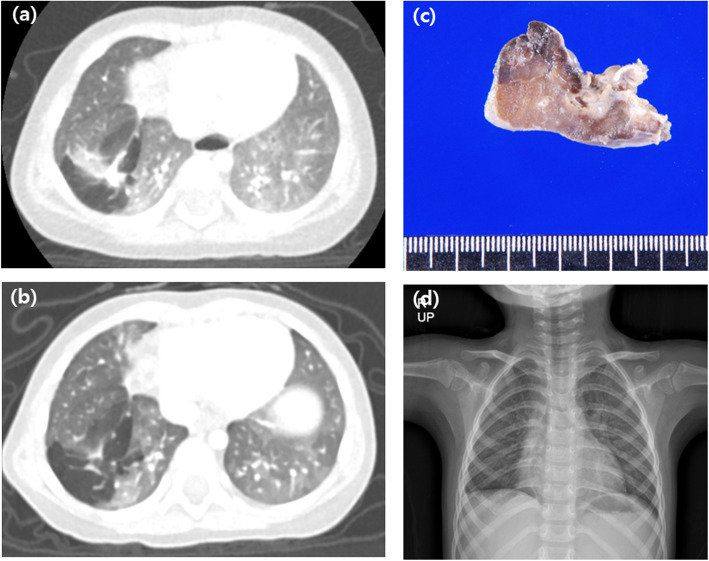
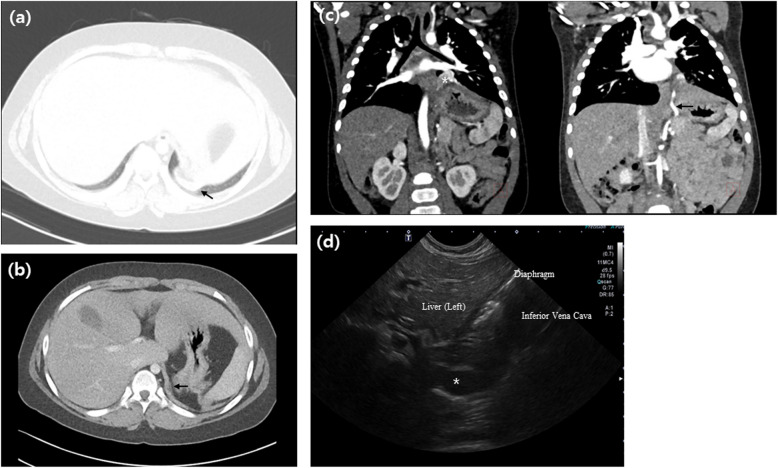
This study retrospectively analyzed the medical records of neonates diagnosed and treated for BPS concurrent with CDH at Asan Medical Center from 1990 to 2021, identifying 15 cases (3.0%) among 493 CDH patients. Comprehensive data on demographics, treatments, outcomes, diagnostic imaging, and pathological findings were collected and analyzed to explore disease characteristics and evaluate clinical outcomes.
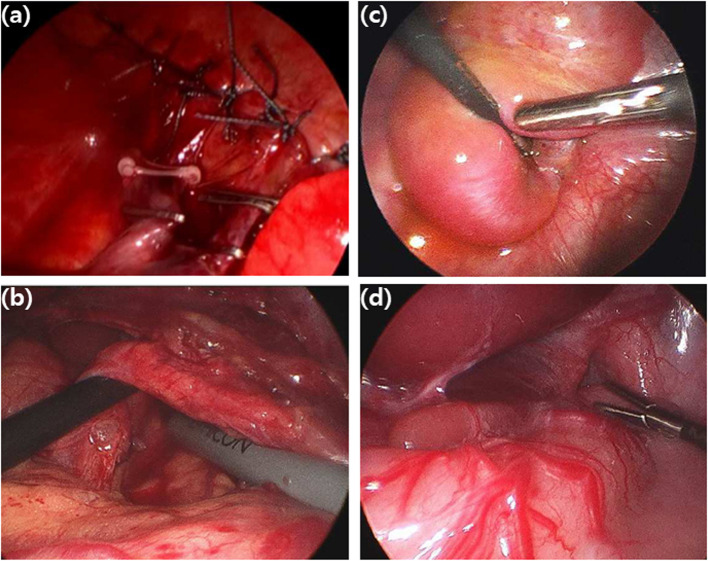
This study analyzed 15 neonates with concurrent BPS and CDH, with a male predominance (10:5) and an average gestational age of 37.8 weeks, of whom 80% were diagnosed prenatally. CDH repair was performed at a median of 8 days, with no acute repair-related complications observed. In some cases, additional procedures such as hiatal hernia or re-do CDH repair was required, and BPS resection was performed either simultaneous or delayed. Follow-up revealed that most patients grew within the 50th percentile range, with thoracoscopic approaches feasible in over half of the cases, and recurrence-free outcomes achieved in those treated for hiatal hernia or BPS.
No statistical difference in CDH severity was observed between the CDH and CDH + BPS groups, and the clinical outcome of CDH + BPS was better, although the high prevalence of sac-associated CDH types may have confounded the results. Our findings provide additional evidence supporting the protective effect of BPS. However, they also highlight the need for further studies in larger populations to clarify the causal relationship.
先天性膈疝(CDH)和支气管肺隔离症(BPS)是罕见的先天性异常,可同时存在,研究表明25%-40%的CDH病例伴有BPS。CDH与BPS之间的关联被认为源于妊娠早期的胚胎发育紊乱,BPS可能起到解剖屏障的作用。本研究旨在评估单一机构中CDH合并BPS患者的发病率、临床特征和预后,以改进治疗方法。
本研究回顾性分析了1990年至2021年在峨山医学中心诊断并治疗的合并BPS的CDH新生儿的病历,在493例CDH患者中确定了15例(3.0%)。收集并分析了有关人口统计学、治疗、预后、诊断性影像学和病理结果的综合数据,以探索疾病特征并评估临床预后。
本研究分析了15例合并BPS和CDH的新生儿,男性占优势(10:5),平均胎龄为37.8周,其中80%在产前被诊断。CDH修复手术的中位时间为8天,未观察到与急性修复相关的并发症。在某些情况下,需要进行额外的手术,如食管裂孔疝或再次进行CDH修复,BPS切除可同时或延迟进行。随访显示,大多数患者生长发育处于第50百分位范围内,超过半数的病例可行胸腔镜手术,接受食管裂孔疝或BPS治疗的患者实现了无复发的预后。
CDH组与CDH+BPS组之间在CDH严重程度上未观察到统计学差异,CDH+BPS的临床预后更好,尽管与囊相关的CDH类型的高患病率可能混淆了结果。我们的研究结果提供了额外的证据支持BPS的保护作用。然而,它们也强调需要在更大的人群中进行进一步研究,以阐明因果关系。