
肺发育和先天性肺疾病的发育途径。
Developmental Pathways Underlying Lung Development and Congenital Lung Disorders.
机构信息
Life and Health Sciences Research Institute (ICVS), School of Medicine, University of Minho, 4710-057 Braga, Portugal.
ICVS/3B's-PT Government Associate Laboratory, 4710-057 Braga/Guimarães, Portugal.
出版信息
Cells. 2021 Nov 2;10(11):2987. doi: 10.3390/cells10112987.
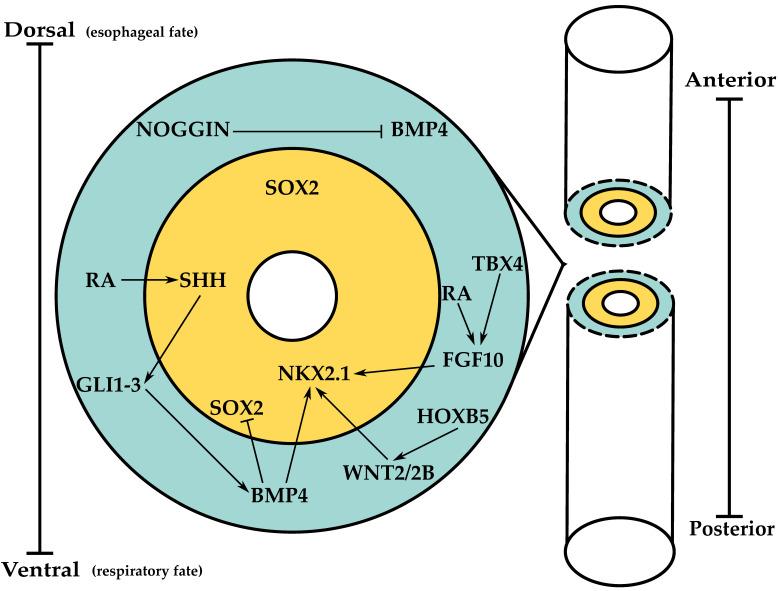
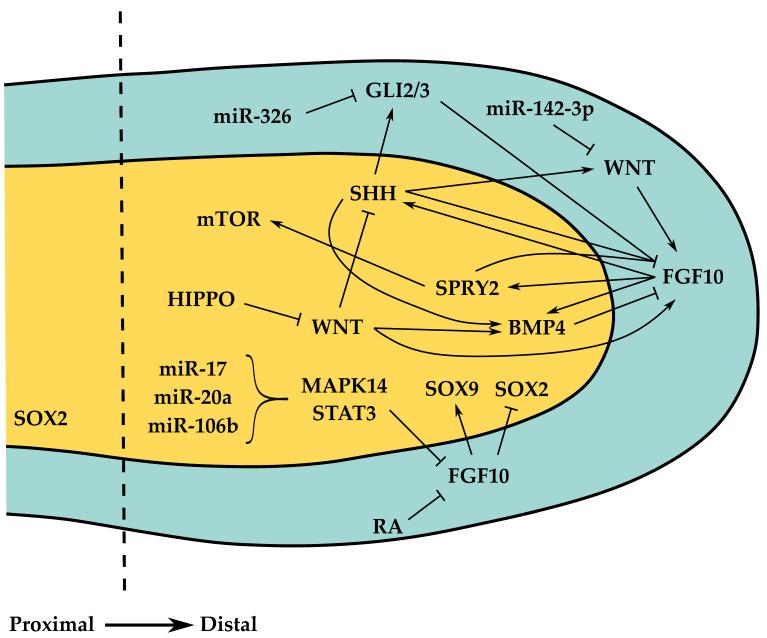
Lung organogenesis is a highly coordinated process governed by a network of conserved signaling pathways that ultimately control patterning, growth, and differentiation. This rigorously regulated developmental process culminates with the formation of a fully functional organ. Conversely, failure to correctly regulate this intricate series of events results in severe abnormalities that may compromise postnatal survival or affect/disrupt lung function through early life and adulthood. Conditions like congenital pulmonary airway malformation, bronchopulmonary sequestration, bronchogenic cysts, and congenital diaphragmatic hernia display unique forms of lung abnormalities. The etiology of these disorders is not yet completely understood; however, specific developmental pathways have already been reported as deregulated. In this sense, this review focuses on the molecular mechanisms that contribute to normal/abnormal lung growth and development and their impact on postnatal survival.
肺器官发生是一个高度协调的过程,由一系列保守的信号通路网络控制,这些通路最终控制着模式形成、生长和分化。这个严格调控的发育过程最终导致一个功能完全正常的器官的形成。相反,如果不能正确调控这一系列复杂的事件,就会导致严重的异常,这可能会危及出生后的生存,或者通过婴儿期和成年期影响/破坏肺功能。像先天性肺气道畸形、支气管肺隔离症、支气管源性囊肿和先天性膈疝这样的疾病都显示出独特的肺异常形式。这些疾病的病因尚不完全清楚;然而,已经有报道称特定的发育途径被失调了。从这个意义上说,本综述重点介绍了促进正常/异常肺生长和发育的分子机制及其对出生后生存的影响。



 Zotero 插件