Wang Xiaoyan, Wen Pengfei, Gao Fang, Zhao JinXiu, Miao Shuchuan
Department of Clinical Nutrition, The First Affiliated Hospital of Chengdu Medical College, Chengdu, Sichuan, China.
Department of Dermatology, West China Hospital, Sichuan University, Chengdu, China.
Front Immunol. 2025 May 6;16:1546031. doi: 10.3389/fimmu.2025.1546031. eCollection 2025.
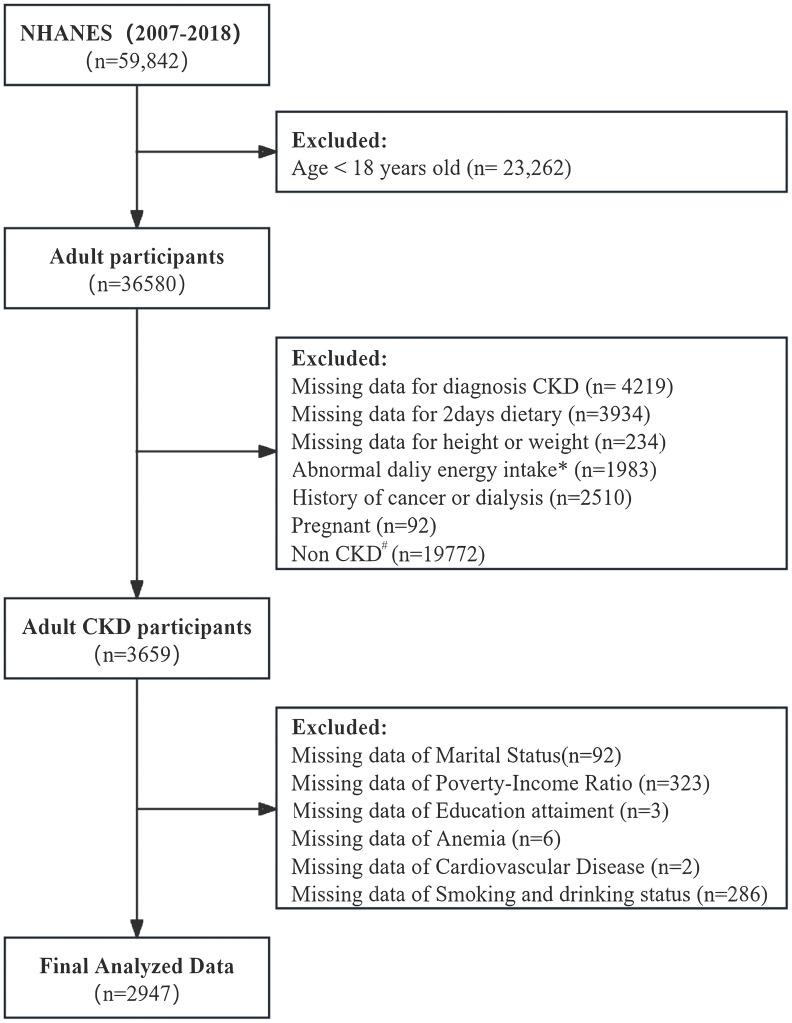
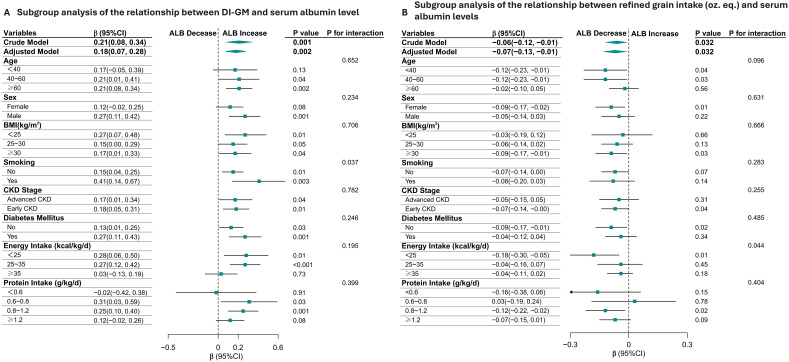
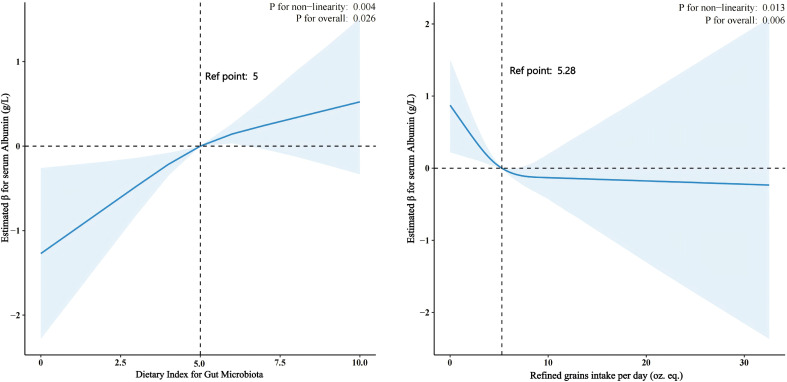
Chronic kidney disease (CKD) is a global health issue, affecting approximately 10% of the population. Hypoalbuminemia, a common complication in advanced CKD, is associated with poor prognosis. This study aimed to investigate the association between a microbiota-friendly dietary scoring system (Dietary Index for Gut Microbiota, DI-GM) and serum albumin levels in patients with CKD. We utilized a cross-sectional cohort from the NHANES 2007-2018, which included 2,947 CKD patients. Multivariable logistic regression and restricted cubic spline models were applied to analyze the relationship between DI-GM scores and serum albumin. Higher DI-GM scores were significantly associated with increased serum albumin levels (β = 0.18 g/L, 95% CI: 0.07-0.28, p = 0.002). Furthermore, each 1-point increase in DI-GM score was linked to a 15% reduction in the odds of hypoalbuminemia (OR: 0.85, 95% CI: 0.74-0.97, p = 0.014). The findings suggest that a high DI-GM diet may have beneficial effects in managing hypoalbuminemia in CKD patients by modulating gut microbiota composition and reducing inflammation. This diet pattern could be a promising dietary intervention for improving clinical outcomes in CKD patients, especially those at risk for malnutrition and inflammation.
慢性肾脏病(CKD)是一个全球性的健康问题,影响着约10%的人口。低白蛋白血症是晚期CKD的常见并发症,与预后不良相关。本研究旨在调查微生物友好型饮食评分系统(肠道微生物群饮食指数,DI-GM)与CKD患者血清白蛋白水平之间的关联。我们利用了2007-2018年美国国家健康与营养检查调查(NHANES)的一个横断面队列,其中包括2947名CKD患者。应用多变量逻辑回归和受限立方样条模型分析DI-GM评分与血清白蛋白之间的关系。较高的DI-GM评分与血清白蛋白水平升高显著相关(β=0.18g/L,95%置信区间:0.07-0.28,p=0.002)。此外,DI-GM评分每增加1分,低白蛋白血症的几率降低15%(比值比:0.85,95%置信区间:0.74-0.97,p=0.014)。研究结果表明,高DI-GM饮食可能通过调节肠道微生物群组成和减轻炎症,对管理CKD患者的低白蛋白血症具有有益作用。这种饮食模式可能是改善CKD患者临床结局的一种有前景的饮食干预措施,尤其是那些有营养不良和炎症风险的患者。