Wang Xiaoyan, Ji Xiaoli, Liu Caicai, Luo Yanhua, Liu Jinfeng
Weifang People's Hospital, Weifang, Shandong, China.
Department of Anesthesiology, Weifang People's Hospital, Weifang, Shandong, China
BMJ Open. 2025 May 21;15(5):e098018. doi: 10.1136/bmjopen-2024-098018.
Postoperative sleep quality is generally impaired in elderly patients undergoing total knee arthroplasty. Decreased postoperative sleep quality seriously affects postoperative recovery. Both esketamine and dexmedetomidine have been individually demonstrated to have the potential to enhance postoperative sleep quality. However, the effectiveness of mini-dose esketamine-dexmedetomidine supplemented intravenous analgesia on postoperative sleep quality remains to be elucidated.
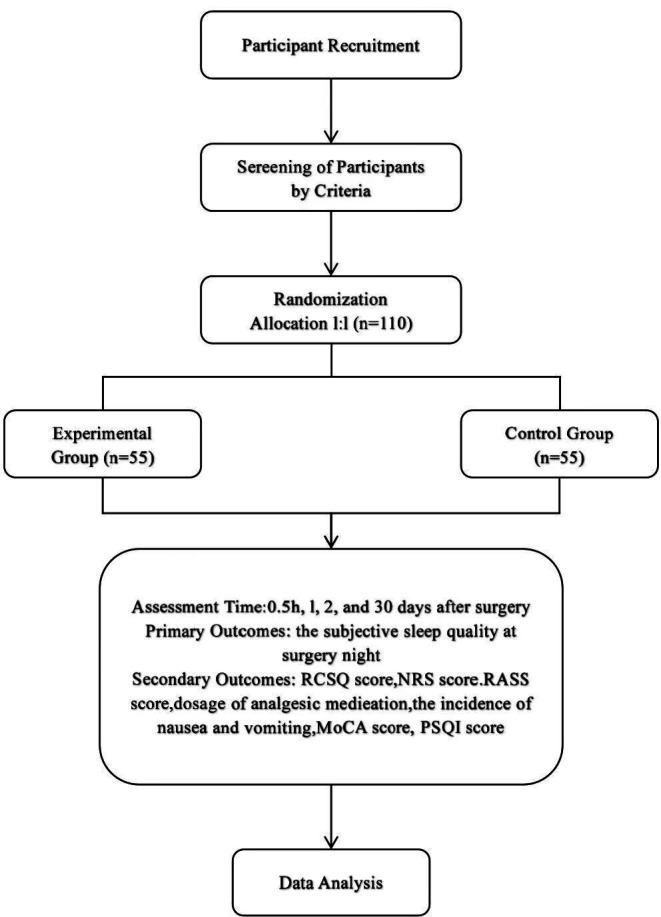
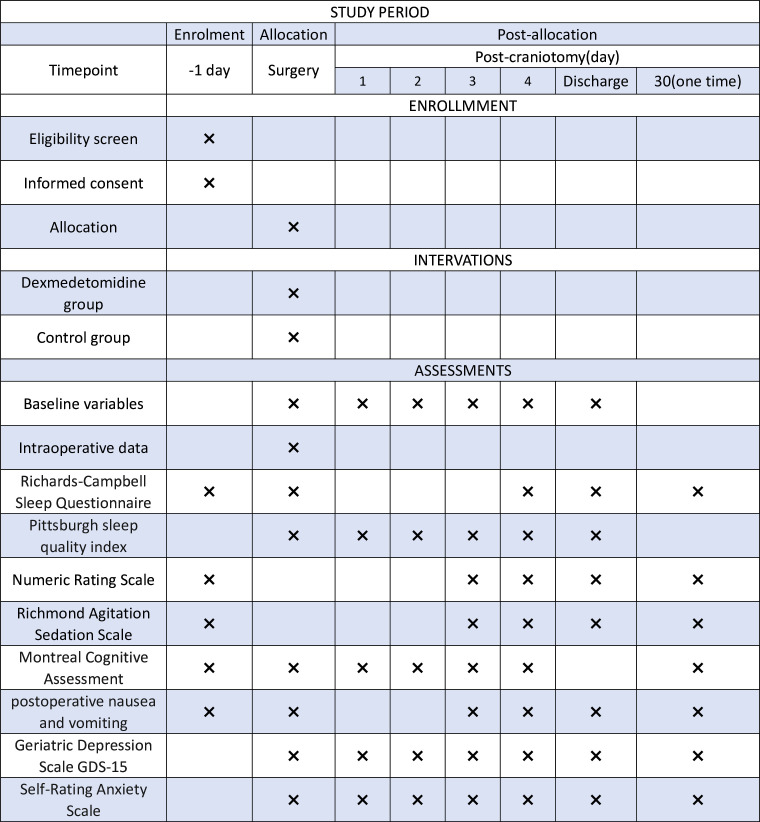
110 elderly patients undergoing total knee arthroplasty will be randomly assigned to different regimens of patient-controlled intravenous analgesia with a total volume of 100 mL in either the experimental group (sufentanil 1.5 µg/kg+esketamine 25 mg+dexmedetomidine 100 µg) or the control group (sufentanil 1.5 µg/kg+equal vol of placebo, ie, saline). The primary outcome is the subjective sleep quality score on the night of surgery, assessed using the Richards-Campbell Sleep Questionnaire. The secondary outcomes are the Richards-Campbell Sleep Questionnaire scores on the first and second postoperative nights. Patients' pain scores, Richmond Agitation-Sedation Scale scores, analgesic medication usage and incidence of nausea and vomiting are documented two times per day for two postoperative days. The Montreal Cognitive Assessment score is assessed on the day of discharge. Regarding other outcomes, telephone follow-up will be performed at 30 days postoperatively to assess the Pittsburgh Sleep Quality Index score and identify and document major complications within 30 days. Safety outcomes encompass not only the monitoring of basic vital signs such as hypotension, hypertension, tachycardia, bradycardia and low peripheral oxygen saturation but also psychiatric symptoms, including nightmares, hallucinations, restlessness, confusion, diplopia and blurred vision. The analysis will be conducted according to the principle of intention-to-treat.
The study protocol has been approved by the Medical Research Ethics Committee of Weifang People's Hospital (KYLL20240523-1). The results of the study will be published in peer-reviewed journals and scientific conferences.
ChiCTR2400085253.
接受全膝关节置换术的老年患者术后睡眠质量通常会受到损害。术后睡眠质量下降严重影响术后恢复。艾司氯胺酮和右美托咪定已分别被证明有提高术后睡眠质量的潜力。然而,小剂量艾司氯胺酮-右美托咪定辅助静脉镇痛对术后睡眠质量的有效性仍有待阐明。
110例接受全膝关节置换术的老年患者将被随机分配至实验组(舒芬太尼1.5µg/kg + 艾司氯胺酮25mg + 右美托咪定100µg)或对照组(舒芬太尼1.5µg/kg + 等量安慰剂,即生理盐水),接受总量为100mL的不同患者自控静脉镇痛方案。主要结局是手术当晚使用理查兹-坎贝尔睡眠问卷评估的主观睡眠质量评分。次要结局是术后第一晚和第二晚的理查兹-坎贝尔睡眠问卷评分。术后两天每天记录两次患者的疼痛评分、里士满躁动-镇静量表评分、镇痛药物使用情况以及恶心和呕吐的发生率。出院当天评估蒙特利尔认知评估评分。关于其他结局,术后30天进行电话随访,以评估匹兹堡睡眠质量指数评分,并识别和记录30天内的主要并发症。安全结局不仅包括监测基本生命体征,如低血压、高血压、心动过速、心动过缓和低外周血氧饱和度,还包括精神症状,如噩梦、幻觉、躁动、意识模糊、复视和视力模糊。分析将按照意向性分析原则进行。
本研究方案已获得潍坊市人民医院医学研究伦理委员会批准(KYLL20240523 - 1)。研究结果将发表在同行评审期刊和科学会议上。
ChiCTR2400085253。