Pugliese Nicola Riccardo, Paneni Francesco, Tricò Domenico, Bacca Alessandra Violet, De Biase Nicolò, Dalpiaz Hermann, Mengozzi Alessandro, Virdis Agostino, Ghiadoni Lorenzo, Taddei Stefano, Kreutz Reinhold, Tsioufis Konstantinos, Masi Stefano
Department of Clinical and Experimental Medicine, University of Pisa, Via Roma 67, 56126, Pisa, Italy.
Center for Translational and Experimental Cardiology (CTEC), University Hospital Zurich and University of Zurich, Zurich, Switzerland.
Cardiovasc Diabetol. 2025 May 22;24(1):224. doi: 10.1186/s12933-025-02778-6.
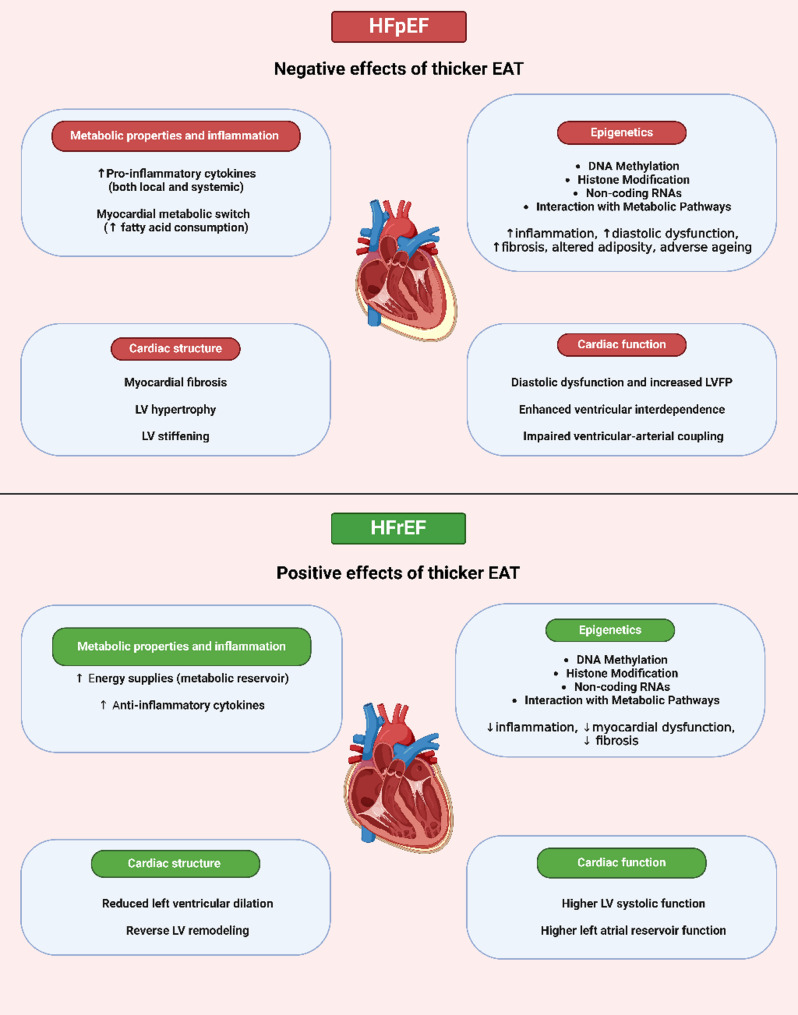
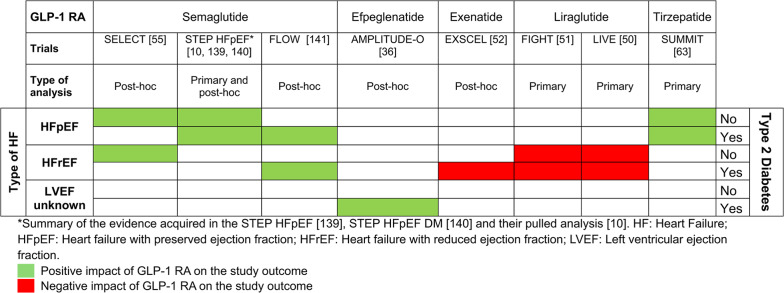
Overweight and obesity are major risk factors for heart failure (HF), contributing to its development through metabolic, neurohormonal, haemodynamic, and inflammatory alterations. While overweight/obesity increases the risk of developing HF, its impact on patient outcomes remains complex. The "obesity paradox" suggests that a higher BMI may be associated with improved survival in patients with established HF. However, recent GLP-1 receptor agonist (GLP-1 RA) trials suggest that intentional weight loss positively influences outcomes in overweight/obese patients with HF. This seemingly contradictory evidence highlights the need for a deeper understanding of the mechanisms linking adiposity to HF outcomes. A more precise characterization of adiposity phenotypes using alternative and accurate measures of pathological fat accumulation is crucial in identifying individuals who may benefit most from anti-obesity treatments. In this context, recent research underscores the role of epicardial adipose tissue (EAT) in HF pathophysiology, as it directly influences cardiac function and structure through inflammatory, metabolic, and mechanical effects. This narrative review summarises current evidence on the impact of weight loss on HF outcomes, focusing on recent GLP-1 RA trial results. Additionally, it highlights epidemiological and molecular data supporting EAT as a novel adiposity measure that might allow refining patient selection for pharmacological weight-loss treatments. Finally, it emphasizes the need for future research to identify causal pathways linking alternative measures of visceral fat accumulation to HF outcomes. These efforts will be essential in optimizing the benefits of novel weight-loss treatments, ensuring effective and individualized therapeutic strategies for overweight or obese patients with HF.
超重和肥胖是心力衰竭(HF)的主要危险因素,通过代谢、神经激素、血流动力学和炎症改变促使其发展。虽然超重/肥胖会增加发生HF的风险,但其对患者预后的影响仍然复杂。“肥胖悖论”表明,较高的体重指数(BMI)可能与已确诊HF患者的生存率提高有关。然而,最近的胰高血糖素样肽-1受体激动剂(GLP-1 RA)试验表明,有意减重对超重/肥胖HF患者的预后有积极影响。这一看似矛盾的证据凸显了更深入了解肥胖与HF预后之间联系机制的必要性。使用替代性且准确的病理性脂肪堆积测量方法更精确地表征肥胖表型,对于确定可能从抗肥胖治疗中获益最大的个体至关重要。在这方面,最近的研究强调了心外膜脂肪组织(EAT)在HF病理生理学中的作用,因为它通过炎症、代谢和机械作用直接影响心脏功能和结构。这篇叙述性综述总结了目前关于减重对HF预后影响的证据,重点关注最近的GLP-1 RA试验结果。此外,它强调了支持EAT作为一种新型肥胖测量指标的流行病学和分子数据,这可能有助于优化药物减重治疗的患者选择。最后,它强调了未来研究确定将内脏脂肪堆积的替代测量指标与HF预后联系起来的因果途径的必要性。这些努力对于优化新型减重治疗的益处、确保为超重或肥胖HF患者制定有效且个性化的治疗策略至关重要。