
评估MXD3表达作为肺鳞状细胞癌生存预测指标
Assessment of MXD3 Expression as a Predictor of Survival in Lung Squamous Cell Carcinoma.
作者信息
Cao Mingzhi, Zhang Ning, Chen Tangbing, Jiang Hong
机构信息
Department of Thoracic Surgery, 905th Hospital of People's Liberation Army Navy, Naval Medical University, Shanghai, China.
出版信息
Int J Genomics. 2025 May 15;2025:7355595. doi: 10.1155/ijog/7355595. eCollection 2025.
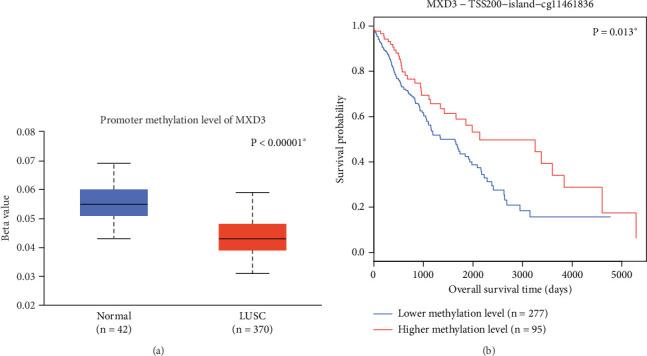
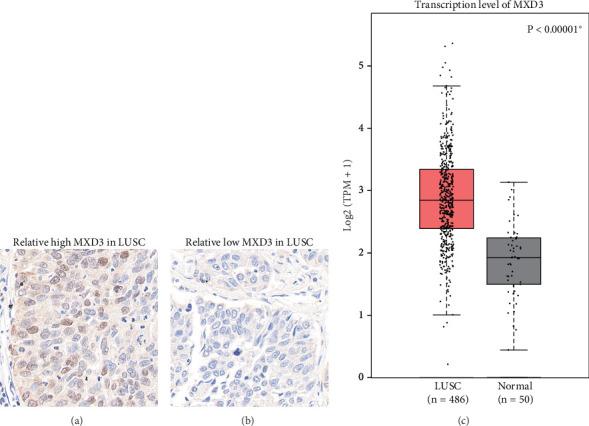
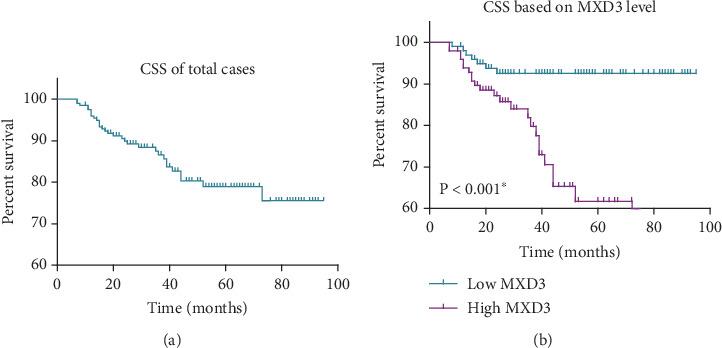
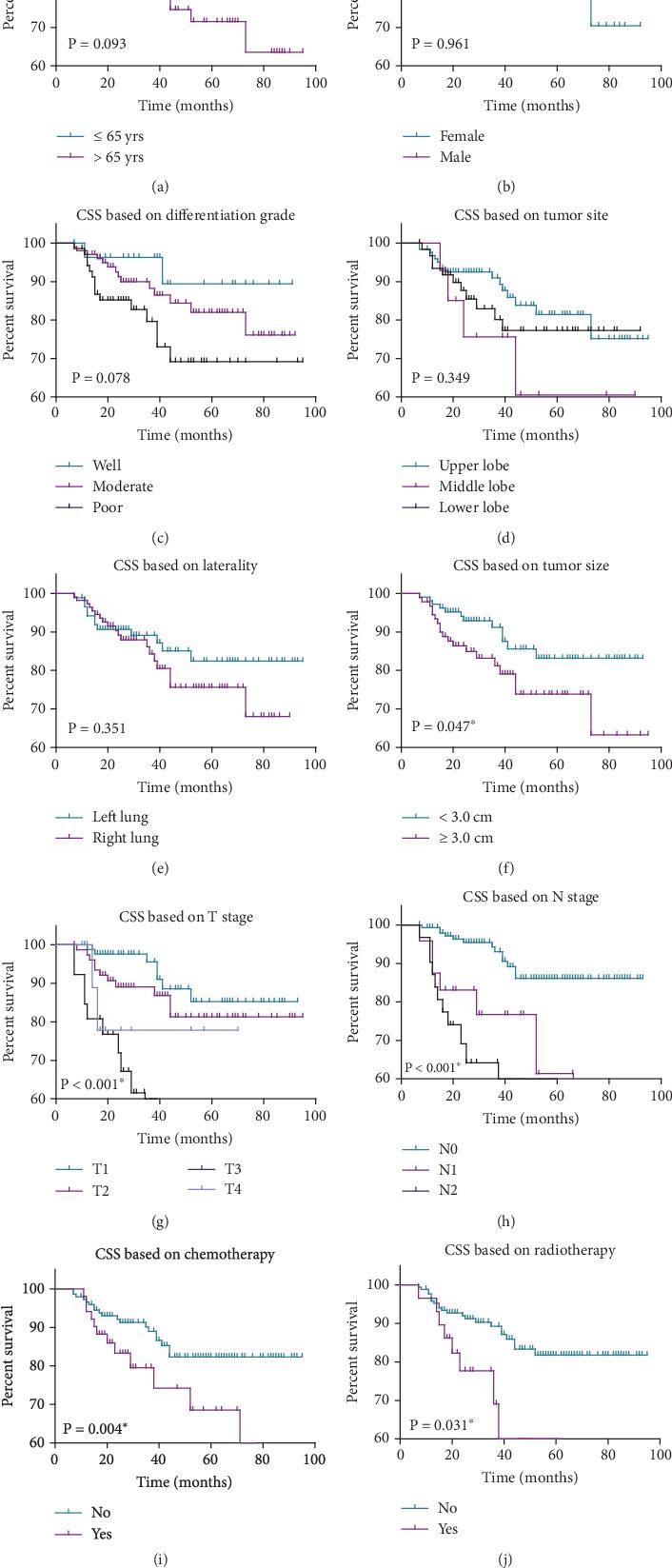
Lung squamous cell carcinoma (LUSC) represents a significant challenge in oncology, necessitating the identification of novel prognostic markers and therapeutic targets. This study is aimed at investigating the oncogenic role of MXD3 (MAX Dimerization Protein 3) in LUSC and its implications for patient prognosis. A retrospective cohort of 199 LUSC patients from the 905th Hospital of People's Liberation Army Navy was analyzed to evaluate MXD3 expression levels and their association with clinicopathological characteristics and survival outcomes. Immunohistochemistry (IHC) staining was performed to assess MXD3 expression in LUSC tissue samples. Survival analyses, including the Kaplan-Meier curves and multivariate Cox regression, were conducted to determine the prognostic significance of MXD3 expression and other clinicopathological factors. Additionally, the methylation status of MXD3 was examined using data from the TCGA database to assess its role in regulating MXD3 expression and survival outcomes. MXD3 expression exhibited significant heterogeneity among LUSC patients, with high MXD3 expression correlating with advanced tumor differentiation grade, larger tumor size, and advanced T and N stages. The Kaplan-Meier survival analyses revealed that high MXD3 expression was associated with shorter cancer-specific survival. Multivariate Cox regression identified MXD3 expression level and lymph node involvement (N stage) as independent prognostic factors for cancer-specific survival in LUSC patients. Additionally, analysis of MXD3 methylation revealed significantly lower methylation levels in LUSC tissues, and reduced methylation correlated with poorer survival outcomes. Our findings highlight MXD3 as a promising prognostic biomarker for LUSC, with high MXD3 expression predicting poorer survival outcomes. MXD3 expression level, along with lymph node involvement and methylation status, could serve as independent prognostic indicators for risk stratification and treatment decision-making in LUSC patients. Further research is warranted to elucidate the underlying mechanisms of MXD3-mediated tumorigenesis and its potential as a therapeutic target in LUSC management.
肺鳞状细胞癌(LUSC)是肿瘤学领域面临的一项重大挑战,因此需要识别新的预后标志物和治疗靶点。本研究旨在探讨MXD3(MAX二聚化蛋白3)在LUSC中的致癌作用及其对患者预后的影响。对来自中国人民解放军海军第905医院的199例LUSC患者的回顾性队列进行分析,以评估MXD3表达水平及其与临床病理特征和生存结果的关联。采用免疫组织化学(IHC)染色评估LUSC组织样本中MXD3的表达。进行生存分析,包括Kaplan-Meier曲线和多变量Cox回归,以确定MXD3表达及其他临床病理因素的预后意义。此外,利用TCGA数据库的数据检测MXD3的甲基化状态,以评估其在调节MXD3表达和生存结果中的作用。MXD3表达在LUSC患者中表现出显著异质性,高MXD3表达与肿瘤分化程度高、肿瘤体积大以及T和N分期晚相关。Kaplan-Meier生存分析显示,高MXD3表达与较短的癌症特异性生存期相关。多变量Cox回归确定MXD3表达水平和淋巴结受累(N分期)是LUSC患者癌症特异性生存的独立预后因素。此外,对MXD3甲基化的分析显示,LUSC组织中的甲基化水平显著降低,甲基化降低与较差的生存结果相关。我们的研究结果表明,MXD3是LUSC一个有前景的预后生物标志物,高MXD3表达预示着较差的生存结果。MXD3表达水平以及淋巴结受累情况和甲基化状态可作为LUSC患者风险分层和治疗决策的独立预后指标。有必要进一步研究以阐明MXD3介导肿瘤发生的潜在机制及其作为LUSC治疗靶点的潜力。
 Zotero 插件