Yagasaki Hiroto, Watanabe Keitaro, Suzuki Takeki, Iwama Makoto, Tanaka Shinichiro, Noda Toshiyuki
Department of Cardiology, Gifu Prefectural General Medical Center, Gifu, Japan; Department of Medicine, Indiana University School of Medicine, Indianapolis, Indiana, USA.
Department of Cardiology, Gifu Prefectural General Medical Center, Gifu, Japan.
JACC Case Rep. 2025 May 21;30(11):103307. doi: 10.1016/j.jaccas.2025.103307. Epub 2025 Mar 12.
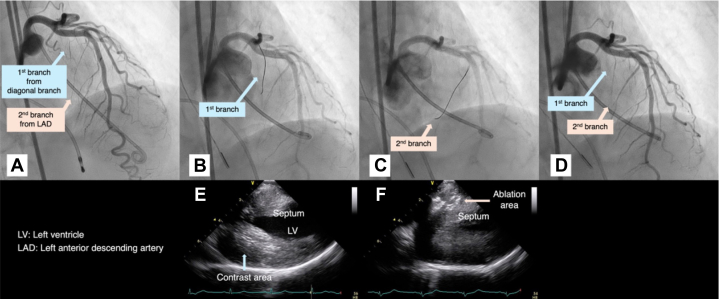
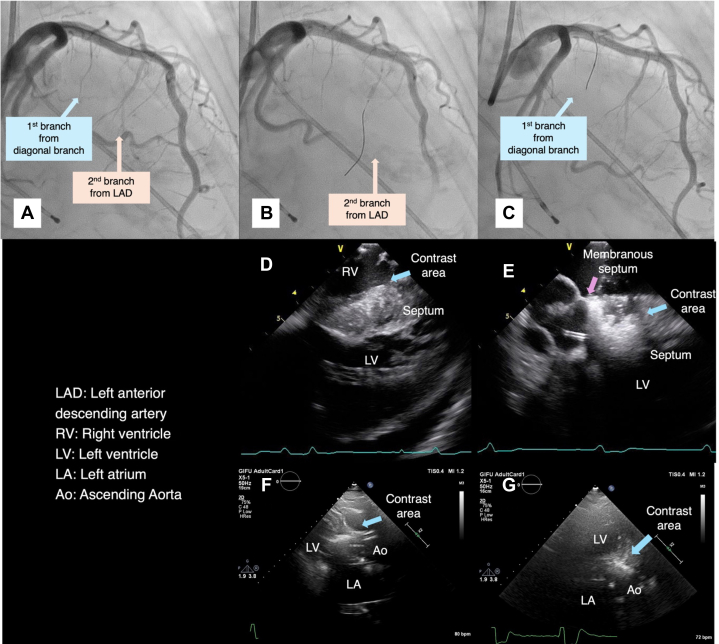
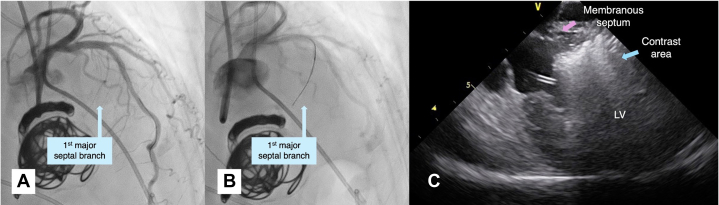
This study sought to describe a novel technique for percutaneous transluminal septal myocardial ablation using intracardiac echocardiography (ICE) through the right internal jugular vein (JV) in patients with hypertrophic obstructive cardiomyopathy.
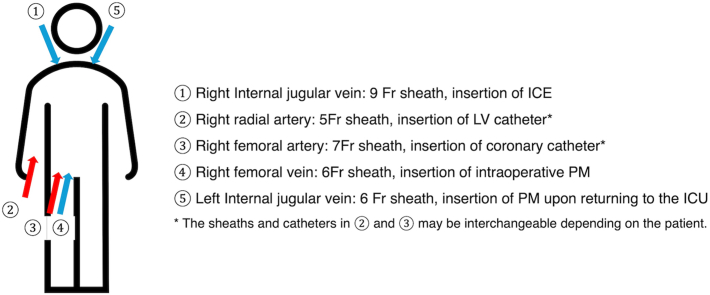
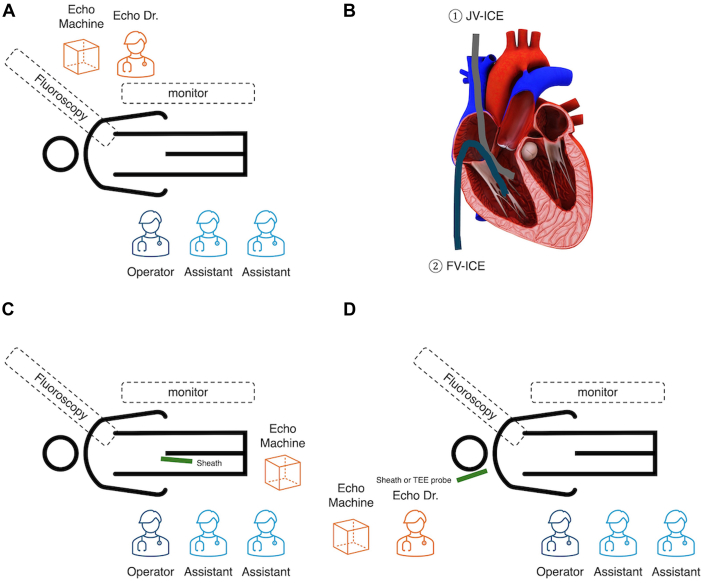
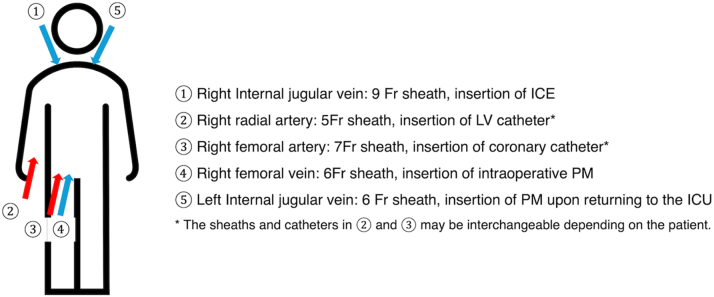
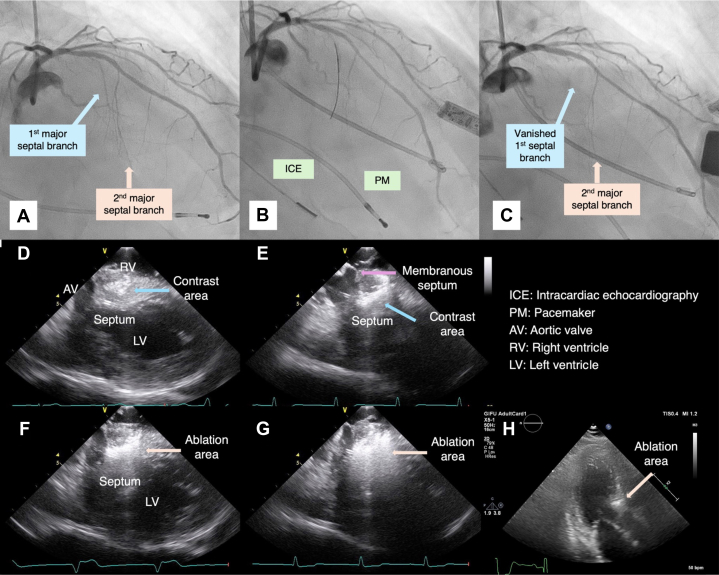
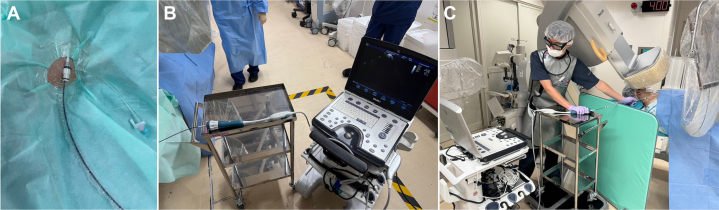
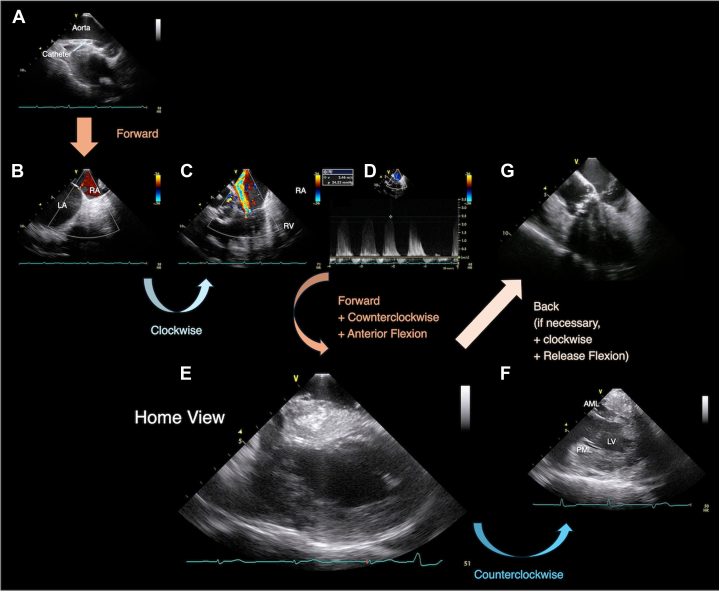
Prepare the equipment and establish vascular access, insert the JV ICE catheter using a sterile sleeve, perform initial screening with JV ICE to obtain key cardiac views, identify target septal branch using coronary angiography and JV ICE, monitor contrast injection and ethanol administration in real time with JV ICE, continuously assess for immediate complications, and evaluate postprocedure gradient reduction and ablation efficacy.
Risks include vascular complications, arrhythmias, cardiac tamponade, embolism, and infections. JV ICE requires specific skills, presenting a learning curve. Mitigation strategies involve ultrasound-guided access, careful catheter manipulation, strict asepsis, comprehensive training, optimized settings, and continuous monitoring.
本研究旨在描述一种在肥厚性梗阻性心肌病患者中,经右颈内静脉使用心腔内超声心动图(ICE)进行经皮腔内室间隔心肌消融的新技术。
准备设备并建立血管通路,使用无菌套管插入颈内静脉ICE导管,用颈内静脉ICE进行初始筛查以获取关键心脏视图,使用冠状动脉造影和颈内静脉ICE识别目标间隔支,用颈内静脉ICE实时监测造影剂注射和乙醇给药,持续评估即时并发症,并评估术后压差降低和消融效果。
风险包括血管并发症、心律失常、心脏压塞、栓塞和感染。颈内静脉ICE需要特定技能,存在学习曲线。缓解策略包括超声引导下穿刺、谨慎的导管操作、严格的无菌操作、全面培训、优化设置和持续监测。