Singh Swati, Narine Lana L, Willoughby Janna R, Eckhardt Lori G
College of Forestry, Wildlife and Environment, Auburn University, Auburn, AL, USA.
PeerJ. 2025 May 22;13:e19407. doi: 10.7717/peerj.19407. eCollection 2025.
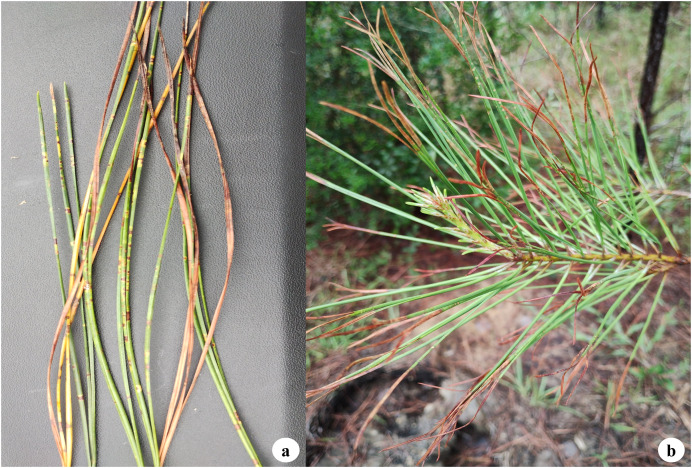
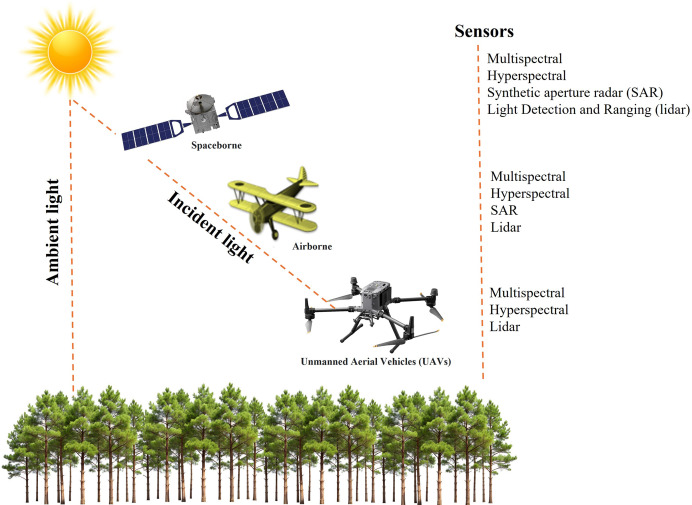
Pine forests are increasingly threatened by needle diseases, including Brown Spot Needle Blight (BSNB), caused by . BSNB leads to needle loss, reduced growth, significant tree mortality, and disruptions in global timber production. Due to its severity, is designated as a quarantine pathogen in several countries, requiring effective early detection and control of its spread. Remote sensing (RS) technologies provide scalable and efficient solutions for broad-scale disease surveillance. This study systematically reviews RS-based methods for detecting BSNB symptoms, assessing current research trends and potential applications. A comprehensive bibliometric analysis using the Web of Science database indicated that direct RS applications for BSNB remain scarce. However, studies on other needle diseases demonstrated the effectiveness of multisource RS techniques for symptom detection, spatial mapping, and severity assessment. Advancements in machine learning (ML) and deep learning (DL) have further improved RS capabilities for automated disease classification and predictive modeling in forest health monitoring. Climate-driven factors, such as temperature and precipitation, regulate the distribution and severity of emerging pathogens. Geospatial analyses and species distribution modeling (SDM) have been successfully applied to predict BSNB pathogen's range expansion under changing climatic conditions. Integrating these models with RS-based monitoring enhances early detection and risk assessment. However, despite these advancements, direct RS applications for BSNB detection remain limited. This review identifies key knowledge gaps and highlights the need for further research to optimize RS-based methodologies, refine predictive models, and develop early warning systems for improved forest management.
松林正日益受到针叶病害的威胁,包括由[病原体名称缺失]引起的褐斑针叶枯病(BSNB)。BSNB会导致针叶脱落、生长减缓、树木大量死亡以及全球木材生产中断。由于其严重性,[病原体名称缺失]在多个国家被指定为检疫性病原菌,需要对其传播进行有效的早期检测和控制。遥感(RS)技术为大规模病害监测提供了可扩展且高效的解决方案。本研究系统地综述了基于RS检测BSNB症状的方法,评估了当前的研究趋势和潜在应用。使用科学网数据库进行的全面文献计量分析表明,针对BSNB的直接RS应用仍然很少。然而,对其他针叶病害的研究表明,多源RS技术在症状检测、空间制图和严重程度评估方面是有效的。机器学习(ML)和深度学习(DL)的进步进一步提高了RS在森林健康监测中进行自动病害分类和预测建模的能力。气候驱动因素,如温度和降水,调节着新出现病原体的分布和严重程度。地理空间分析和物种分布建模(SDM)已成功应用于预测气候变化条件下BSNB病原菌的范围扩展。将这些模型与基于RS的监测相结合可增强早期检测和风险评估。然而,尽管有这些进展,用于BSNB检测的直接RS应用仍然有限。本综述确定了关键的知识空白,并强调需要进一步研究以优化基于RS的方法、完善预测模型并开发早期预警系统,以改善森林管理。